








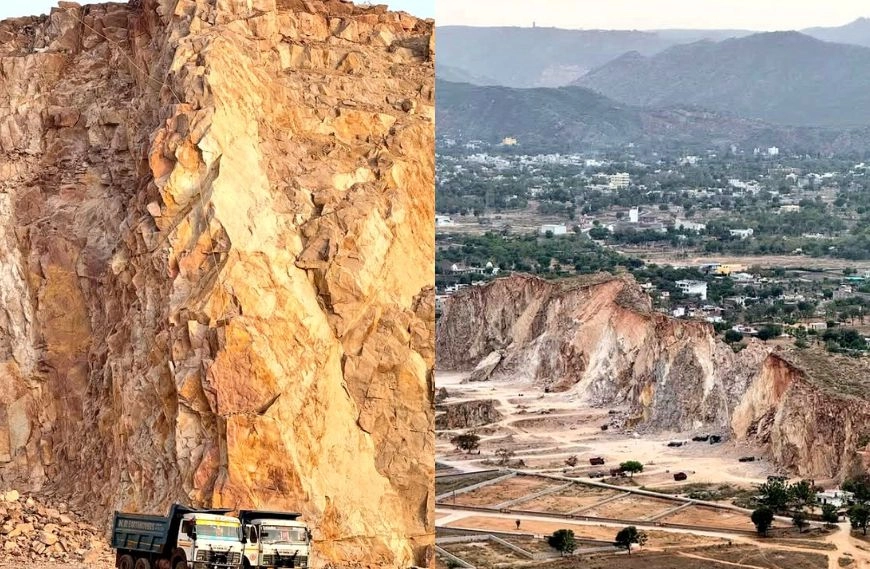
India’s highest court has stepped in to pause the implementation of a contentious environmental definition related to the Aravalli Hills, directing that a fresh expert assessment be carried out to resolve scientific and legal uncertainties.
The Supreme Court made the decision after realising that the earlier definition, which sought to identify what constitutes the Aravalli range, had sparked disagreement among environmentalists, authorities and local communities. By taking up the matter on its own motion, the court underscored its concern that rolling out the previous formulation without greater clarity could have lasting ecological consequences.
A constitution bench, led by the Chief Justice of India, noted that ambiguities in interpreting the existing criteria could lead to uneven protection of fragile landscapes. The court observed that some smaller formations that are important to the region’s ecology might be left undefended if a uniform height-based benchmark were used. As a result, the Supreme Court retained the earlier order in abeyance and called for a new review by a high-powered committee of independent experts.
The fresh panel will be tasked with evaluating not only how the Aravalli Hills and adjacent landforms should be defined, but also how that definition should guide regulatory action on mining, construction and other land use. The court said any fresh framework must be grounded in environmental science and sustainable planning principles rather than technicalities that could be exploited to weaken protection.
The Aravallis are among India’s oldest mountain systems, stretching across several states in the north and west. They are widely recognised for their crucial role in recharging groundwater, moderating local temperatures and supporting diverse plant and animal life. The hills also act as a natural barrier to desertification and play an important part in stabilising soils and filtering air functions that are particularly valuable for communities living in adjacent plains.
Opposition to the earlier definition arose from a cross section of environmental groups, legal experts and regional stakeholders. Critics argued that the approach adopted previously gave undue emphasis to physical measurements and did not take sufficient account of ecological connectivity, water systems and existing land use pressures.
In response to growing concerns, the Supreme Court indicated that the fresh expert committee should consider a wide array of ecological indicators and consult scientific literature, field data and traditional knowledge where relevant. The court has scheduled the matter for further hearing in early 2026, by which time it expects the review body to have submitted interim findings.
The government and state authorities affected by the proposed changes are likely to be stakeholders in the review process. Once the expert panel completes its assessment, its recommendations could shape how laws are framed and enforced in ecologically sensitive areas across the country.
For now, the status quo remains in place while regulators and conservationists await the new analysis. The order reflects a broader trend in environmental governance where scientific rigour and judicial oversight intersect to guide policy in complex ecological contexts. How the Aravalli Hills are ultimately defined and protected could set a precedent for future efforts to balance environmental stewardship with development needs.
Subscribe Deshwale on YouTube


