 Deshwale
The Family Dining Table Is Disappearing. What Are We Losing Along With It?
In brief · AI summary Modern schedules, work demands and technology mean many families no longer eat together at the same time, and the shared dining table has lost much of its role as a place for everyday conversation. The article notes that research links more frequent family meals to healthier eating, better mental well-being and improved academic outcomes for children and teenagers, particularly when the atmosphere is relaxed and welcoming. It suggests that families can rebuild this connection by sharing at least one meal together whenever possible, with phones set aside and space for everyone to speak.
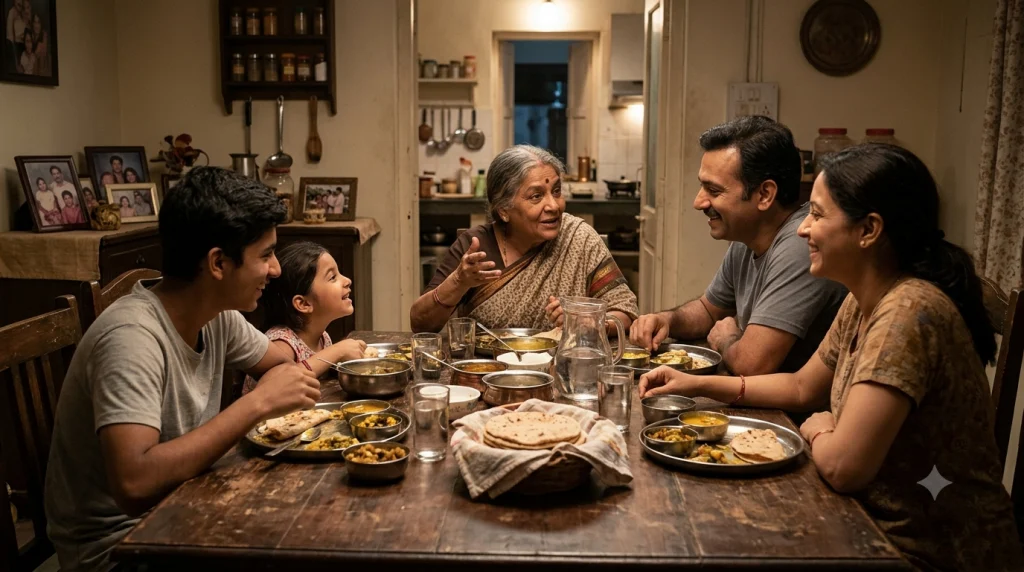
There was a time when dinner was not considered complete until everyone had gathered around the table. Someone would ask how the day had gone, children would share stories from school, parents would discuss something that happened at work, and grandparents would add their own experiences to the conversation. Sometimes, someone would arrive late and hear the familiar reminder: “We were waiting for you!”
The food was important, but so was the company.
Today, that familiar picture is changing. In many homes, family members eat at different times. One person is busy with work, another has an online meeting, children have their own schedules, and someone may prefer eating while watching television or scrolling through a mobile phone.
The kitchen may still be busy and food may still be prepared at home, but the family dining table is no longer the meeting place it once was.
The question is not simply why families have stopped eating together. It is what we might be losing when one of the easiest opportunities to connect with one another gradually disappears.
More Than a Place to Eat
For generations, the dining table served a purpose beyond food. It was an informal family meeting place where everyday life unfolded.
Children learnt about the experiences of older family members. Parents discovered what was happening in their children’s lives through ordinary conversations. Grandparents shared memories, family stories and lessons that might never have been recorded anywhere.
Even small discussions mattered. A child talking about a school competition, someone sharing an interesting news story or a family member discussing weekend plans helped everyone feel included.
Of course, not every family meal was peaceful or memorable. There were arguments between siblings, disagreements about food and uncomfortable silences. The past was not perfect. But shared meals created opportunities for people to talk, listen and understand one another.
Sometimes, the most important conversations happened without anyone planning them.
When Everyone Lives on a Different Schedule
Modern life has changed the way families organise their days. Parents may work long hours, children attend classes and extracurricular activities, and young adults may have demanding professional schedules. In many homes, people return at different times.
Nuclear families, long commutes, shift work and changing work patterns have also made it difficult to follow a common meal schedule.
Technology has added another dimension to this change. A family may be sitting around the same table, yet each person could be mentally occupied with a different world. One is replying to messages, another is watching videos, while someone else is following news updates.
They are physically together, but not necessarily sharing the moment.
Eating separately is not automatically a sign of a distant family. There are practical reasons why people cannot always sit together. The concern is when opportunities to spend meaningful time together become increasingly rare.
What Does Research Tell Us?
The importance of family mealtimes is not based only on nostalgia. Researchers have also examined their connection with children’s health and well-being.
A 2023 umbrella review published in the journal Nutrients brought together findings from 41 earlier systematic reviews. It found that more frequent family meals were associated with several positive outcomes for children and teenagers, including healthier eating habits, better mental well-being and improved academic outcomes.
However, this does not mean that simply sitting together guarantees a happy family. The atmosphere matters too. A meal filled with arguments, pressure or uncomfortable silence may not create the connection people expect.
What makes a shared meal valuable is the opportunity to communicate in a relaxed and welcoming environment.
The Stories We May Stop Hearing
One of the less noticed losses of separate mealtimes is the disappearance of everyday family stories.
A grandparent may have fascinating memories of growing up in another town. A parent may have an interesting story about a first job. A child may have a funny experience from school. These stories often emerge naturally during ordinary conversations.
When family members spend less time together, such exchanges may become less frequent. Younger generations may know less about their family’s experiences, traditions and history.
The dining table was, in many ways, an informal classroom. It passed knowledge, values and memories from one generation to another without lessons, textbooks or formal teaching.
Bringing Back the Joy of Eating Together
Perhaps the answer is not to return to an older lifestyle or insist that everyone must sit together for every meal. Modern families have different routines, responsibilities and needs.
A more realistic beginning could be to share one meal whenever possible. It could be breakfast on a Sunday, dinner on a particular weekday or lunch when everyone is at home.
Keeping phones aside for a little while, allowing children to speak freely and making space for everyone’s experiences can help make these moments meaningful.
The meal does not have to be elaborate. It does not even have to be prepared at home. What matters is the willingness to spend time together.
A family dining table may appear to be an ordinary piece of furniture, but the memories created around it can last for years.
Children may eventually forget what was served for dinner, but they may remember the laughter, conversations, familiar voices and stories that accompanied those meals.
Because a family does not become closer simply by eating the same food. It becomes closer when people make time to share their lives with one another.