









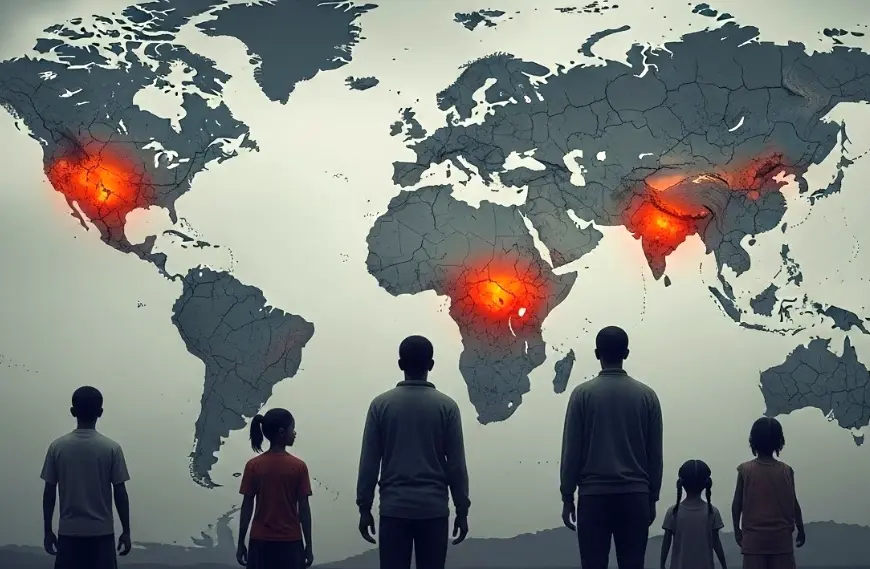
Happiness is no longer treated as some vague, feel-good idea. It is now measured, tracked and studied in detail. Each year, the World Happiness Report looks closely at how people actually experience their lives, using indicators such as income security, social support, life expectancy, freedom of choice, trust in institutions and levels of corruption.
So while Nordic countries often sit comfortably at the top of these rankings, the unhappiest countries in the world tell a very different story. Look closely, and you will see a pattern. These nations are usually dealing with conflict, economic collapse, political instability, weak public services and restricted personal freedoms. The thing is, together they show where global development has stalled and, honestly, where humanitarian challenges remain most severe.
Below is a closer look at ten countries that consistently find themselves at the bottom of global happiness tables, and why daily life remains such a struggle for millions.
Afghanistan – Ongoing crisis and restricted freedoms
Afghanistan remains the least happy country in the world. Years of conflict, economic isolation and political uncertainty have stretched public services to breaking point. Restrictions on education, employment and movement, especially for women and girls, have dramatically reduced personal freedoms. Food insecurity, unemployment and limited access to healthcare are not occasional problems here; they define everyday survival.
Sierra Leone – Poverty despite post-war progress
To be fair, Sierra Leone has made progress since the end of its civil war. But the reality on the ground is still harsh. Widespread poverty persists, and many communities lack reliable access to clean water, electricity and healthcare. Weak infrastructure, unemployment and corruption continue to undermine trust in institutions, keeping overall life satisfaction low.
Lebanon – Economic collapse and public disillusionment
Lebanon is living through one of the most severe economic collapses in modern history. Hyperinflation has wiped out savings, the currency has lost most of its value, and political deadlock shows little sign of ending. Fuel, electricity and medicines are often in short supply. If we are being real, these daily hardships have pushed Lebanon firmly into the list of the unhappiest countries in the world.
Malawi – Climate shocks and rural vulnerability
Malawi’s economy depends heavily on agriculture, which means it is extremely vulnerable to droughts and erratic rainfall. Climate shocks regularly threaten food supplies, and after a while, the impact becomes exhausting for communities. Limited access to education, healthcare and stable employment continues to weigh on life satisfaction, particularly in rural areas.
Zimbabwe – Inflation and institutional mistrust
Zimbabwe’s long-running economic crisis has left households grappling with high inflation, unstable currency systems and widespread unemployment. Shortages of basic goods and medicines are common. But then there’s another issue: declining trust in state institutions. Political tensions and uncertainty have created a deep sense of pessimism about the future.
Botswana – Inequality beneath stability
Botswana is often seen as relatively stable, but happiness scores reveal a more complicated picture. Economic growth driven by diamond mining has not been evenly shared. Youth unemployment remains a serious concern, and income inequality is hard to ignore, especially outside urban centres. Clearly, stability alone does not guarantee well-being.
Democratic Republic of the Congo – Resource wealth, human poverty
Believe it or not, the Democratic Republic of the Congo is one of the world’s most resource-rich countries. Yet it ranks among the unhappiest. Decades of conflict, displacement and weak governance have left millions without reliable access to clean water, electricity or healthcare. Corruption and insecurity prevent economic gains from reaching ordinary people, and that’s the truth.
Yemen – A prolonged humanitarian emergency
Yemen’s ongoing conflict has created one of the worst humanitarian crises on the planet. Widespread hunger, recurring disease outbreaks and collapsed infrastructure shape daily life. Many families have been forced to flee their homes, healthcare systems are overwhelmed, and access to clean water is critically limited. In that moment, survival becomes the only priority.
Comoros – Isolation and limited opportunity
This small island nation struggles with economic fragility and political uncertainty. Heavy reliance on imports makes everyday goods expensive, while unemployment and underdeveloped healthcare services continue to strain households. Geographic isolation only adds to the challenge, leaving many with limited opportunities to improve their circumstances.
Lesotho – Health challenges and economic dependence
Lesotho faces persistent poverty, harsh winters and one of the highest HIV/AIDS prevalence rates in the world. Employment opportunities are scarce, and many families rely on remittances from workers abroad. Access to healthcare and education remains uneven, especially in remote mountainous regions, and eventually, that lack of support takes a toll.
What these rankings reveal
The unhappiest countries in the world are not defined by one single problem. Instead, they reflect a mix of conflict, economic insecurity, governance failures and deep social inequality. Think about it: happiness is closely tied to stability, dignity and opportunity. For millions across the globe, those basics are still painfully out of reach, and that’s when it really clicks.
Subscribe Deshwale on YouTube


