



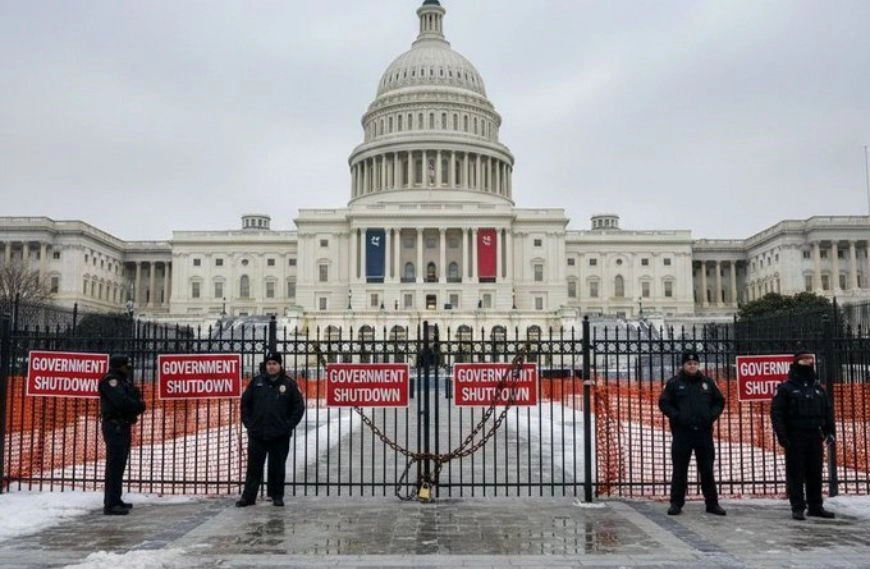
The United States government entered a partial shutdown early on January 31, 2026, after Congress failed to approve the federal budget before the midnight funding deadline. Lawmakers in both the Senate and the House of Representatives were working to pass spending bills, but disagreements over key issues prevented a final deal from being completed on time.
In the final hours before the deadline, the Senate passed a funding package that included a short extension for the Department of Homeland Security. This was meant to give lawmakers more time to settle debates linked to immigration and border enforcement policies. However, the House of Representatives did not vote on the bill before funding expired, which triggered the shutdown.
A partial shutdown does not mean that the entire government stops working. Essential services continue to operate. Social Security payments, Medicare benefits, and other mandatory programmes are expected to continue without interruption. These services are funded separately and are protected from immediate shutdown impacts.
However, several federal departments that depend on annual budget approval are affected. Agencies such as the Departments of State, Transportation, Labor, Health and Human Services, and parts of the Treasury Department may reduce operations. Many government employees in these departments could be placed on temporary unpaid leave, also known as furlough, until funding is restored.
Political disagreements played a major role in the funding delay. Lawmakers clashed over immigration enforcement funding and accountability measures. These disputes made it difficult to reach a compromise, especially on the budget for homeland security, which became the main obstacle in passing the wider spending package.
Despite the disruption, political leaders have suggested that the shutdown may not last long. The House is expected to return to session soon to vote on the funding package that has already cleared the Senate. Once both chambers approve the bill and the President signs it into law, normal government operations can resume.
For now, federal agencies are following shutdown procedures while millions of Americans wait to see how long the situation will continue. The event once again highlights how budget deadlocks in Washington can directly affect government services and public administration across the country
Subscribe Deshwale on YouTube
