









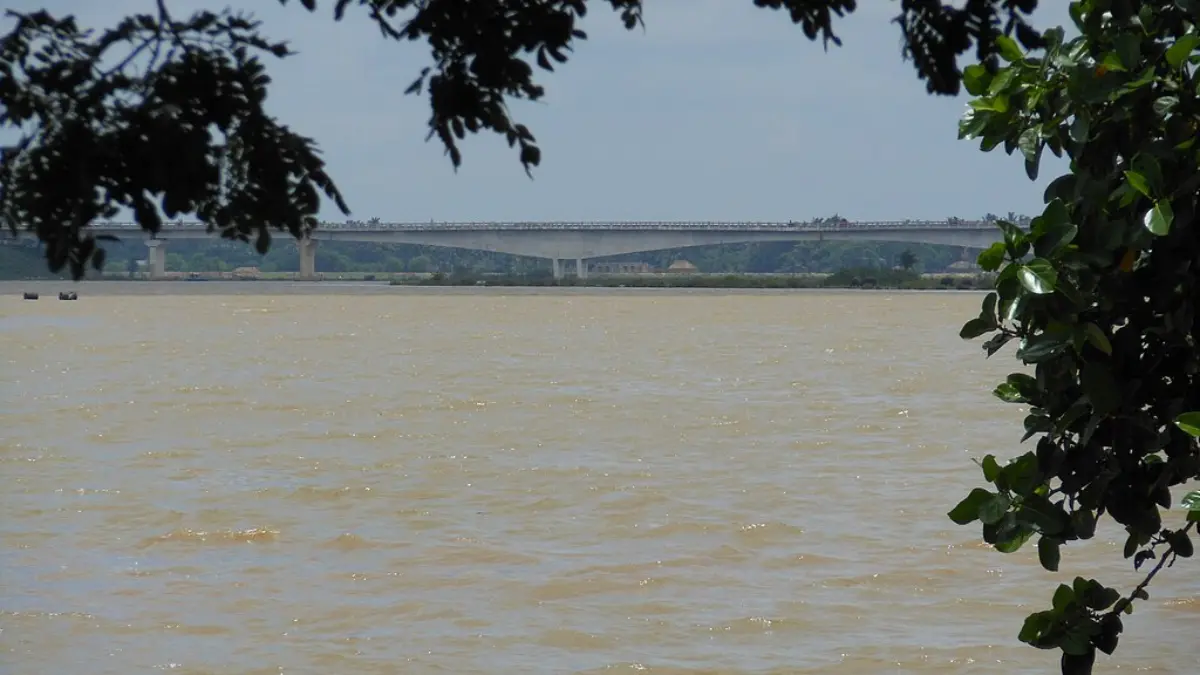
The Vaitarani River, a fearsome stream in Hindu mythology, separates the living from Naraka, Yama’s realm. Sinners face a river of blood and torment, while the virtuous see a nectar-like passage. Linked to Odisha’s Baitarani River, it symbolises karma’s unyielding justice. Rituals like the Vaitarani Vrata, involving cow donation, aid souls in crossing. Revered by Hindus and Sikhs, this river blends dread and divinity, teaching the timeless value of righteous living.
In the twilight between life and death, there flows a river both feared and revered: the Vaitarani. In Hindu mythology, this spectral stream marks the boundary between the mortal world and Naraka, the realm of Yama, the god of death. For souls departing this earthly plane, crossing the Vaitarani is no mere passage. It is a journey laden with consequence, where the weight of one’s deeds determines the river’s very nature. To the sinful, it churns with blood and pus, teeming with horrors that rend the spirit. To the virtuous, it shimmers as a gentle stream of nectar, guiding them to peace. This river, steeped in ancient texts and revered by Hindus and Sikhs alike, is more than a myth. It is a mirror of karma, reflecting the eternal dance of action and consequence.
Picture a soul standing on the river’s edge, trembling at its sight. The Garuda Purana paints a chilling portrait: “This river is very frightening and when seen inspires misery. Even hearing an account of this river arouses fear. It is a hundred yojanas in width and it does not contain water. It is a river full of blood and pus with heaps of bones on its banks and mud of blood and flesh.” For those who lived unrighteously, the Vaitarani is a nightmare manifest. Crocodiles snap, vultures swoop, and flames leap from its seething surface. Yet for those who walked the path of dharma, the river transforms. Its waters become clear and soothing, offering safe passage to the afterlife. This duality, rooted in the principle of karma, makes the Vaitarani a potent symbol of moral accountability, a concept that resonates deeply with Indian spiritual traditions.
The river’s origins are as captivating as its imagery. The Padma Purana reveals its name: Vaitarani, from Vai (truly) and tarini (saving), signifying its role in delivering souls from sin. Legend tells of Parashurama, the warrior-sage, whose relentless penance moved Lord Shiva to bring the Vaitarani from Patala, the underworld, to Earth. This divine act, recounted in the Vaitarani Mahatmya, linked the mythical river to its physical counterpart, the Baitarani River in Odisha. Emerging from the Gonasika hills, where water flows from a stone resembling a cow’s nostril, the Baitarani is a sacred site. Known as Guptaganga for its brief underground course, it draws pilgrims who believe that bathing in its waters cleanses sins and shields them from Yama’s judgement.

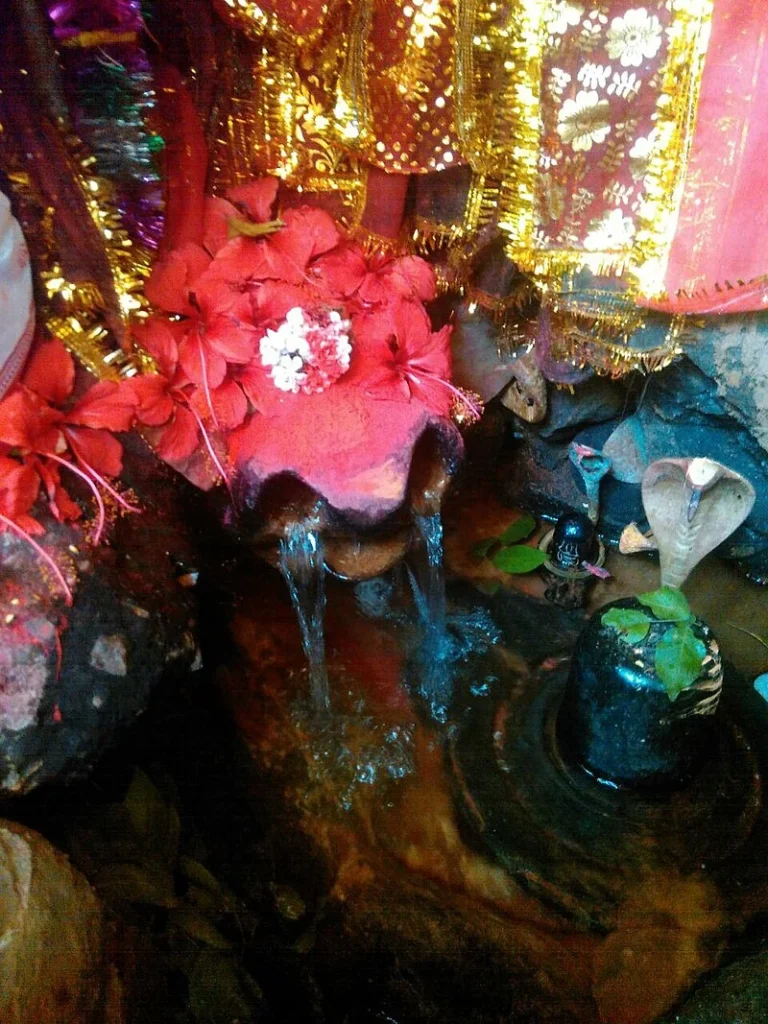
Source – Wikipedia
The Baitarani River, stretching 360 kilometres to the Bay of Bengal, is more than a geographical marvel. The Skanda Purana’s Harihareshvara Mahatmya declares that those who bathe in its waters are forever freed from Yama’s torment. This belief transforms the river into a spiritual nexus, where the physical and metaphysical converge. Temples like the Brahmeswar Mahadev at Gonasika stand as testaments to its sanctity, drawing devotees who seek purification. The river’s role in Odisha’s “Hexadeltaic region,” alongside the Mahanadi and Brahmani, underscores its earthly significance, irrigating vast farmlands and sustaining communities. Yet its mythological weight elevates it beyond mere utility.
Rituals surrounding the Vaitarani are as vivid as its descriptions. The Vaitarani Vrata, observed on the eleventh day of the dark phase of Margashirsha, is a solemn practice where devotees worship and donate a cow, believed to ferry the soul across the dreaded river. The Garuda Purana explains that this “Vaitarani cow” ensures a boat for the deceased, sparing them the agony of wading through blood and fire. Without such offerings, sinners face a gruesome fate, skewered by Yama’s messengers and dragged across like fish on a hook. This ritual, deeply embedded in Hindu tradition, reflects the faith that righteous acts in life can ease the soul’s journey beyond.
The Mahabharata, in its Tirtha-yatra Parva, further enriches the Vaitarani’s lore. It describes the river as a sacred tirtha where even the god of virtue performed rites, its waters capable of destroying every sin. Bathing in the Vaitarani, it says, purifies the soul, granting the highest spiritual state. The epic also ties it to the physical Baitarani, noting its path through the Kalinga lands to the Bay of Bengal. This connection grounds the myth in a tangible landscape, making the Vaitarani a bridge between the seen and unseen worlds.
Beyond Hinduism, the Vaitarani’s echo resounds in Sikhism. The Shri Guru Granth Sahib, on Ang 702, speaks of a “terrible river” that souls must cross:
“I do not know anything about spiritual wisdom, meditation or karma, and my way of life is not clean and pure. Please attach me to the hem of the robe of the Saadh Sangat, the Company of the Holy; help me to cross over the terrible river.”
This verse, attributed to Guru Arjan Dev, portrays the river as a spiritual challenge, surmountable through devotion and community. Similarly, on Ang 1026, the imagery of a fiery river of poisonous flames evokes the Vaitarani’s dread, urging Sikhs to seek divine guidance to navigate the afterlife’s trials.
In Buddhism, the Vaitarani appears as Vaitaraṇī Nadī, a caustic river in the hell realm, flowing past the sword-leaved forest of Asipattavana. Pali texts describe it as a place of torment for those guilty of grave sins such as abortion or oppressing the weak. This cross-cultural presence underscores the river’s universal resonance, akin to the River Styx in Greek mythology, where souls pay Charon to cross into Hades. The Vaitarani, however, is unique in its karmic framework. The river’s form shifts based on one’s deeds, not a fixed toll.
The Vaitarani’s imagery has seeped into Indian consciousness, though specific depictions in art or modern literature are scarce. Its vivid descriptions in scriptures likely inspired oral traditions and temple iconography, where scenes of Yama’s realm might adorn sacred spaces. In Odisha, the Baitarani’s banks host festivals and rituals, weaving the river into the cultural fabric. Its mention in the Ramayana, where Ravana crosses the bloody Vaitarani in his pushpaka vimana, adds a narrative flair, hinting at its role in epic storytelling.
The river’s symbolism transcends its mythological roots. It embodies the inexorable law of karma, where every action shapes one’s destiny. As the Garuda Purana warns, the Vaitarani is impassable for the sinful. Its horrors serve as a stark reminder to live righteously. For Hindus and Sikhs, it is a call to align with dharma, to seek purity through devotion and good deeds. The physical Baitarani, with its serene yet sacred flow, invites pilgrims to reflect on this truth. Its waters form a tangible link to the divine.
The Vaitarani’s legacy endures in its ability to captivate and instruct. It challenges believers to confront their mortality and to weigh their actions against the eternal. Whether as a river of torment or salvation, it remains a powerful metaphor, urging all to tread the path of virtue. In a world of fleeting pleasures, the Vaitarani stands as a timeless reminder. The journey beyond life is shaped by the choices made within it.


