









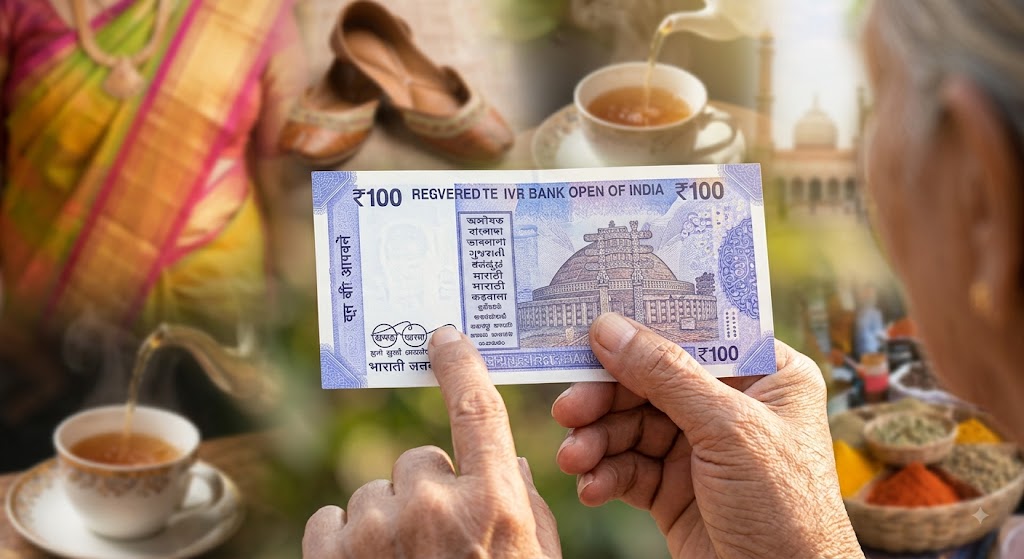
Take out an Indian currency note and look closely. You will see numbers, symbols and words printed in several scripts. For many of us, this is something we have seen since childhood, but rarely stopped to ask why. Why does a single ₹10, ₹100 or ₹500 note carry so many languages?
The answer is closely connected to what makes India unique: its diversity.
India is home to hundreds of languages and dialects, with 22 languages recognised in the Eighth Schedule of the Constitution. From Hindi and Bengali to Tamil, Telugu, Marathi, Gujarati, Kannada, Malayalam and Punjabi, every language carries the history and identity of millions of people.
The multilingual design of Indian currency is not simply about decoration. It is a way of recognising this diversity in something that travels through almost every corner of the country. A currency note can pass from a farmer in a village to a shopkeeper in a city, from a student to a traveller, or from one state to another. Seeing multiple Indian languages on it is a small reminder that all these different communities are part of the same country.
There is also a practical reason behind it. The denomination of the note is written in the language panel using 15 languages, apart from Hindi and English, which appear prominently on the front of the note. This language panel helps make the currency more accessible across different linguistic regions.
Interestingly, the languages are not arranged randomly. They appear in alphabetical order according to the scripts used by the Reserve Bank of India. The panel includes languages such as Assamese, Bengali, Gujarati, Kannada, Kashmiri, Konkani, Malayalam, Marathi, Nepali, Odia, Punjabi, Sanskrit, Tamil, Telugu and Urdu.
Think about what that means. A small piece of paper in your wallet quietly carries a representation of India’s linguistic landscape. It does not belong to one state or one language. It belongs to everyone.
Indian currency therefore tells a story beyond money. Its notes reflect an idea that is deeply woven into the country’s identity: unity does not necessarily mean everyone speaking the same language, following the same traditions or living the same way.
Sometimes, diversity is simply about making space for everyone.
And perhaps that is why the many languages on an Indian currency note feel so natural. We see them every day, but behind those scripts is a larger message: India may speak in many voices, but they all share the same currency, the same country and a common sense of belonging.
Subscribe Deshwale on YouTube


