



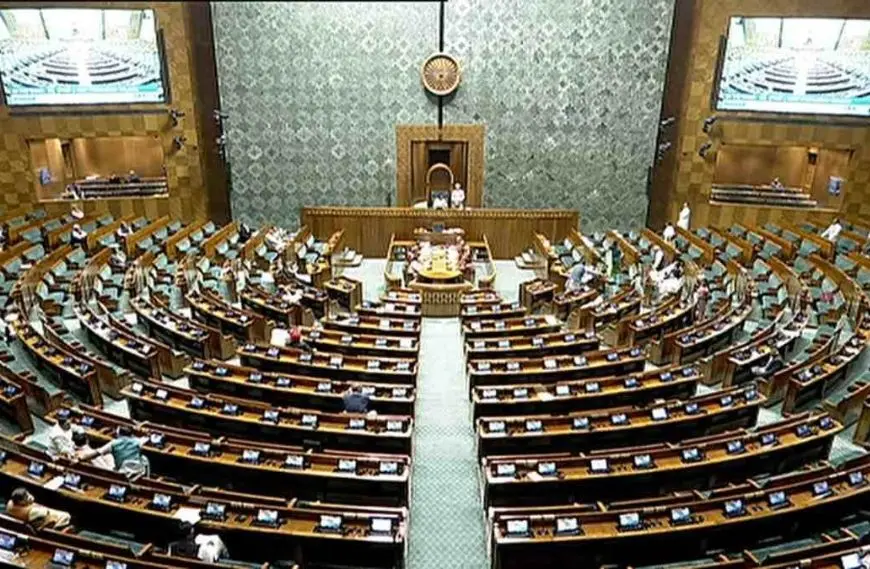
Parliament’s Winter Session opened this morning under a cloud of political tension, with the Opposition signalling its intention to challenge the government on multiple fronts, most notably the SIR programme and the recent deaths of Booth Level Officers. What is usually a procedural start to the legislative calendar has turned into a battle of narratives, with both sides framing the weeks ahead as a test of democratic accountability.
The ruling NDA has outlined an ambitious legislative slate for the next 15 sittings, including 14 Bills that touch on nuclear regulation, higher education restructuring and new taxation on tobacco and related goods. Ministers have stressed that the government is prepared to discuss ‘any issue as per rules’ and urged cooperation to ensure a productive session. Yet Opposition leaders accuse the government of shortening the duration deliberately and of attempting to dilute scrutiny, echoing public criticism that Parliament is becoming more ceremonial than deliberative.
For the Opposition block, Congress, the DMK, the Left and others, the Winter Session centres on three themes, transparency in electoral administration, safeguarding federalism and national security accountability. All three converge in their demand for a full debate on the Special Intensive Revision of electoral rolls, widely known as SIR, and what they describe as the human cost behind its implementation. Several parties argue that the pressure placed on BLOs during the SIR campaign contributed to recent suicides, turning the issue into an emotive flashpoint now being termed ISIR, BLO suicides in Opposition’s arsenal across party discussions.
The government maintains that SIR is a critical step in strengthening electoral accuracy, reducing duplication and fortifying the democratic system. The Opposition, however, contends that there is inadequate oversight and transparency on how the SIR directives were applied across states. Sources indicate that at least one Opposition strategy paper lists gaps in safety protocols, staffing and grievance mechanisms during the SIR rollout. BJP leaders have countered that allegations are being weaponised ahead of 2026 state elections, insisting that any administrative shortcomings are being examined internally.
Prime Minister Narendra Modi, addressing the media outside Parliament, warned against what he labelled “politics of disruption”. In a pointed message, he said “Parliament should not be used as a stage for pre-election theatrics”, emphasising that citizens expect delivery rather than drama. He went further, claiming that leaders facing anti-incumbency in their respective states often choose to ‘vent’ in Parliament rather than engage with voters on the ground.
The Opposition has framed this rhetoric as an attempt to delegitimise dissent. Senior Congress leaders, including Sonia Gandhi, Mallikarjun Kharge and Rahul Gandhi, met on Sunday night and again today to finalise the party’s intervention plans. Sources suggest that the parliamentary strategy allocates speaking time across benches to ensure that the demands for discussions on SIR, national security following the Delhi blast, inflation, unemployment and federal tensions are raised systematically rather than sporadically.
Debate around national security is expected to accelerate mid-week, as the Delhi blast, which left 15 dead, remains under investigation. Opposition MPs argue that security preparedness and intelligence coordination deserve thorough discussion, especially before the festive and election seasons. The government says it welcomes structured debate but rejects what it views as attempts to directly link national security discourse to the SIR controversy.
Another symbolic flashpoint may arise from the government’s plan to dedicate parliamentary time to a commemorative discussion on Vande Mataram. While the ruling alliance wants the conversation to serve as a unifying reflection, several Opposition parties view the timing as a distraction from substantive legislative oversight. With only 15 sittings scheduled, Trinamool Congress has publicly asked whether ceremonial discussions should be prioritised over debates on SIR and economic issues.
Outside the ideological clashes, the session is likely to focus briefly on economic reforms. Finance Ministry officials have privately signalled that the government wants to project India as a resilient economy facing global uncertainty, while the Opposition argues that joblessness, price instability and withheld state funds deserve urgent scrutiny. The Budget Session, tentatively scheduled for early next year, may become the arena for the more detailed fiscal confrontation.
Beyond the legislative chamber, analysts expect the Winter Session to serve as a precursor to campaign messaging. BJP allies view successful tabling of the 14 Bills as proof of continuity and authority post their victory in Bihar, while the Opposition believes that persistent pressure over SIR, electoral accountability and governance will help shape the political narrative heading toward state elections.
For now, the clash appears inevitable, both sides convinced the other is eroding democratic norms. With only 15 sittings, the margin for compromise is narrow and the stakes appear high. Whether the government can push through its legislative priorities while addressing demands for debate on SIR will determine how this Winter Session is ultimately judged: as a productive period of delivery, or one more chapter in an increasingly oppositional Parliament.
Subscribe Deshwale on YouTube
