



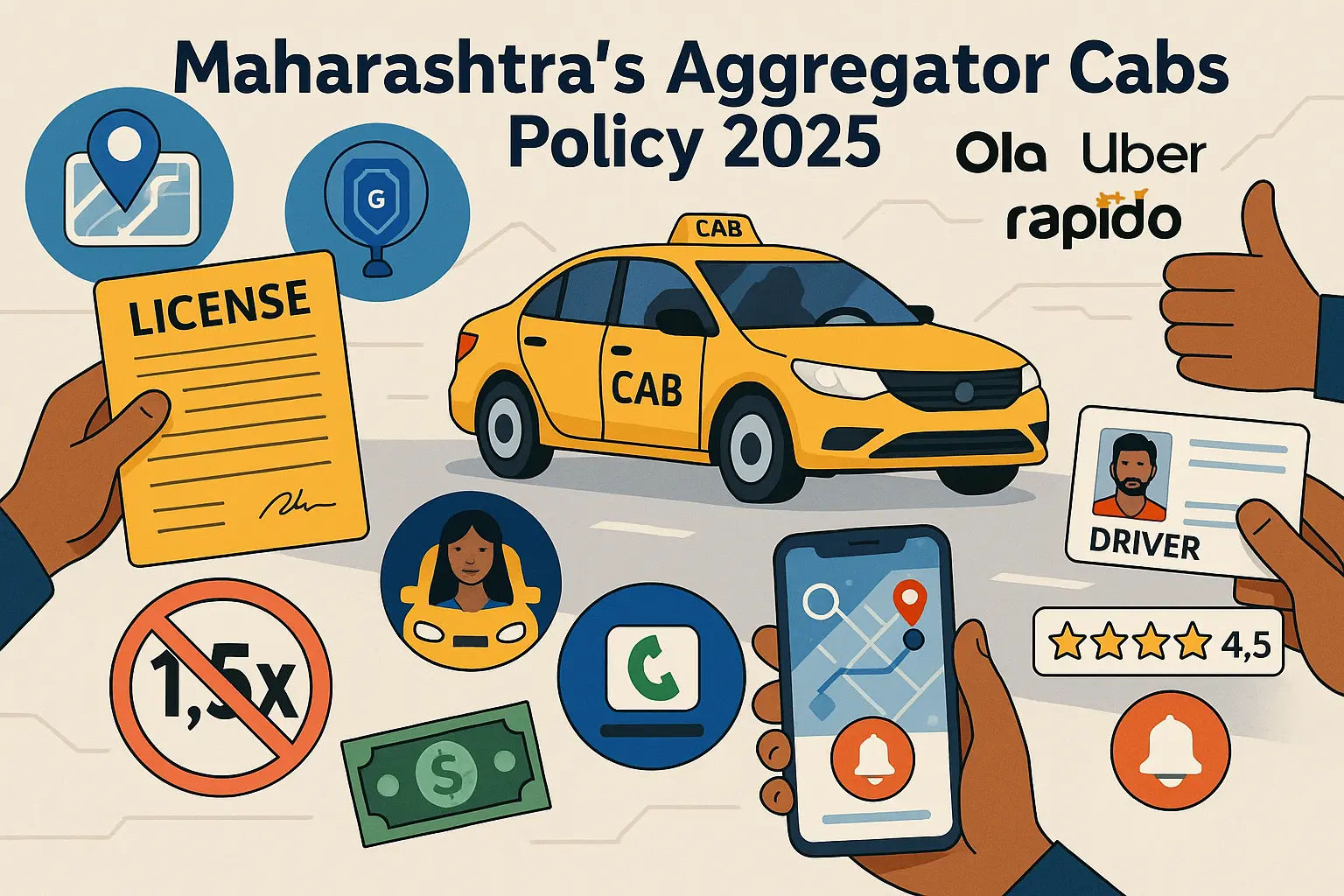
The state government has introduced this policy to tackle a growing number of complaints from passengers, especially women, about ride cancellations, unsafe journeys, and unfair pricing. Now, aggregators like Ola, Uber, and Rapido must follow strict new guidelines if they want to continue operating in Maharashtra.
Clear Rules, Safer Rides
The new rules are not just about fines. They are about raising the bar across the board. Under this policy, cab companies must:
- Obtain a state licence to operate
- Install GPS tracking in every vehicle
- Conduct police verification and background checks for drivers
- Introduce a visible emergency button in the app
- Ensure women-focused ride-sharing options
- Limit surge pricing to a maximum of 1.5 times the regular fare
Also, drivers are expected to maintain at least 80% passenger satisfaction based on feedback. If they don’t, they risk being removed from service.
No More Free Passes for Cancellations
Under the new policy, if a ride is cancelled by the driver for no valid reason, the passenger will not just be left stranded anymore. The app company will have to compensate the user. This is a major step toward making the system more passenger-friendly and responsible.
Drivers to Get a Fairer Deal Too
Not all the rules are just for riders. The government has ensured drivers also benefit from the updated policy. For every fare, 80% will now go directly to the driver. Aggregators are also required to provide proper training, offer welfare support, and ensure that cabs are maintained in safe, working condition.
Tech and Transparency Go Hand in Hand
Privacy and data protection are also a key part of the policy. App-based operators must now follow India’s IT laws on cybersecurity and user data safety. They also need to set up local offices in the state to improve response and transparency.
The policy was shaped by a Supreme Court directive and a panel led by retired IAS officer Sudhir Kumar Srivastava. The aim is to eliminate the regulatory vacuum in which app cabs had been operating and ensure both passengers and drivers get a fair and safe deal.
The state’s Transport Department will soon roll out further detailed guidelines, but for now, the message is clear – no more shortcuts, no more excuses.
