



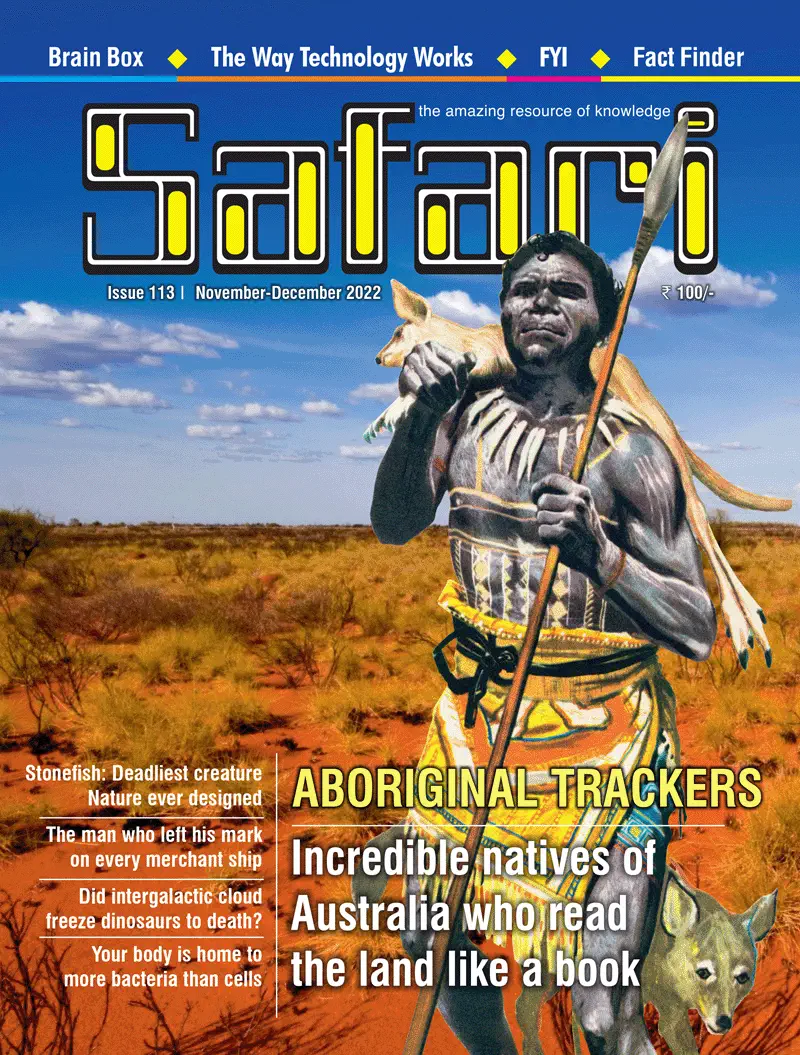
The word—Safari—evokes a universe of wonder. Though an English word, it became synonymous with Gujarati intellectual curiosity, gifting the language a periodical like no other. Unlike magazines discarded after reading, Safari was preserved, stacked in home libraries like heirlooms. To meet a Gujarati who hasn’t read Safari is to meet someone unknowingly deprived of a cultural treasure.
For decades, Safari (and the earlier Scope and Flash magazine too) stood tall among India’s finest polyglot magazines, its content so exceptional it could rival any pan Indian publication. But time and digital tides wait for no one. In May 2025, its 368th print edition marked the end of an era. Henceforth, Safari will thrive digitally—a bold reinvention.

Nagendra Vijay, who began writing at 14 and authored 18+ books, wielded a pen that turned complexity into charm. His genius lay in making the obscure enthralling—whether explaining bird flight mechanics or unraveling ancient Indian mysteries.
Reflecting on his long journey in publishing, he shares: “Safari’s soul remains, but its body changes. The digital avatar will still deliver deep, immersive writing—just in a new form.” Amid social media buzz about the print closure, he reassures, “I’m not bowing out. The playbook has just been updated.”
Gujarati publications rarely delve into literature, science, or history—partly because Gujaratis, unlike Marathi or Bengali readers, lack fierce linguistic pride. Today, most periodicals also struggle to survive. Yet Safari, alongside the ad-free Chandan magazine, carved a niche. While mainstream magazines like Chitralekha or Abhiyan catered to masses, Safari made intellect irresistible.
Harshal Pushkarna, Nagendra’s son and collaborator (between 1989–2018), recalls Safari’s gritty early days: “We were debt-ridden, often unable to pay staff.” His first article in the 13th issue marked his rise. By Issue 28, grassroots efforts—spearheaded by educators like Ravjibhai Savaliya and Jay Vasavada—propelled subscriptions. At its peak, circulation hit 75,000.
Harshal’s 2008 English edition experiment was short-lived (“Father worried it diverted focus”), as was his dream of multilingual editions. His poignant Facebook post captures this journey—a rare emotional ode to Safari’s trials and triumphs.
Published by Ahmedabad’s Harshal Publications, Safari blended science, history, and storytelling with quizzes, military tales, and whimsical columns. It wasn’t just informative; it was fun. Children, adults, and elders alike found something to cherish—a rarity in regional media.
The print farewell, driven by declining readership and digital dominance, is bittersweet. Yet the digital edition (on Magzter and Harshal’s website) ensures the legacy endures. As Deshwale, we salute Nagendra Vijay and team, wishing Safari’s next chapter dazzles as brightly as its past.
