



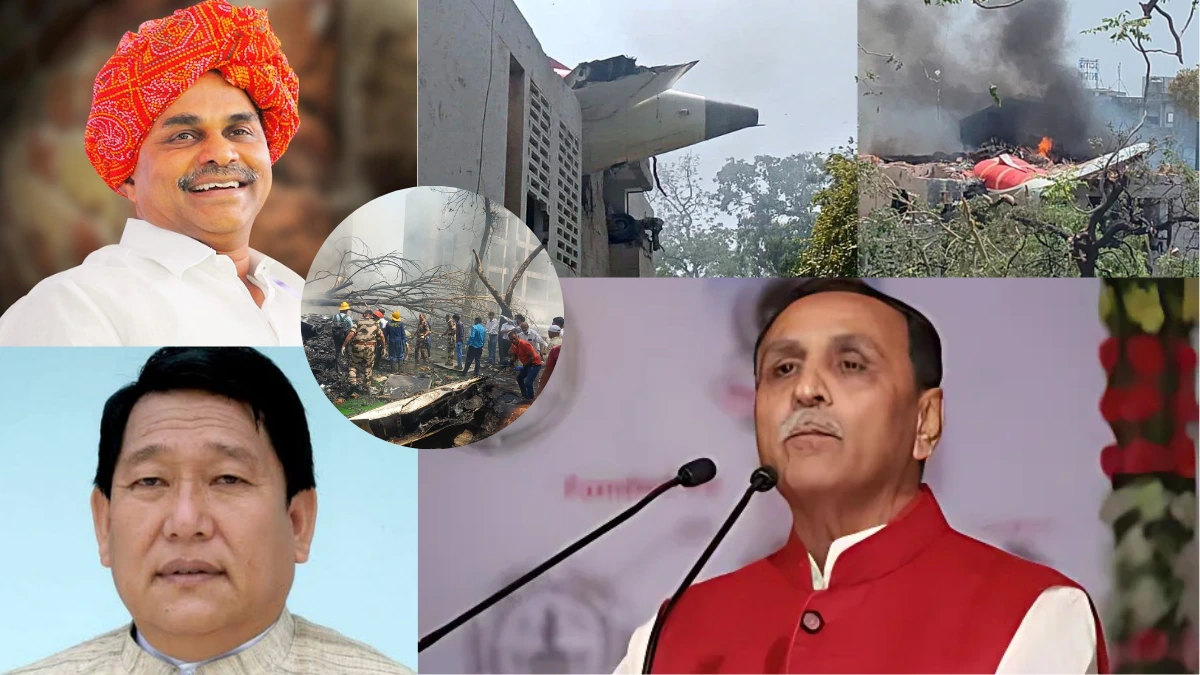
The sky is a canvas of dreams for most Indians. It promises freedom, progress, and connection. Yet, for some, it has been a silent witness to tragedy. The roar of an aeroplane engine, the whir of a helicopter blade, these sounds have carried India’s leaders to their destinies, and sometimes, to their doom. The loss of chief ministers in plane crashes is not just a statistic. It is a haunting narrative woven into India’s political tapestry. This story explores not the crashes themselves, but the deeper echoes they leave behind. Why do these tragedies linger in our collective memory? How do they shape our trust in leadership and technology? And what do they reveal about India’s relentless pursuit of progress?
Picture a small village in Andhra Pradesh. The year is 2009. Farmers pause their work, gazing skyward. A helicopter carrying Chief Minister Y.S. Rajasekhara Reddy has vanished. For 27 hours, hope wrestles with dread. The news finally breaks: the chopper crashed in the dense Nallamala forest. The state mourns. YSR, as he was fondly called, was more than a politician. He was a symbol of aspiration for millions. His death was not just a personal loss. It shook the foundations of trust in air travel for many. The Bell 430 helicopter, a marvel of modern engineering, became a reminder of human fragility. This was not an isolated incident. Other chief ministers have met similar fates, each crash leaving scars on India’s psyche.
Consider Dorjee Khandu, Arunachal Pradesh’s chief minister, lost in 2011. His helicopter vanished near the Sela Pass, a rugged frontier at 13,000 feet. For five days, the nation held its breath. The wreckage was found, but the questions lingered. Was it the treacherous terrain? Pilot error? Or the aging Pawan Hans chopper? The tragedy stirred unease in the Northeast, where air travel is a lifeline. Remote regions depend on helicopters to connect them to the world. Khandu’s death highlighted a grim reality: progress comes at a cost. The skies that promise connectivity also demand sacrifice.
Now, imagine Gujarat in 2025. Former Chief Minister Vijay Rupani boards an Air India flight in Ahmedabad. Minutes after takeoff, the Boeing 787 Dreamliner crashes. The nation reels. Rupani, a steady hand during his tenure from 2016 to 2021, becomes the second Gujarat chief minister to die in an air crash. The first was Balwantrai Mehta, shot down by a Pakistani jet in 1965 during the Indo-Pak war. Six decades apart, these tragedies bookend a narrative of ambition and vulnerability. Air travel, a symbol of India’s global rise, also mirrors its fragility. Why do these incidents resonate so deeply? They expose the paradox of progress. We soar higher, but the fall is steeper.
These crashes are not mere accidents. They are mirrors reflecting India’s complex relationship with technology. In the 1960s, air travel was a privilege of the elite. Leaders like Mehta flew in small, often poorly maintained aircraft. The risks were high, but the nation was young, hungry for progress. Today, India boasts one of the world’s fastest-growing aviation markets. Yet, the spectre of disaster persists. The 2009 YSR crash report cited bad weather and pilot error. Khandu’s crash pointed to mechanical issues. Rupani’s tragedy, still under investigation, suggests a cascade of failures. Each incident chips away at public confidence. If chief ministers, guarded by protocol and privilege, are not safe, what hope is there for ordinary citizens?
The emotional toll is profound. When a chief minister dies, it is not just a political vacancy. It is a rupture in the social fabric. YSR’s death sparked protests and suicides among his supporters. His larger-than-life presence had woven him into Andhra’s identity. Khandu’s loss left Arunachal’s tribal communities grappling with uncertainty. Rupani’s death, fresh in our minds, has reignited debates about aviation safety. These leaders were not just administrators. They were fathers, sons, and symbols of hope. Their absence leaves voids that policies cannot fill. The grief is personal, yet universal. It binds us as a nation, reminding us of our shared vulnerability.
But there is another layer to this story. These tragedies expose India’s aviation challenges. The country has 153 airports, but only a fraction meet global safety standards. Helicopters, vital for remote areas, are often old and poorly maintained. A 2011 report by the Directorate General of Civil Aviation flagged inadequate training for pilots flying in hilly terrains. Little has changed. The Northeast, where Khandu perished, still relies on aging fleets. Weather forecasting, critical for safe flights, remains inconsistent in remote regions. These are not just technical issues. They are questions of priority. Why do we invest in gleaming airports but skimp on safety for the skies?
The crashes also reveal a cultural paradox. Indians revere technology as a path to progress. From Chandrayaan missions to UPI, we celebrate innovation. Yet, we often overlook the human element. Pilots, air traffic controllers, and maintenance crews work under immense pressure. Errors creep in. In YSR’s case, the pilots ignored weather warnings. In Khandu’s crash, the chopper was not fit for high-altitude flight. These are not isolated lapses. They reflect a system stretched thin by ambition. India’s aviation sector grows at 10% annually, but safety protocols lag behind. The result is a gamble with lives, even those of our leaders.
What can we learn from these tragedies? First, they demand accountability. Investigations often fizzle out, leaving families and citizens in the dark. The YSR crash report was criticised for its vagueness. Khandu’s inquiry raised more questions than answers. Rupani’s crash must not follow this pattern. Transparency is non-negotiable. Second, we need investment in safety. Modern weather systems, rigorous pilot training, and fleet upgrades are urgent. Third, we must rethink our relationship with progress. Growth is meaningless if it endangers lives. The skies should unite us, not claim our leaders.
These crashes also teach resilience. India has endured loss but pressed forward. After YSR, Andhra found new leadership. Arunachal rebuilt after Khandu. Gujarat will heal from Rupani’s loss. This is our strength. We mourn, but we march on. Yet, the scars remain. Each crash is a reminder to cherish life, to question systems, and to demand better. The skies are vast, but they are not invincible. Neither are we.
As the sun sets over Ahmedabad, families gather to mourn Vijay Rupani. In villages across Andhra and Arunachal, memories of YSR and Khandu linger. These leaders dared to soar, embodying India’s dreams. Their deaths challenge us to ground those dreams in safety and trust. The next time a helicopter whirs overhead, let it not carry fear. Let it carry hope. Let it remind us that progress is not just about reaching the skies. It is about returning safely to earth.
