



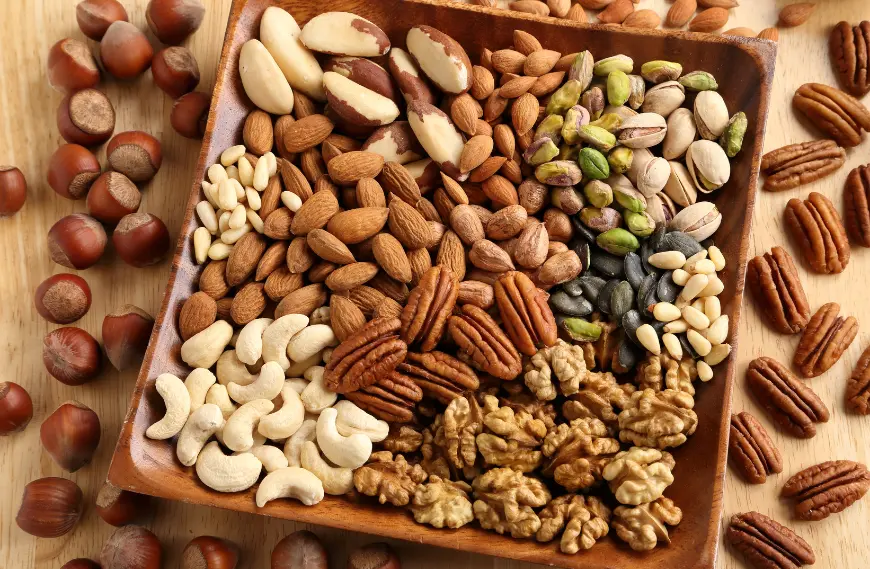
Nuts like almonds, walnuts, and pistachios are nutrient-dense gems offering healthy fats, protein, and fiber for optimal health, per a 2024 Nutrition Reviews study.
A 30-gram serving of almonds provides 7 grams of protein, 4 grams of fiber, and 50 percent of daily vitamin E, supporting heart health and skin with 160 calories, per USDA data. Regular intake 30 grams daily cuts heart disease risk by 20 percent, per a 2023 European Heart Journal meta-analysis of 30 studies.
Walnuts’ omega-3s reduce LDL cholesterol by 10 percent, benefiting 2 billion with high cholesterol, per WHO 2024. In India, almonds are a festive staple, though high costs limit rural use, per a 2022 FSSAI report.
Nuts’ antioxidants lower cancer risk by 8 percent, per a 2021 Cancer Research study, and stabilize blood sugar, aiding 537 million diabetics. Challenges include allergies affecting 1 percent of people, per a 2023 AAAAI report, and cost 15 dollars per kg in urban markets.
Environmentally, almond farming uses 15000 liters of water per kg, per a 2020 WWF study, though sustainable practices in Australia cut this by 20 percent. Culturally, nuts feature in Mediterranean and Middle Eastern diets, but X posts show 50 percent of low-income households find them pricey.
Accessibility issues persist, rural Asia lacks 30 percent of nut supply, per FAO 2023. Snacking on nuts or adding them to salads boosts health, making them a versatile, heart-protective food.
