



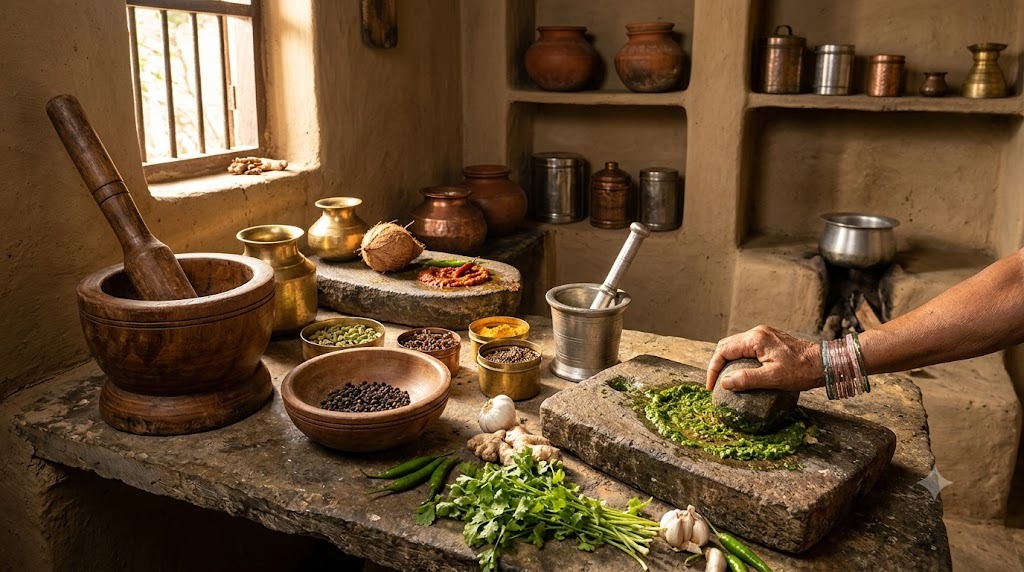
The aroma of freshly ground spices, the taste of homemade chutney and the familiar sound of something being pounded in the kitchen are memories that connect generations of Indian families. Long before mixer-grinders became everyday kitchen companions, simple tools made of stone and wood played an important role in preparing the food we grew up eating.
Think about the taste of freshly prepared coriander chutney, crushed garlic or a masala made from whole spices. In many Indian homes, preparing these ingredients once involved a flat stone, a small grinding tool and a little patience. These were ordinary kitchen activities, yet they were part of something bigger: the everyday traditions through which families prepared, shared and enjoyed their meals.
Across India, different communities developed their own kitchen tools according to local ingredients, cooking habits and available materials. Their names and designs varied, but their purpose was familiar: helping families bring out the flavours of everyday ingredients.
Sil-Batta: Where Homemade Chutneys Found Their Flavour
One of the most recognisable traditional kitchen tools is the sil-batta, also known as sil-nora in some regions. It consists of a flat stone called the sil and a smaller, elongated grinding stone called the batta.
Green chillies, garlic, ginger, coriander and other ingredients are placed on the flat surface and ground by moving the smaller stone back and forth. This method allows the cook to control the texture, making it useful for preparing chutneys, spice pastes and other mixtures.
For many families, the sil-batta was part of the familiar routine of preparing lunch or dinner. The fresh chutney made on it often accompanied a simple homemade meal, adding flavour to the dining table.
Okhli-Musli: The Rhythm of Traditional Cooking
The okhli-musli is another traditional kitchen companion. It generally consists of a deep bowl made of wood or stone and a heavy pounding stick known as the musli.
Unlike the sil-batta, which works through a grinding movement, the okhli-musli is used to crush ingredients through repeated pounding. Whole spices such as pepper, cloves and cardamom can be prepared using it. Depending on the region and household, it may also be used for pounding grains and other ingredients.
The rhythmic sound of the musli striking the okhli was once a familiar part of everyday kitchen life. It reminds us that even preparing a handful of spices had its own place in the process of making a meal.
Khal-Batta: A Small Tool with a Big Role
The khal-batta is a traditional mortar-and-pestle arrangement used for crushing and grinding ingredients in smaller quantities. It generally consists of a bowl-shaped container and a sturdy grinding stick.
It is particularly useful for crushing spices, garlic, ginger and small quantities of fresh masala. Its compact design makes it convenient for everyday preparations.
Although its name and design may differ across regions, the basic purpose remains the same: helping cooks prepare ingredients by hand while controlling their texture.
Ammi-Kallu: A South Indian Kitchen Tradition
In South Indian kitchens, particularly in Tamil Nadu, the ammi-kallu has been an important traditional grinding tool. It consists of a flat grinding stone and a smaller hand-held stone, often called an ammikkutti.
It is used to grind ingredients such as coconut, chillies, spices and herbs into pastes for chutneys and other dishes. Its design reflects the traditional cooking practices of the region and the importance of freshly prepared ingredients in everyday meals.
These tools remind us that India’s food culture is not built around one cooking tradition. Every region has its own ingredients, methods and kitchen practices, making the country’s culinary heritage wonderfully diverse.
The People and Memories Behind These Tools
There is another story behind these traditional kitchen companions: the people who make and use them. Shaping a stone grinder requires practical knowledge of materials, size and design. The artisans who create these objects contribute to a part of India’s everyday cultural heritage.
In many families, these tools also carry personal memories. Someone may remember watching their grandmother grind chutney, helping a parent crush spices or waiting for a favourite homemade dish while ingredients were being prepared. Such small moments often become lasting memories of home.
Can They Still Find a Place in Modern Kitchens?
Modern mixer-grinders and food processors have made cooking quicker and more convenient. They are useful for blending ingredients, preparing larger quantities and handling everyday kitchen tasks.
Traditional tools, however, continue to offer a different experience. They allow cooks to prepare small quantities by hand and control the texture of ingredients. Some home cooks also enjoy the process of making fresh chutneys and crushing spices using these tools.
There is no need to choose between the old and the new. Both can comfortably find a place in today’s Indian kitchen, depending on the dish, the available time and personal preference.
Perhaps the most beautiful thing about these tools is that they remind us how food connects generations. A simple stone grinder may look like an ordinary kitchen object, but behind it are countless recipes, familiar flavours and memories of family meals. Because sometimes, the story of a delicious meal begins long before it reaches the plate.
Subscribe Deshwale on YouTube
