











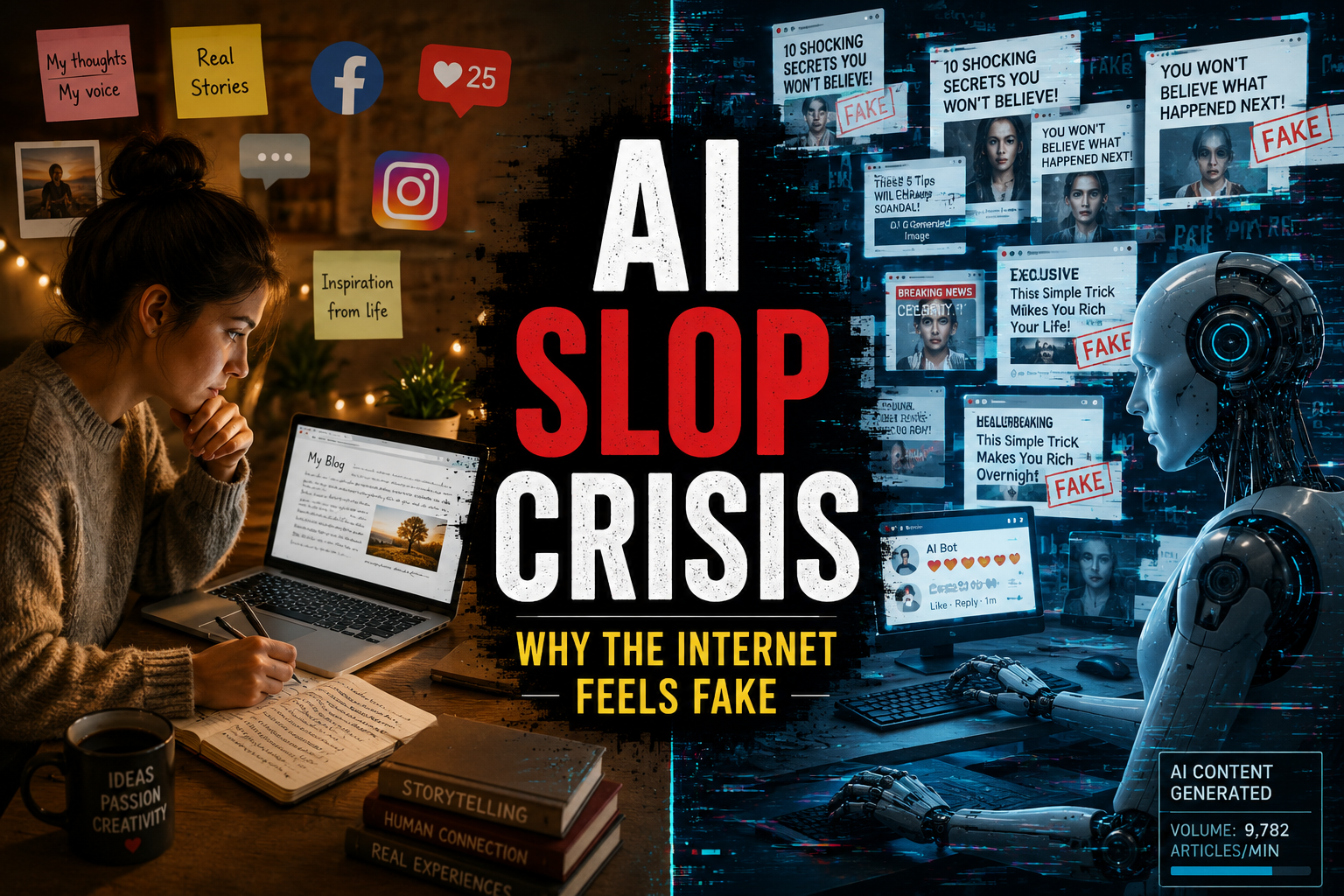
A few years ago, the internet felt more personal. People wrote blogs filled with opinions and emotions. Reviews sounded genuine. Social media posts felt spontaneous and human. Today, however, many users are beginning to feel that something online has changed. Articles sound repetitive, comments look robotic, and even emotional posts sometimes feel strangely artificial.
Welcome to the age of “AI slop” a term now widely used to describe the flood of low quality, AI generated content spreading across the internet.
The rise of artificial intelligence tools has completely transformed how online content is created. From articles and product reviews to videos, memes and social media captions, AI can now generate content within seconds. While this technology has made work faster and easier in many industries, it has also created a new problem. The internet is becoming overcrowded with content that looks human on the surface but often lacks originality, accuracy and emotional depth.
The phrase “AI slop” became popular online as users started noticing an explosion of repetitive and low effort AI content across websites and social media platforms. Many people now believe that large parts of the internet no longer feel authentic. Instead of creativity and personal experiences, users are often met with generic articles, fake reviews, AI generated images and emotionally manipulative posts designed only to attract clicks and engagement.
One major reason behind this trend is the race for online traffic. Websites are under constant pressure to publish more content every day in order to rank higher on search engines. AI tools allow publishers to produce hundreds of articles quickly and cheaply. However, quantity often replaces quality. As a result, many articles provide shallow information, repeat the same points or contain factual errors.
The problem is not limited to websites alone. Social media platforms are also being flooded with AI generated content. Fake inspirational quotes, AI created celebrity images, fabricated emotional stories and misleading viral posts are spreading rapidly online. In many cases, users do not even realise they are interacting with artificial content.
This growing flood of AI generated material is slowly creating a trust problem on the internet. Readers are beginning to question whether the content they consume is written by real people or machines. Online reviews for restaurants, hotels and products are also becoming harder to trust because AI can easily generate convincing fake opinions. Some companies are even accused of using AI to create positive reviews and promotional comments to influence customers.
Another worrying aspect of AI slop is misinformation. AI systems can generate large volumes of false or misleading content much faster than humans. During major events such as elections, natural disasters or celebrity controversies, fake information can spread within minutes. Since AI generated posts often sound confident and polished, many readers fail to notice inaccuracies.
Experts have also warned about the emotional impact of AI generated content. Social media algorithms reward posts that trigger strong reactions such as anger, sadness or fear. AI tools are now capable of producing emotionally manipulative content designed specifically to increase engagement. This includes fake emotional stories, edited videos and exaggerated headlines that encourage users to react without verifying facts.
At the same time, many creators and journalists fear that genuine human storytelling is getting buried under this endless flood of machine generated content. Independent writers, artists and small publishers often struggle to compete with websites producing AI articles at massive scale. Some readers now complain that the internet feels repetitive because many AI generated articles follow similar writing patterns and tones.
However, not everyone believes AI itself is the problem. Many experts argue that artificial intelligence is simply a tool. When used responsibly, AI can help writers research topics, improve productivity and make information more accessible. The real issue begins when speed and profit become more important than authenticity and accuracy.
Interestingly, the rise of AI slop may also create a new demand for genuine human voices. Across social media, many users are already showing greater appreciation for personal storytelling, authentic experiences and content that feels emotionally real. Podcasts, independent newsletters and creator driven communities are growing because audiences want honesty and human connection in a digital world increasingly filled with automation.
Technology companies are now facing pressure to address the issue. Search engines and social media platforms are trying to improve systems that identify spammy AI content and misinformation. Some websites have also started labelling AI generated material to maintain transparency with readers. However, experts believe the challenge will continue to grow as AI tools become more advanced and harder to detect.
The internet was originally built to connect people, share ideas and encourage creativity. But as AI generated content rapidly expands, many users fear the online world is becoming less human. The biggest challenge ahead may not be whether AI can create content, but whether the internet can still preserve authenticity, trust and genuine human emotion in the middle of this digital flood.
In the end, readers may become the most important filter. In a world full of artificial content, people are slowly learning to value what feels real.
Subscribe Deshwale on YouTube


