






One year after a landmark ruling by the International Court of Justice (ICJ), the global conversation on climate change has entered a new phase. The court’s advisory opinion confirmed that countries have legal obligations to address climate change and protect vulnerable populations from its impacts. For many Pacific island nations, this was more than a legal victory. It was a long-awaited recognition of a reality they have faced for decades.
Countries such as Vanuatu, Fiji and Tuvalu contribute less than one per cent of global greenhouse gas emissions. Yet they remain among the worst affected by climate change. Rising sea levels, stronger storms and frequent flooding continue to threaten communities, infrastructure and livelihoods. In some areas, entire villages face the possibility of relocation as coastlines disappear.
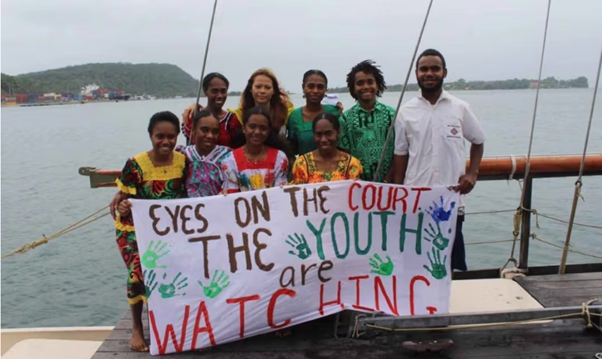
The ICJ ruling, backed by the United Nations General Assembly, established that climate inaction is not simply a political issue. It can also represent a failure to meet international legal obligations. The decision was largely driven by Pacific nations and youth activists who spent years advocating for greater accountability from major polluting countries.
However, legal recognition alone cannot protect communities from rising seas or extreme weather. The bigger challenge now is turning those principles into practical support. Climate finance was designed to help vulnerable countries adapt to climate change and recover from its impacts. Yet access to this funding remains a major obstacle.
Many small island nations struggle with complicated funding systems, lengthy application processes and strict reporting requirements. Governments and local organisations often lack the resources needed to navigate these complex mechanisms while simultaneously responding to climate emergencies. As a result, support frequently arrives too slowly or falls short of what is required.
The issue is becoming even more important as global climate finance commitments grow. International efforts aim to mobilise up to US$1.3 trillion annually by 2035 to support climate action worldwide. While this represents a significant opportunity, it also raises concerns about transparency and accountability. Large infrastructure projects, emergency procurement systems and multiple delivery partners can create risks of poor oversight and inefficient spending.
The coming months could prove crucial. Fiji and Tuvalu are expected to play prominent roles in preparations for COP31, the next major United Nations climate conference. By hosting key pre-COP meetings, these Pacific nations will bring global leaders closer to the frontline of the climate crisis. Their experiences highlight why vulnerable countries must have a stronger voice in shaping climate solutions.
Meanwhile, climate negotiators will gather in Bonn, Germany, in June to advance discussions on mitigation, adaptation, finance and technology. Transparency advocates continue to call for stronger safeguards against conflicts of interest and greater protection of climate negotiations from undue industry influence.
The ICJ has delivered a powerful message. Climate responsibility is no longer just a moral argument. It now carries legal weight. The next test is whether governments can transform that legal recognition into meaningful action for the communities already living with the consequences of a warming world.
Subscribe Deshwale on YouTube