









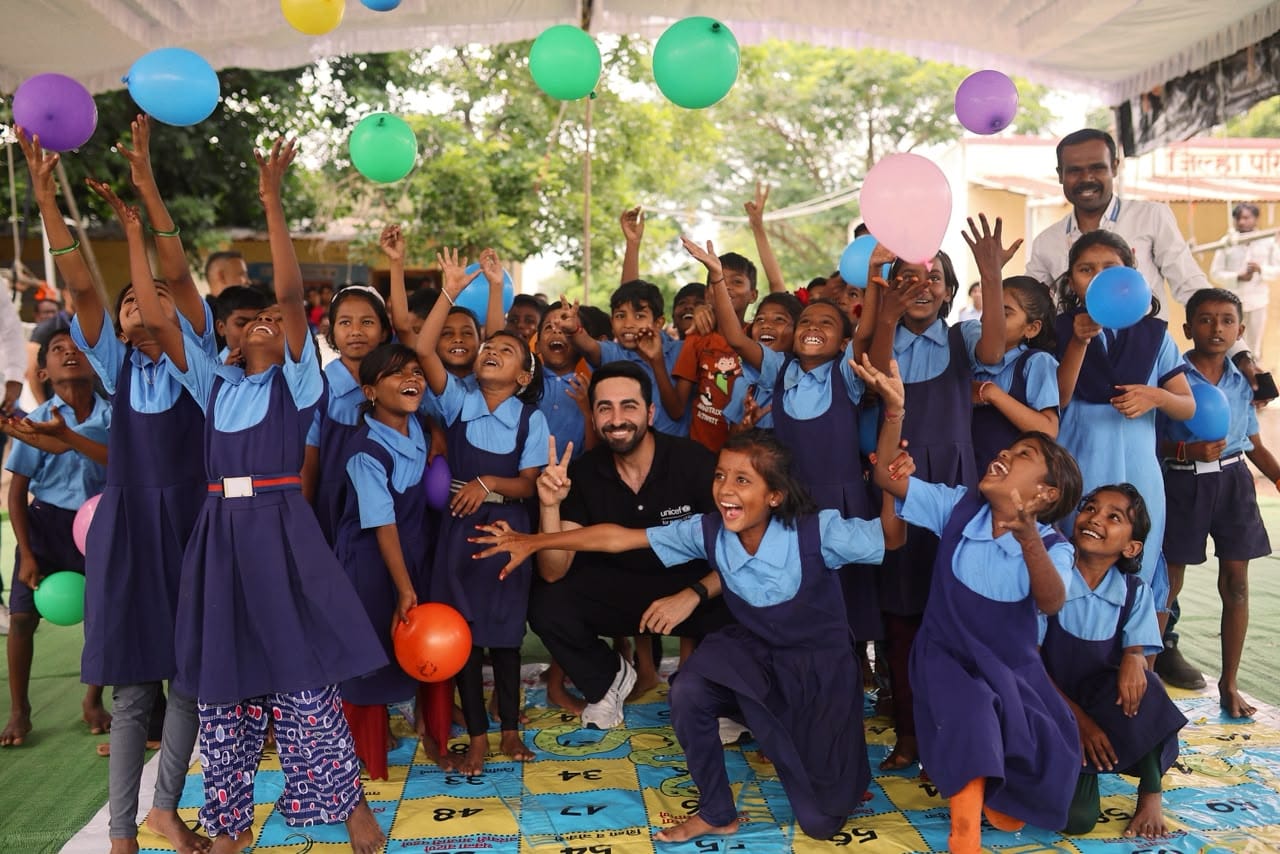
Mumbai (Anil Bedag): Renowned actor and UNICEF India National Ambassador Ayushmann Khurrana visited Jalna in Maharashtra to meet children and families affected by seasonal migration. During his visit, he highlighted the importance of child safety, education, health and emotional well-being. He also spoke about the need to ensure that every child gets the opportunity to enjoy a safe and secure childhood, regardless of their family or social circumstances.
Khurrana visited communities where children are being supported through UNICEF-supported kinship and community care programmes. These programmes aim to help children remain within family and community settings while receiving the care and support they need. The focus is on keeping children connected to education and protecting them from risks such as child labour and child marriage.
A Safe Childhood for Every Child
During his interaction with children and families, Ayushmann Khurrana stressed that difficult circumstances should not take away a child’s right to grow, learn and dream.
“No child should have to lose their childhood because of their circumstances. Kinship care is not just about providing a safe home; it also preserves relationships, restores confidence and offers hope for a better future,” Khurrana said.
His message focused on the importance of keeping children close to their families and communities whenever it is safe to do so. A stable support system can help children feel secure while allowing them to continue their education and maintain important relationships.
Khurrana interacted with young volunteers, Balmitras, adolescent girls and families during his visit. Balmitras are child-friendly community workers who help connect children and families with support services. Their work also helps communities understand the needs and rights of children.
Understanding Challenges at the Grassroots
Seasonal migration can create several challenges for children. When families move from one place to another in search of work, children may face difficulties in continuing their education. They may also become more vulnerable to child labour, child marriage and other forms of exploitation.
Community-based support can play an important role in reducing these risks. By working closely with families, schools and local communities, support systems can help children stay connected with education and essential services.
During his visit, Khurrana took the opportunity to understand the changes taking place at the grassroots level. His interactions with children and community workers provided an insight into the efforts being made to create safer environments for vulnerable children.
Highlighting the Dreams of Girls
Khurrana also spoke about the importance of education and a safe environment for girls. He cited the example of 18-year-old Shilpa, highlighting how young girls can work towards their dreams when they grow up in healthy, educated and secure surroundings.
“Girls can fulfil their dreams when children grow up in an educated, healthy and safe environment,” he said.
Education can give children greater confidence and open doors to future opportunities. For girls in particular, continued education can also help them make informed choices about their lives and careers.
Preventing Violence Against Children
UNICEF Acting Representative Jesper Moller also highlighted the need for stronger systems to protect children from violence and other risks.
“Violence against children can be prevented. We need to strengthen systems that identify risks and connect families with the services they need,” Moller said.
Early identification of risks can help families receive support before problems become more serious. Schools, community workers, local authorities and child protection systems all have an important role to play in this process.
Creating a safe environment for children is not the responsibility of one organisation alone. It requires cooperation between families, communities, schools and public institutions.
More Than 5,800 Children Supported in Jalna
During 2024–25, more than 5,800 children in Jalna remained under kinship care. The initiative is helping children stay connected to their families and communities while continuing their education.
The programme also aims to reduce the risks faced by children during periods of seasonal migration. Keeping children in supportive family environments can help protect them from dropping out of school and becoming vulnerable to child labour or child marriage.
Ayushmann Khurrana’s visit brought attention to these efforts and reinforced the message that every child deserves safety, care and opportunities to learn.
His interaction with children and families also highlighted the importance of listening to young people and understanding their experiences. Children need more than basic protection. They need emotional support, education, healthy surroundings and the confidence to imagine a better future.
The message from the Jalna visit was clear: a child’s circumstances should never decide the limits of their dreams. With the right support from families, communities and child protection systems, children can continue their education, stay safe and build a stronger future.
Ensuring a secure childhood today can help create a healthier and more confident generation tomorrow.
Subscribe Deshwale on YouTube


