



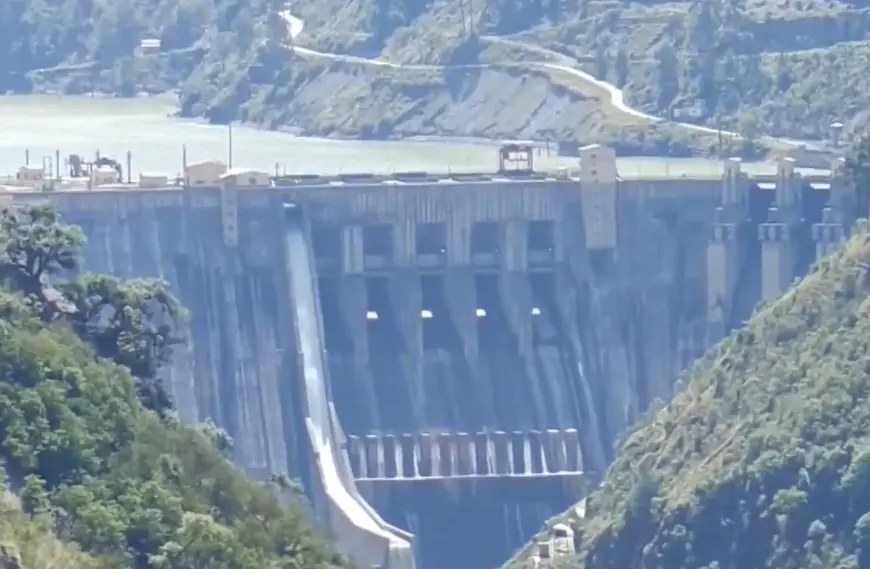
Pakistan’s political temperature soared after Bilawal Bhutto-Zardari, chairman of the Pakistan Peoples Party (PPP), issued a fierce warning to India over the suspension of the Indus Waters Treaty. In a dramatic statement, he declared, “Either our water will flow, or their blood will.”
The statement, made during a public address in Thatta, comes in response to India’s decision to suspend the decades-old treaty following the Pahalgam terror attack that killed 26 tourists. India blamed Pakistan-based groups for the attack and took several retaliatory diplomatic measures.
India pulls out of treaty
India announced the indefinite suspension of the Indus Waters Treaty (IWT), signed in 1960 under World Bank mediation. The treaty had survived wars and tensions but now faces collapse after India accused Pakistan of weaponising terrorism under its diplomatic cover.
India’s External Affairs Ministry said the move was necessary due to “consistent and deliberate misuse of peace frameworks by Pakistan.” It also expelled Pakistani diplomats and halted all bilateral talks.
Bhutto’s outburst raises global eyebrows
Reacting to the suspension, Bhutto-Zardari said Pakistan would not allow India to “steal its water.” He called India’s actions an “act of war” and threatened retaliation. His “water or blood” comment has sparked international concern, particularly regarding the stability of nuclear-armed neighbours.
Bhutto further accused India of pushing Pakistan into a corner and trying to provoke internal instability. His rhetoric was met with both support and criticism within Pakistan, with some calling it “unhelpful war-mongering.”
India’s political response
In New Delhi, political leaders strongly condemned Bhutto’s remarks. Several parliamentarians said the comment confirmed Pakistan’s “aggressive intent” and “disregard for international law.” Home Minister Amit Shah said India would not be blackmailed by violent threats.
India reiterated its commitment to protecting national interests, including the rights over water from the Indus Basin. “We are within our sovereign rights. No threat will change that,” an official statement read.
Global reactions and warnings
The World Bank, a guarantor of the treaty, has called for restraint and dialogue. The United Nations expressed deep concern over rising tensions and urged both nations to avoid further escalation.
China, a key player in the region, urged “calm and diplomacy,” while the United States said “provocative statements only worsen instability.”
The bigger picture
The Indus Waters Treaty has long been considered a rare example of successful water diplomacy. With climate change stressing regional water resources, any disruption to the treaty could have serious implications, especially for farmers and industries on both sides.
Experts warn that water conflict could be the next big geopolitical flashpoint in South Asia. Bhutto’s statement has added fuel to an already volatile situation.
