



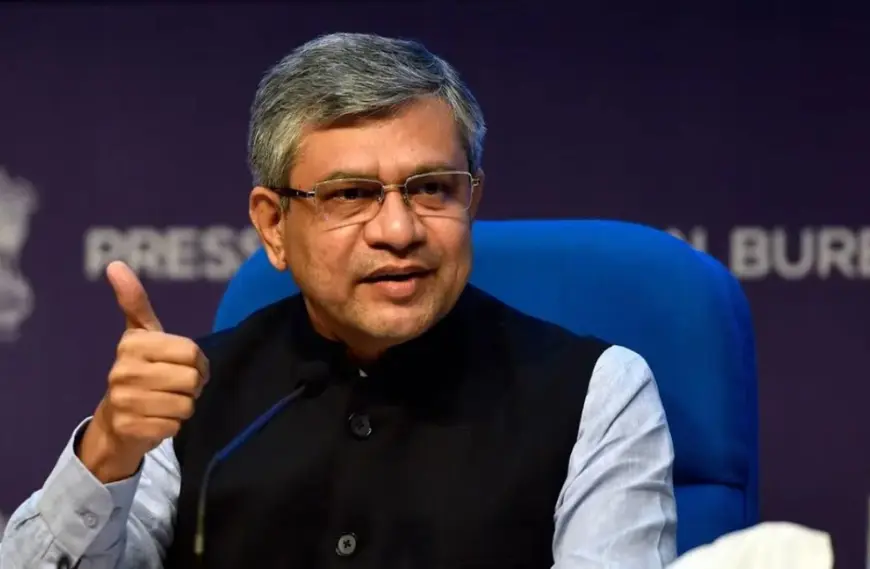
The Indian government has confirmed that caste-based enumeration will be formally included in the next national census. This decision was shared by Union Minister Ashwini Vaishnaw following a Union Cabinet meeting on 30 April 2025.
Speaking to the media, Vaishnaw said that the Cabinet Committee on Political Affairs, under the leadership of Prime Minister Narendra Modi, has given the green light to include caste details in the upcoming Census. He said this move reflects the government’s commitment to addressing the social and structural realities of Indian society.
“This is a step in line with our government’s previous decisions like the 10 percent reservation for economically weaker sections. We are moving forward with transparency and purpose,” he stated.
Political divide over caste census
Vaishnaw took a direct swipe at the opposition, particularly the Congress and the INDI Alliance, accusing them of treating caste data as a political tool. He pointed out that although many political parties had previously supported the idea of a caste census, earlier Congress-led governments had avoided it.
He referenced the year 2010 when then Prime Minister Dr. Manmohan Singh had promised to look into the matter. Although a group of ministers was formed, the Congress chose to carry out a limited socio-economic caste survey (SECC) instead of a full-fledged census.
“The Congress has used caste surveys purely for vote bank politics. Meanwhile, some States have carried out their own caste surveys, but not always in a transparent way. This has led to confusion and division in society,” Vaishnaw said.
He underlined that the Census, as per Article 246 of the Constitution, is a Union subject. “To prevent misuse and ensure national consistency, caste enumeration must be done through the official Census process, not through isolated state surveys,” he added.
Bigger picture: strengthening social equity
The Minister emphasised that bringing caste into the Census would help build a stronger social and economic understanding of the population. He added that doing it transparently and centrally will avoid the political misuse seen in some States.
“This isn’t just about data. It’s about ensuring that policies are based on clear and accurate insights into our society. That’s how we build a fairer system,” he explained.
New infrastructure push: Shillong–Silchar highway
Apart from the caste enumeration decision, Vaishnaw also announced a major infrastructure update. The Cabinet has approved a 166.8-kilometre four-lane highway project between Shillong and Silchar. This corridor, connecting Meghalaya and Assam, will be developed at a cost of ₹22,864 crore.
“This road will improve connectivity for people in Manipur and Mizoram as well. The project will be executed under a hybrid model to fast-track implementation,” he said.
As more details are expected in the coming weeks, these announcements show the government is focusing both on social equity and physical infrastructure as part of its larger governance vision.
