








The world of 2026 is defined not by scarcity but by misalignment between wealth and need, power and accountability, short-term gains and long-term stability.
The global landscape today is complex. Resources and knowledge are abundant, yet their distribution is uneven. Superpowers wield influence, yet none can guarantee lasting peace. International institutions exist but often struggle to enforce cooperation amid rivalry and self-interest. Economic growth continues, but it frequently leaves behind the very populations it should uplift. Inclusion and sustainability remain aspirational rather than realised.
Navigating this uneasy age demands a different trajectory. This requires rethinking priorities, placing public goods at the centre of policy. Health systems must be robust and accessible, education must equip citizens for the evolving world, and infrastructure must connect communities and economies efficiently. Social protection needs strengthening to shield the vulnerable, and technological advancement should expand opportunities rather than narrow them. International cooperation must also be deepened, tackling issues that transcend borders — from climate change to financial stability — with shared commitment rather than fragmented efforts.
For India and other large developing nations, this path is both urgent and strategic. Growth must be dynamic, yet inclusive. Leveraging technology and global integration can drive productivity and innovation. At the same time, domestic opportunity must expand, ensuring that prosperity reaches all layers of society. Beyond national borders, engagement should go beyond strategy alone. These nations can act as voices for equitable development, advocating for a global order that balances progress with justice.
Yet pursuing this path is far from easy. Entrenched interests resist change, seeking to protect concentrated wealth and power. Geopolitical tensions complicate collaboration and make long-term planning uncertain. However, history offers lessons: periods of turbulence can catalyse innovation and reform. When societies face acute crises, they also often find the political will and public imagination to redesign institutions and social contracts.
Redefining peace is central to this endeavour. In the modern era, peace cannot be measured solely by the absence of war. True stability includes economic dignity, social mobility, and trust in institutions. Without these, even formally peaceful societies risk fragility. Citizens need assurance that the rules governing their lives are fair and that progress is shared, not hoarded.
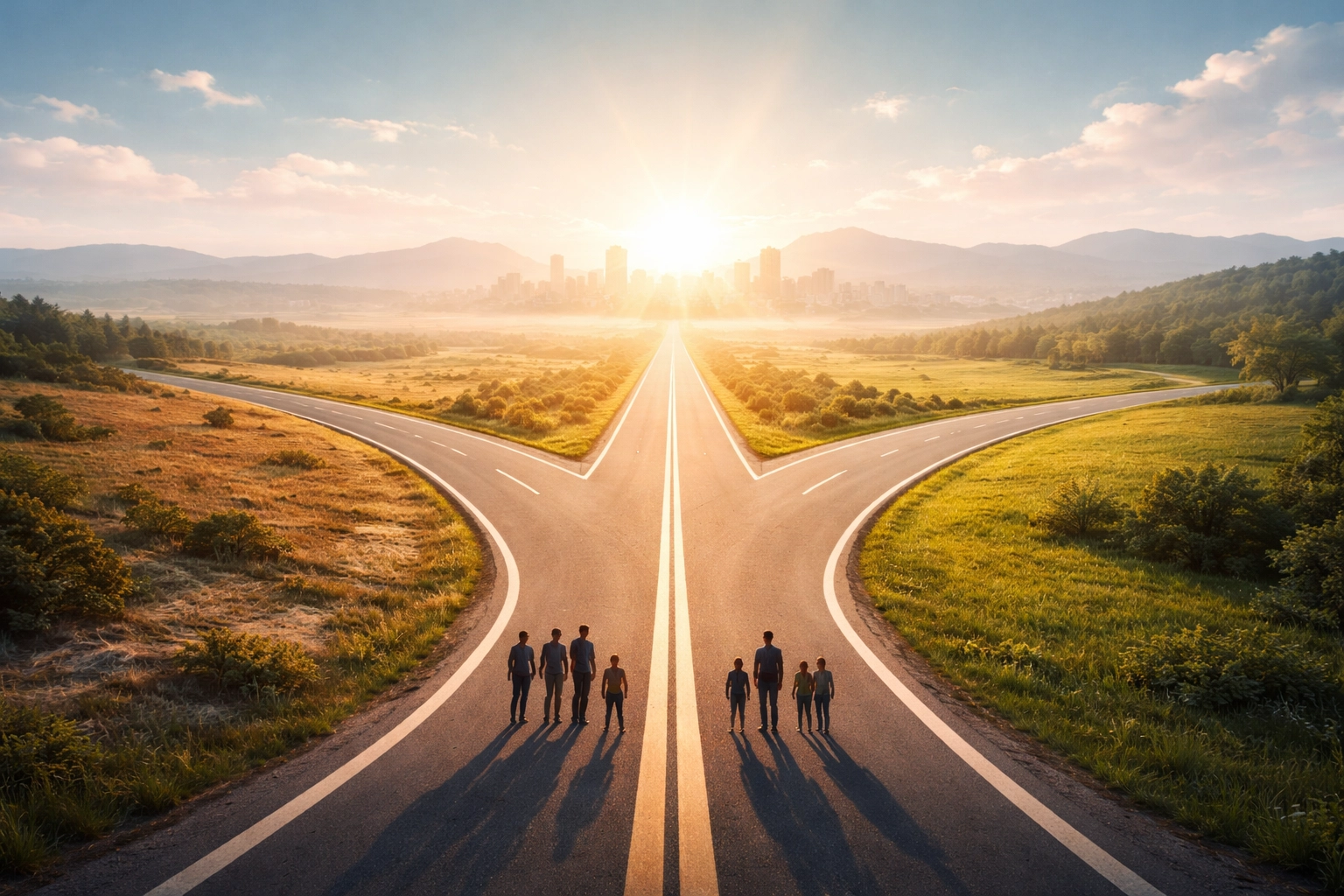
The choices ahead are stark. The world can continue along the current trajectory, where prosperity and security remain concentrated, leaving crises to recur. Or it can embark on the harder work of building systems that share both more broadly. This involves difficult decisions and long-term vision. It requires investing in people and institutions, not just markets. It calls for political courage, social innovation, and global cooperation that rises above short-term competition.
The outcome will shape the future in profound ways. A world that realigns progress with justice can create opportunities for generations, stabilise societies, and reduce the intensity of crises. Conversely, failure to act risks perpetuating cycles of inequality, instability, and conflict. While uncertainty is inevitable, the possibility of a better, more equitable world remains real — if societies choose to pursue it with determination.
The crossroads of 2026 is not merely a moment of reflection. It is an invitation to deliberate action. By recalibrating priorities, strengthening institutions, and broadening opportunity, humanity can aspire to a future defined not by recurring crises, but by a slow, steady alignment of progress with justice. This is the hard path, but it is also the necessary one.


