



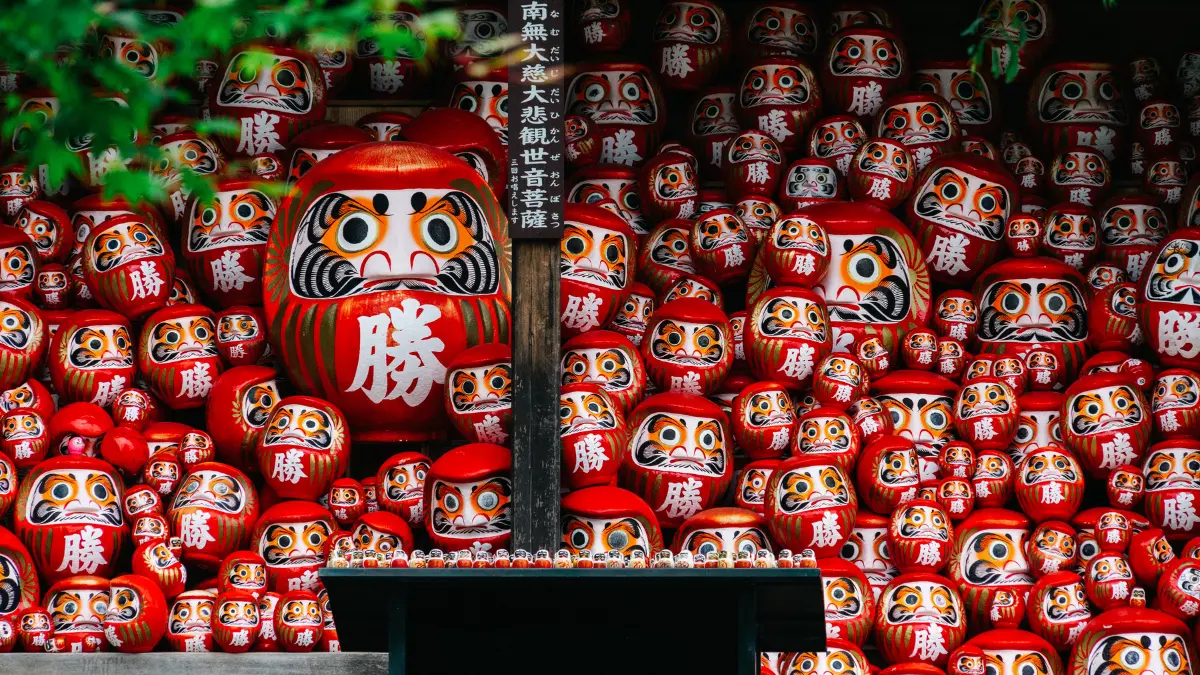
During his recent visit to Japan, Prime Minister Narendra Modi received a unique gift that has sparked curiosity in India – a Daruma doll. This traditional Japanese figure, known for its round shape and striking eyes, carries a deep cultural meaning in Japan. The gift was presented to him at the historic Shorinzan Daruma Temple in Takasaki, the region where most Daruma dolls are made.
The Daruma doll is not just an ornament; it is a centuries-old symbol of perseverance, resilience, and the power of setting goals.
The Origins of the Daruma Doll
The Daruma doll represents Bodhidharma, a Buddhist monk credited with bringing Zen Buddhism to Japan around 1,500 years ago. While historical accounts of his life vary, Bodhidharma is widely regarded as a figure of meditation and determination. Over time, Japanese artisans began creating these rounded dolls in his likeness, with no arms or legs, signifying his legendary meditation practice.
Today, around 80 percent of Daruma dolls are produced in Takasaki, making the city a major hub for this cultural icon.
The Indian Connection: Bodhidharma’s Legacy
The origins of the Daruma doll highlight a strong cultural link between India and Japan. Bodhidharma, believed to have been born in Kanchipuram, Tamil Nadu, travelled to China in the 5th–6th century to spread Buddhist teachings. His philosophy laid the foundation for Chan Buddhism in China, which later evolved into Zen Buddhism in Japan. In Japan, Bodhidharma came to be known as Daruma, and his image inspired the creation of these round, hollow dolls. Their self-righting design reflects the Japanese proverb “nanakorobi yaoki,” which means “fall down seven times, get up eight,” symbolising resilience and the ability to recover from setbacks. The Shorinzan Daruma Temple in Takasaki, dedicated to Bodhidharma, became the centre of Daruma doll production during the Edo period.
Why Does the Daruma Doll Have Blank Eyes?
One of the most striking features of the Daruma doll is its blank, white eyes. When someone buys a Daruma doll, they make a wish or set a goal and fill in one eye to represent their commitment. Once the goal is achieved, the second eye is painted to celebrate success. This tradition turns the doll into a personal symbol of motivation and achievement.
Colours and Meaning
Although the most common Daruma dolls are red, they come in many colours, each carrying a different meaning. Red represents good luck and fortune, while gold signifies prosperity. White is often associated with purity and new beginnings, and black is believed to ward off evil. This diversity allows people to choose a doll that aligns with their hopes.
The Spirit of Perseverance
A popular Japanese proverb associated with the Daruma is “nanakorobi yaoki” which translates to “fall down seven times, get up eight.” This saying perfectly captures the spirit of the doll – to keep trying, no matter how many setbacks occur. The round shape of the doll also reflects this idea, as it always returns to an upright position when tipped over.
Significance of Modi Receiving the Daruma Doll
When Prime Minister Modi received the Daruma doll, it was more than just a gesture of friendship. It symbolised a wish for determination, success, and renewed strength in India-Japan relations. The Shorinzan Temple, where he received the doll, has long been a place where people come to buy Daruma dolls at the start of the year to set their goals and return them after they are fulfilled.
The Daruma doll gifted to Prime Minister Modi reflects the enduring partnership between the two nations, built on shared values of perseverance and progress. For many Indians unfamiliar with this cultural artefact, the gift has become an introduction to a unique Japanese tradition that continues to inspire people around the world
