



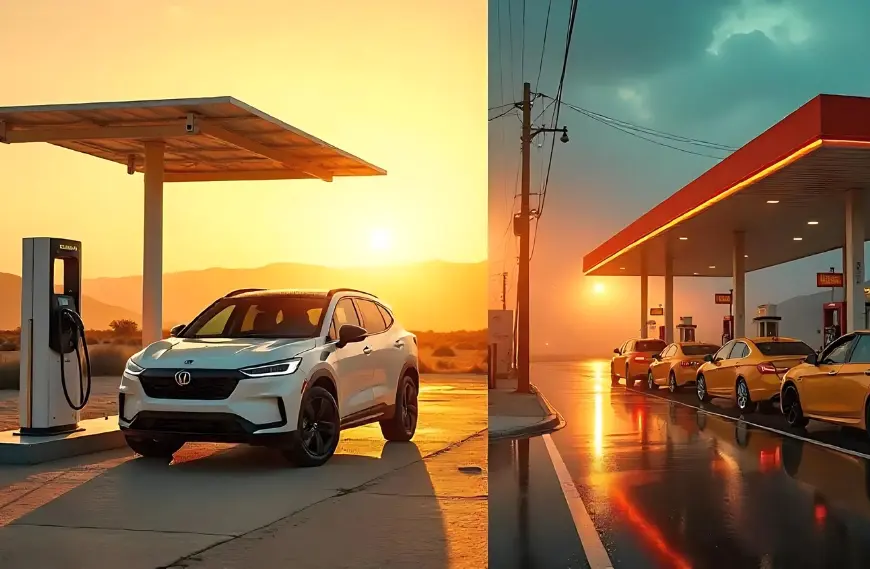
Hitting the road: Pump or plug?
Picture yourself cruising down the highway, fuel light flashing. Do you pull into a gas station or search for an EV charger? That’s the choice drivers face today. EV charging vs. gas refueling… a consumer perspective digs into what really matters… time, money, and ease. Electric chargers, like Tesla’s V4 Superchargers or Electrify America’s stations, are growing fast and offer a clean way to refuel. Meanwhile, gas stations are the tried-and-true option, always there when you need them. As EVs become more common, I wanted to explore how each method feels for everyday drivers. So, let’s dive in and figure out which suits your life… gas pump or electric plug.
How fast can you get back out there?
When you are low on fuel, speed matters. Gas stations are the champs here. You pull up, pump 15 gallons, and you are gone in five minutes. It’s like grabbing a coffee to go… fast and easy. But hold up, Tesla’s V4 Superchargers are stepping up. They pump out 500 kW, adding 100 miles of range in just 10 minutes. For instance, a Tesla Cybertruck can go from nearly empty to 80% in 35 minutes. Still, that’s slower than gas. So, EV drivers need to plan their stops, especially on long road trips. However, Tesla’s network is solid, with 99.95% uptime in 2024, per their reports. Gas stations can run dry sometimes, which is a pain. If you charge at home overnight, speed’s less of an issue. Gas wins for quick stops, but EVs are closing in.
What’s it gonna cost you?
Let’s talk about cash. Gas prices are all over the place… about $3.50 a gallon in the U.S. in 2025, according to AAA (American Automobile Association). If you drive 30 miles a day in a car getting 25 miles per gallon, you are spending around $42 a month. EVs, though, can save you some bucks. Tesla’s V4 Superchargers cost about $0.40 per kWh in California, so a 300-mile trip in a Tesla Model 3 runs you $12. Better yet, charging at home is even cheaper… around $0.15 per kWh with average U.S. rates. That same commute? Just $15 a month. But EVs cost more upfront, and not everyone has a home charger. So, your savings depend on your setup. For folks watching their budget, EVs are a long-term win, especially with gas prices climbing. Gas is easier on the wallet upfront, but EVs pay off over time.
Where and how: What’s the vibe?
Convenience is everything when you are refueling. Gas stations are literally everywhere… over 100,000 in the U.S., per the Department of Energy. You roll in, pump, pay, and bounce. No stress, no planning. Tesla’s Supercharger network, with 70,000 stalls worldwide, is growing fast but still sparse in some spots. Rural roads? Good luck finding a V4 Supercharger nearby. However, Tesla’s app is a game-changer. It shows you stalls, availability, and even lets you queue up without awkward hovering. Gas stations don’t have that techy perk. Plus, EVs are cleaner… no gas fumes or sticky pumps. But charging takes longer, so you might be chilling with a snack while you wait. For city folks, public charging can be a hassle without nearby stations. Gas is king for availability, but Tesla’s making EVs easier every day.
Does it fit your life?
Your lifestyle picks your refueling team. Gas is perfect for folks who love quick, no-fuss stops. Think long-haul truckers or rural drivers who need a station on every corner. But EVs? They are made for city commuters and tech lovers. Tesla’s V4 Superchargers are great for planning road trips, especially at cool spots like their solar-powered Oasis station in California, running on 11 MW of clean energy, per Electrek. That’s a big draw for eco-minded folks. Gas refueling doesn’t make you rethink your routine, which is why some stick with it. But with EVs hitting 30% of U.S. car sales in 2024, according to Bloomberg, charging is becoming second nature. Families love EVs for cutting fuel costs, freeing up cash for other stuff. So, gas is for the go with the flow crowd, while EVs suit those ready to switch things up.
Where’s the road taking us?
EV charging vs. gas refueling… a consumer perspective shows both options have their perks. Gas stations are quick and everywhere, perfect for drivers who value flexibility. EVs, with chargers like Tesla’s V4 or Charge Point’s network, save money and feel modern but require some planning. Your choice depends on your life… city commuters might lean toward EVs for savings, while rural drivers often stick with gas for convenience. As charging networks grow, the decision gets tougher. In 2025, both gas and EVs work well… It’s about finding your fit. So, next time your tank’s low, weigh your options… pump or plug? It’s your call.
Also Read: कोल्हापुरी चप्पल: परंपरा, पहचान और विवादों से जुड़ी एक अमर कला
