



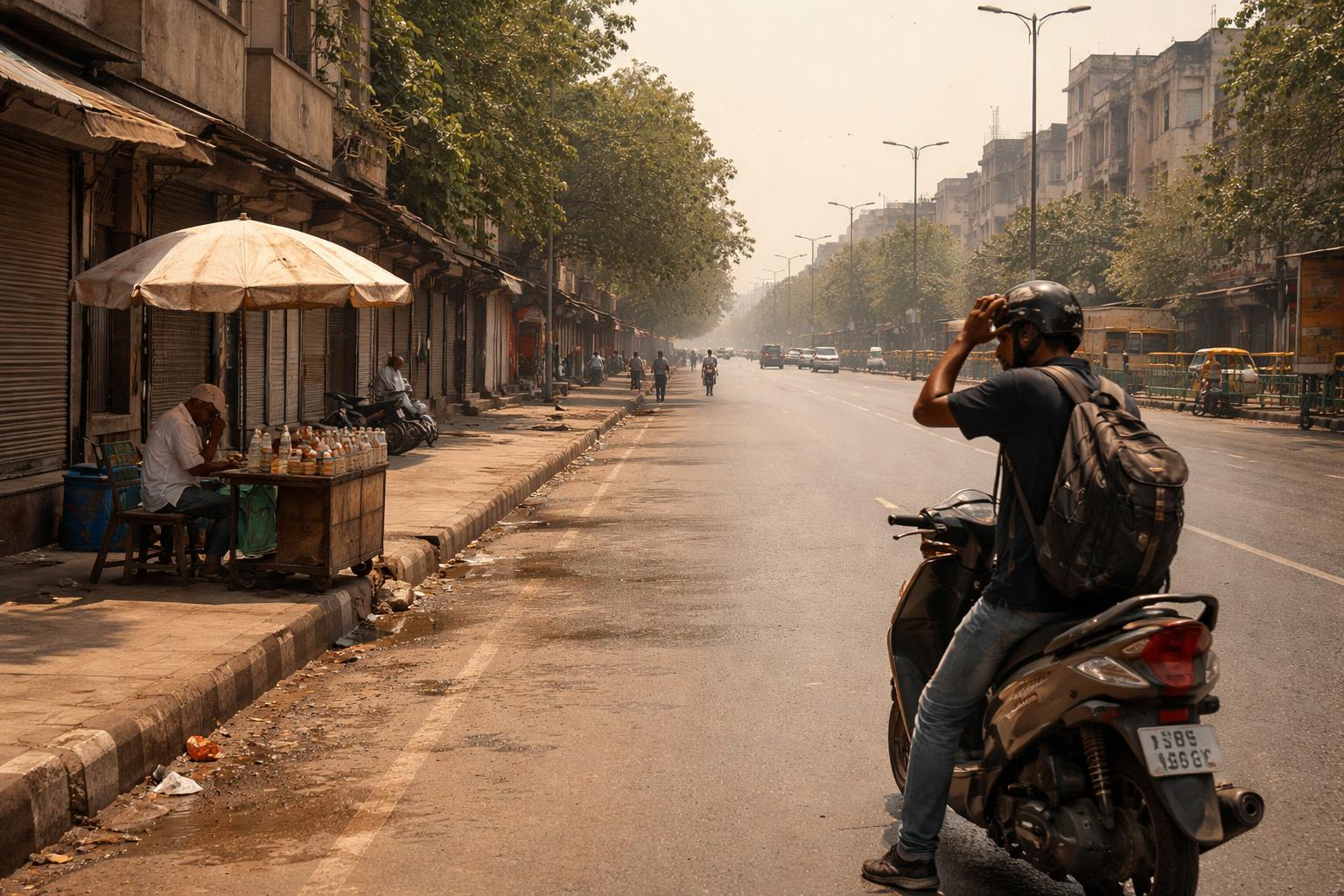
At 2 in the afternoon, the road outside a residential block in Delhi lies unusually silent. A tea seller, who would normally expect a small crowd at this hour, wipes sweat from his forehead and looks at the empty pavement. It is only mid March, yet the heat carries the weight of peak summer. A delivery rider pauses under a shrinking patch of shade, checking his phone before stepping back into the glare. The calendar says spring. The body says something else.
Across India, this scene is repeating itself. From Mumbai to inland cities, March has arrived not as a gentle transition, but as a heatwave like warning. Temperatures have surged, nights offer little relief, and the familiar rhythm of seasons feels disrupted.
Meteorological experts say this trend has been building over the past decade.
This is not a passing discomfort. It is a sign of a deeper shift, one that is steadily erasing spring from India’s climate map.
A Season That Seems To Have Disappeared
For decades, spring in India was brief but distinct. It softened the exit of winter and prepared the ground for summer. There was warmth, but also balance.
That balance is fading.
In recent years, and sharply in 2026, the transition has become abrupt. Cool mornings have given way to hot afternoons within days. Evenings no longer carry the same mildness. The in between season, once taken for granted, now feels compressed to the point of disappearance.
Meteorologists have observed that March temperatures are rising faster than historical averages. The shift is not only about how hot it gets, but how quickly it happens.
What The Data Is Telling Us
The numbers behind this shift are difficult to ignore.
- Several regions across north and west India have recorded temperatures crossing 40 degrees Celsius in March
- In many cities, readings are 4 to 6 degrees above seasonal averages
- Night time temperatures are also elevated, reducing the body’s ability to recover
For someone like Ramesh, a construction worker in his late thirties, the numbers translate into daily strain. His workday now begins earlier, but even by mid morning, the heat feels exhausting. By afternoon, productivity slows, and breaks become longer, not by choice, but by necessity.
This pattern reflects a broader reality linked to Climate Change. Rising global temperatures are not only increasing heat intensity, they are reshaping seasonal boundaries.
According to the India Meteorological Department, recent assessments indicate a clear rise in the frequency of early season heat events across multiple regions, with March increasingly showing temperature patterns once typical of late April and May.
The Science Behind Early Heatwaves
The early arrival of heatwaves is driven by a combination of interacting forces.
- Weakened western disturbances
These systems usually bring cooling rain and cloud cover. Their reduced presence this year has allowed temperatures to rise unchecked - Persistent high pressure zones
These systems trap hot air near the surface, creating stable, heat retaining conditions - Urban heat island effect
In cities such as Delhi and Mumbai, concrete heavy infrastructure absorbs and radiates heat, intensifying local temperatures - Dry ground conditions
Reduced soil moisture limits natural cooling through evaporation
Together, these elements create a feedback loop where heat builds quickly and lingers longer.
How Daily Life Is Already Changing
The early heatwave is reshaping everyday routines.
Meena, an office worker in Mumbai, now plans her commute carefully. She leaves home earlier to avoid peak heat and carries extra water, something she would normally do only in May. Even inside the office, air conditioning units are running at full capacity weeks ahead of schedule.
Across urban India:
- Offices are adjusting working hours informally
- Public transport feels more exhausting during peak afternoon hours
- Parks and outdoor spaces are emptier during the day
At home:
- Fans and air conditioners are running longer
- Water usage has increased
- Night time discomfort is affecting sleep
These shifts may seem small individually, but collectively, they reflect a society adapting in real time.
The Health Risks Are Real And Rising
Heatwaves bring serious health consequences, especially when they arrive early.
Hospitals and clinics are beginning to see:
- Cases of dehydration and heat exhaustion earlier than usual
- Increased fatigue related complaints
- Greater vulnerability among children, the elderly, and outdoor workers
Dr Shah, an urban physician, notes that early heat exposure is particularly risky because the body has not yet adjusted to sustained high temperatures.
Preventive measures remain critical:
- Drinking water regularly, even without feeling thirsty
- Avoiding direct sunlight during peak hours
- Wearing light, breathable fabrics
- Recognising early warning signs such as dizziness and weakness
Public awareness, however, often lags behind the pace of changing weather.
Economic Costs That Often Go Unnoticed
The financial impact of early heatwaves extends beyond visible discomfort.
- Rising electricity consumption
Cooling demand has increased weeks ahead of schedule, pushing up household and commercial energy costs - Reduced labour efficiency
Workers in construction, logistics, and delivery services are slowing down under extreme conditions - Agricultural disruption
Crops that depend on gradual seasonal change are exposed to stress, affecting yield and quality - Supply chain pressure
Heat affects storage conditions, especially for temperature sensitive goods
For Ramesh, fewer productive hours mean lower daily earnings. For businesses, it translates into rising operational costs.
A Global Pattern, Not Just An Indian Story
India’s experience is part of a wider global shift.
In Bangkok, authorities have issued advisories as temperatures climbed earlier than expected. Schools in Manila have adjusted schedules to protect students from extreme heat. Even in Sydney, extended warm spells have blurred seasonal norms.
European cities such as Madrid and Athens have also reported unusual early heat events in recent years.
These patterns underline a global truth. Climate systems are becoming less predictable, and extreme heat is no longer confined to traditional summer months.
Are India’s Cities Prepared?
India’s cities face a growing challenge in adapting to prolonged heat.
- Limited green cover reduces natural cooling
- Dense construction traps heat within urban zones
- Public cooling spaces remain inadequate
- Water systems face seasonal stress earlier in the year
While some cities have introduced heat action plans, their reach and implementation vary widely. The scale of the current shift demands more comprehensive planning.
The Role Of Individual And Collective Action
Adapting to early heatwaves requires both systemic and personal responses.
At an individual level:
- Conserving energy during peak demand hours
- Using energy efficient appliances
- Staying informed about local weather updates
At a community level:
- Supporting urban greening efforts
- Promoting awareness about heat related risks
- Creating shared cooling spaces where possible
These steps may not solve the problem entirely, but they can reduce its immediate impact.
What Lies Ahead For 2026
The trajectory of the current season raises concern.
Forecasts indicate:
- Continued above normal temperatures across large regions
- Increased frequency and duration of heatwave conditions
- Warmer nights, limiting recovery time
If these trends persist, the summer of 2026 could be longer and more intense than usual, placing additional strain on infrastructure and public health systems.
A Warning That Cannot Be Ignored
The early heatwave is not just a seasonal irregularity. It is a signal of structural change.
India’s climate is shifting towards:
- Longer summers
- Shorter transitional seasons
- More frequent extreme weather events
The disappearance of spring is both symbolic and real. It reflects a system moving out of balance.
Responding to this will require:
- Climate aware urban planning
- Strengthened healthcare readiness
- Greater public engagement with environmental issues
Conclusion: Living In A New Climate Reality
As the sun continues to dominate March skies, the question is no longer whether change is happening. It is how quickly people and systems can adapt.
For Meena, for Ramesh, and for millions across India, the shift is already part of daily life. The routines are changing, the expectations are adjusting, and the seasons themselves are being redefined.
The calendar still says March. But across India, it already feels like May.
Names and characters are representative of common experiences.
