



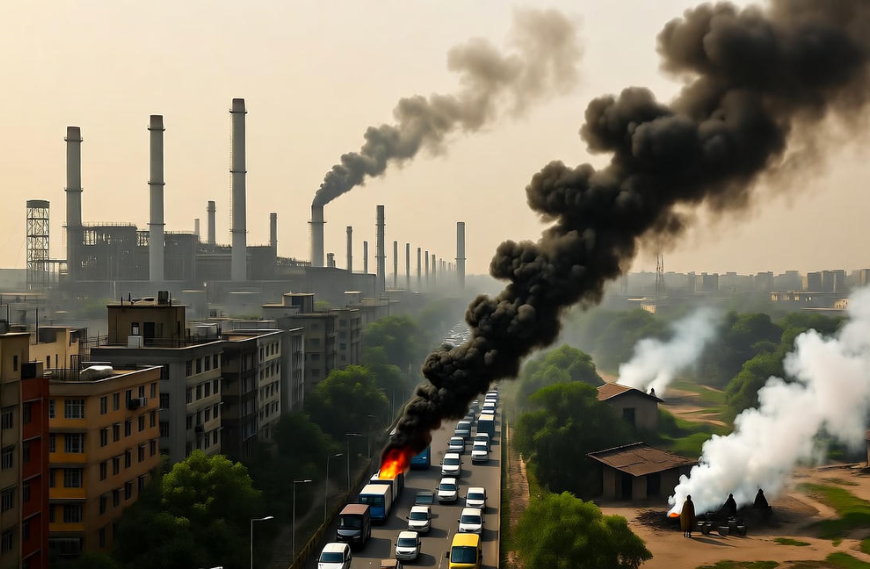
A recent global report has revealed a shocking truth: around 70 percent of all deaths caused by air pollution worldwide are linked to India. This finding highlights how deeply pollution has become part of the country’s public health crisis, touching every breath millions of people take each day.
According to the report, nearly 2.5 million people die globally each year due to outdoor air pollution, and India contributes the largest share to that number. The findings paint a worrying picture of a nation where industrial smoke, vehicle exhaust, coal burning, and household pollution have quietly become silent killers.
Experts say that India’s growing energy demand, rapid urbanisation, and reliance on fossil fuels have made air pollution an invisible emergency. From the crowded lanes of Delhi and Mumbai to smaller towns in Uttar Pradesh and Bihar, the air is thick with fine particles that damage lungs and increase the risk of heart disease, strokes, and respiratory illnesses.
What makes this even more alarming is the rise in deaths over the years. Since 2010, air pollution-related deaths in India have gone up by nearly 38 percent. This means more Indians are dying today from the effects of bad air than ever before. The report also found that air pollution is responsible for a major drop in productivity, with each person losing around 419 work hours per year due to health problems and heat stress.
The problem is not limited to cities. Rural India is also suffering. The study shows that household air pollution from cooking fuels and open fires causes roughly 125 deaths per 100,000 people in villages, compared to 99 deaths in urban areas. The use of solid fuels like wood and dung for cooking still remains common in many homes, exposing women and children to toxic fumes daily.
Economically, the impact is huge. In 2022 alone, India lost an estimated 339 billion dollars, nearly 10 percent of its GDP because of deaths and diseases caused by outdoor air pollution. This loss affects not just families but also industries, labour, and overall national growth.
The report calls for urgent policy action. Experts recommend a faster transition to renewable energy, stricter emission standards, and stronger enforcement of clean-air regulations. Without major changes, India’s air could continue to take a deadly toll one that cannot be seen but is felt in every home, every city, and every breath.
Subscribe Deshwale on YouTube
