









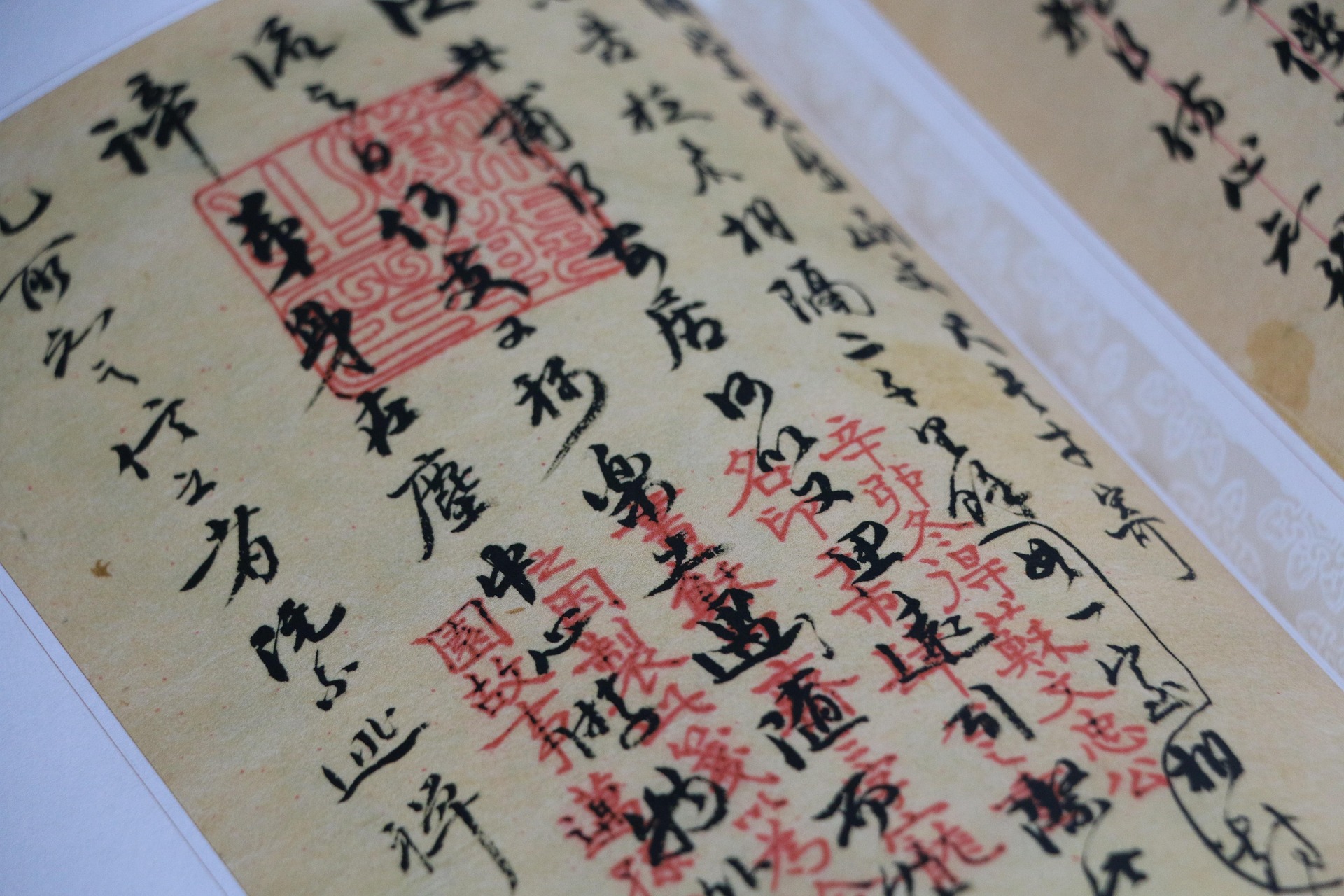
Mandarin is the official language in both mainland China and Taiwan. Yet decades of political, cultural, and historical divergence have created noticeable differences in pronunciation, vocabulary, and writing systems.
Mandarin, Putonghua, and Guoyu
Mandarin is a group of related Chinese dialects spoken across northern, southwestern, and western China. It is the most widely spoken form of Chinese, with over a billion speakers worldwide. In Chinese, it is called 官话 (guānhuà), meaning “official speech,” because it was historically used in imperial courts and government. Mandarin serves as a lingua franca among speakers of different Chinese dialects, many of which are mutually unintelligible.
Putonghua literally means “common speech.” It is the standardised form of Mandarin in mainland China, based mainly on the Beijing dialect. The Chinese government officially adopted Putonghua to unify the country linguistically after 1949, ensuring people from different regions could communicate. Putonghua has standardised pronunciation, grammar, and vocabulary, and is used in schools, media, and government.
Guoyu literally means “national language.” It is the standardised form of Mandarin in Taiwan, also largely based on northern dialects. Guoyu preserves traditional characters and older vocabulary, reflecting Taiwan’s emphasis on maintaining continuity with Chinese culture and literature. Its pronunciation is softer than Putonghua and includes influences from Japanese and local dialects like Hokkien.
Pronunciation and Accent
The Mandarin spoken in Beijing forms the basis of Putonghua, the official language of mainland China. It features the characteristic erhua sound, which adds a soft ‘r’ to the ends of words. Many mainland speakers also emphasise retroflex consonants such as zh, ch, and sh. Taiwan, however, has a softer accent, influenced by historical northern dialects and local languages like Hokkien. The erhua sound is rare in Taiwan, and retroflex consonants are not strongly pronounced. Some visitors note that it is easier to speak with Taiwanese than with Beijing locals, but the difference is subtle enough that both groups can generally understand each other.
Vocabulary Choices
Vocabulary differences are another major distinction. Taiwan often retains older or more classical expressions, while mainland China leans toward modern or colloquial terms. For example, a subway is 地铁 (dìtiě) in Beijing but 捷运 (jiéyùn) in Taipei. Toilets are 厕所 (cèsuǒ) in the mainland and 洗手间 (xǐshǒujiān) in Taiwan. Even ordinary words like ‘awesome’ may be said as 酷 (kù) in both regions, but Taiwanese speakers might also say 很棒 (hěn bàng) casually. It is not unusual to hear mainlanders stumble when visiting Taiwan because of unexpected vocabulary.
Writing System: Simplified vs Traditional
One of the most visible differences is in writing. Mainland China uses simplified Chinese characters, while Taiwan retained traditional characters, viewing them as cultural heritage.
The adoption of simplified characters in mainland China was a deliberate policy by the Chinese Communist Party in the 1950s. Literacy was a major concern after decades of war and instability. Millions of Chinese could not read or write fluently because traditional characters were complex and had many strokes. The CCP sought to increase literacy rapidly to unify the population and promote education. Simplified characters reduce the number of strokes, making them faster and easier to learn. For example, the character for ‘dragon’ changed from 龍 to 龙, cutting strokes from 16 to 5.
The simplification was also symbolic. The CCP aimed to break with the past, discarding old imperial, feudal, and elite traditions associated with traditional characters. This symbolic break reinforced the image of a modern, revolutionary China moving toward equality and mass participation.
In contrast, Taiwan emphasised continuity with the past. The Republic of China government wanted to maintain contact with Chinese history, literature, and classical culture. Traditional characters were seen as carriers of cultural identity, moral values, and literary heritage. Preserving them was a way to maintain historical memory and legitimacy, especially after retreating to the island in 1949 following the defeat of the Kuomintang by the Communist Party on the mainland.
Impact of Japanese Occupation on Taiwan
Taiwan was under Japanese rule from 1895 to 1945, leaving a deep imprint on its language, culture, and administration. Japanese was widely taught in schools, and many Taiwanese adopted loanwords from Japanese into everyday speech. Even after 1945, some vocabulary, pronunciation habits, and formal administrative terms continued to reflect Japanese influence. The occupation also reinforced Taiwan’s separate cultural identity from mainland China, which influenced decisions on language standardisation and vocabulary.
Historical and Cultural Background
The divergence in writing and speech has deep roots. After the Chinese civil war, the Communist Party in Beijing pursued reforms across politics, society, and culture. Language reform was central to this vision. Meanwhile, the Republic of China government, having retreated to Taiwan in 1949, continued to teach classical forms, emphasising continuity with Chinese history. Cultural pride also played a role. For many Taiwanese, traditional characters are a symbol of heritage, identity, and literary depth.
Political and Ideological Factors
Language differences also reflect political realities. In mainland China, Putonghua is tightly regulated to unify the country linguistically and ideologically. Taiwan’s Guoyu, while standardised, allows more flexibility and regional influence. Political separation reinforced differences over decades. Mandarin in Taiwan absorbed loanwords from Japanese occupation and local dialects, while mainland Chinese evolved through modern reforms and media influence.
Impact on Communication
Despite differences, communication is largely possible. Mandarin remains mutually intelligible. However, subtle vocabulary differences, pronunciation, and writing can cause occasional confusion. A mainlander reading a Taiwanese text might recognise all characters but be slowed by traditional forms. Conversely, a Taiwanese speaker may need a moment to understand modern mainland slang. These minor barriers rarely stop meaningful interaction but highlight the cultural and historical paths each region has taken.
Comparison Table: Key Vocabulary Differences
| Concept | Mainland China | Taiwan | Notes |
|---|---|---|---|
| Subway | 地铁 (dìtiě) | 捷运 (jiéyùn) | Common public transport term |
| Bus stop | 车站 (chēzhàn) | 公车站 (gōngchē zhàn) | Everyday urban term |
| Toilet | 厕所 (cèsuǒ) | 洗手间 (xǐshǒujiān) | Politeness and cultural preference |
| Computer | 电脑 (diànnǎo) | 计算机 (jìsuànjī) | Formal vs casual usage |
| Mobile phone | 手机 (shǒujī) | 手机 (shǒujī) | Same word but accent differs |
| French fries | 薯条 (shǔtiáo) | 薯条 (shǔtiáo) | Minor pronunciation variation |
| Cool / Awesome | 酷 (kù) | 酷 (kù) or 很棒 (hěn bàng) | Informal speech shows variation |
| Rice | 米饭 (mǐfàn) | 白饭 (báifàn) | Taiwan uses older term |
| Ticket | 票 (piào) | 車票 (chēpiào) | Taiwan uses more specific |
| Metro map | 地铁图 (dìtiě tú) | 捷运图 (jiéyùn tú) | Reflects local terminology |
| Hello | 你好 (nǐhǎo) | 你好 (nǐhǎo) | Pronunciation slightly softer in Taiwan |
| Television | 电视 (diànshì) | 电视 (diànshì) | Minor accent differences |
| Coffee shop | 咖啡店 (kāfēi diàn) | 咖啡馆 (kāfēi guǎn) | Cultural nuance in term |
| School | 学校 (xuéxiào) | 學校 (xuéxiào) | Traditional vs simplified characters |
Pronunciation Guide: Mainland vs Taiwan Mandarin
| Pinyin | Mainland Pronunciation | Taiwan Pronunciation | Notes |
|---|---|---|---|
| zh | Retroflex, strong | Less retroflex | Example: 这 (zhè) |
| ch | Retroflex, crisp | Softer | Example: 吃 (chī) |
| sh | Retroflex, clear | Softer | Example: 书 (shū) |
| r | Rounded, pronounced | Lighter or absent | Example: 人 (rén) |
| j | Clear palatal | Slightly softened | Example: 见 (jiàn) |
| q | Strong aspirated | Softer | Example: 去 (qù) |
| x | Crisp palatal | Softer | Example: 小 (xiǎo) |
| erhua | Common | Rare | Example: 花儿 (huār) |
Everyday Examples in Narrative
A visitor from Beijing might enter a Taiwanese convenience store and ask for a toilet, saying 厕所, and the clerk may pause before pointing to the 洗手间. Small things like this make travel interesting. People laugh at the small confusions, but it rarely impedes conversation.
Sidebar Mini-Glossary: Japanese and Hokkien Influences in Taiwanese Mandarin
| Term | Meaning | Origin | Notes |
|---|---|---|---|
| 公仔面 (gōngzǎi miàn) | Instant noodles | Japanese “kōji” | Everyday snack term |
| 巴士 (bāshì) | Bus | English via Japanese | Common public transport term |
| 便當 (biàndāng) | Lunchbox | Japanese “bento” | Widely used in Taiwan |
| 阿姨 (āyí) | Aunt / helper | Hokkien influence | Common respectful address |
| 食堂 (shítáng) | Cafeteria | Japanese influence | Found in schools and companies |
| 打工 (dǎgōng) | Part-time work | Hokkien / Japanese hybrid | Popular term among youth |
| 手巾 (shǒujīn) | Towel / handkerchief | Hokkien usage | Ordinary daily vocabulary |
In conclusion, the Mandarin of mainland China and Taiwan reflects a long story of political separation, historical reform, foreign influence, and cultural pride. The adoption of simplified Chinese in the mainland was driven by literacy needs, political ideology, and a desire to symbolically break with the past. Taiwan, influenced by its Japanese occupation and the retreat of the Republic of China government in 1949, maintained traditional characters to preserve continuity with Chinese history and culture. Differences in pronunciation, vocabulary, grammar, and script reveal histories of reform, colonisation, and identity. Despite these, the shared roots of Mandarin ensure that Beijing and Taipei speakers can converse comfortably. Language here is both a tool and a living symbol of the region’s history.


