








By: Subha Lakshmi
“Can I go to the CJP protest today?”
“Yes, you can. Make sure you write about how you feel personally after you are back to work, okay?”
It was just my first week as an intern at Deshwale, and I had already been given an opportunity to do something for the nation. At least, that’s how I felt. This was also my first on-field assignment. Naturally, I was doubly excited as I left our Goregaon office and hopped a train to Dadar, the epicentre of the CJP protest in Mumbai, on Wednesday, 22 July 2026.
What would my experience be like?
Would this protest yield any legitimate results in the end? Or would it end like just another, several such protests, including the farmers’ protest of 2020–21, which largely remained futile and to which the Central Government remained mostly aloof?
Questions kept hammering my mind as my local train made its way towards the destination, a destination that might, I wasn’t sure, bring about a remarkable change for the better in my beloved country. Or do nothing at all.

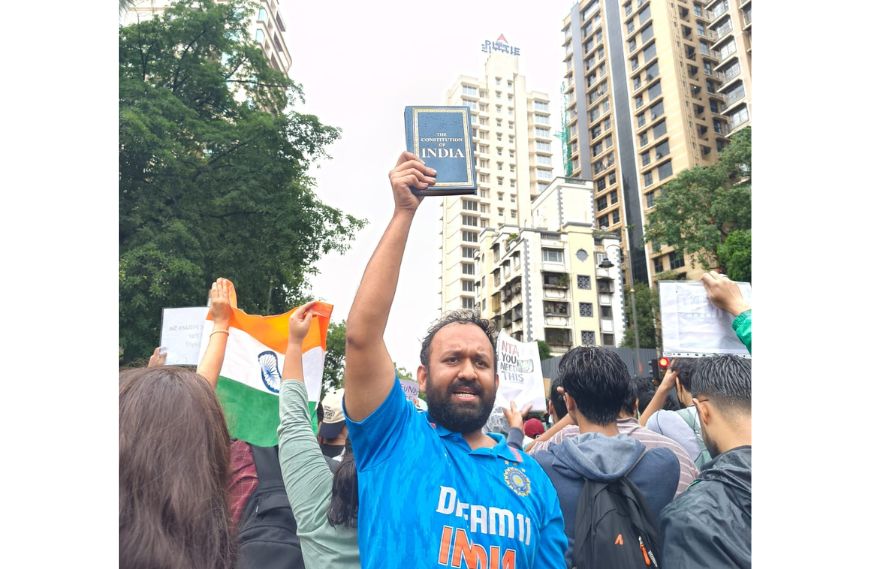
Image Courtesy: Gargi Narvekar
A city that looked different
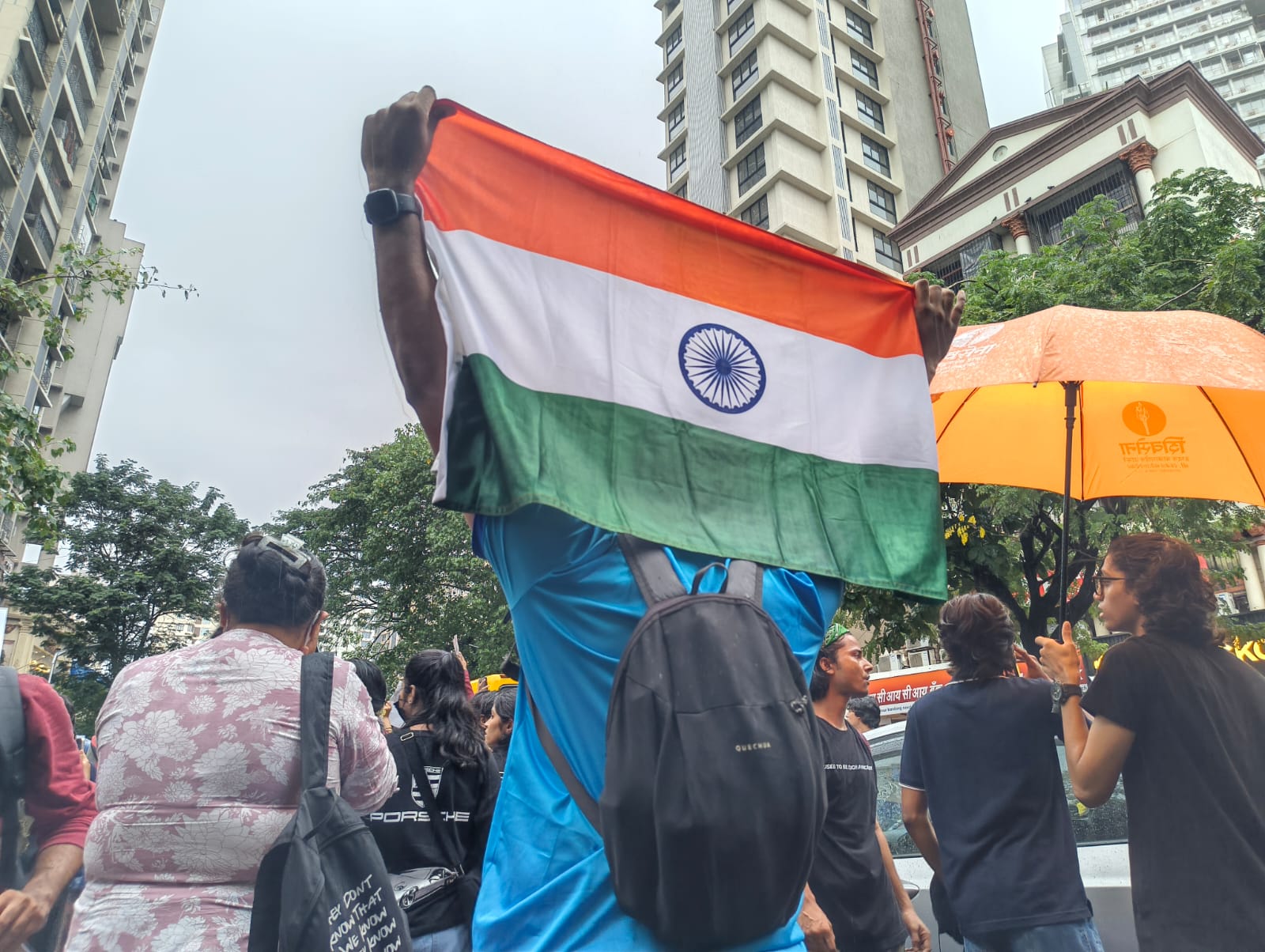
Soon, I reached Dadar station, which looked like a sea of people. One glance around was enough for me to realise, “No, this isn’t the usual crowd of Mumbaikar commuters of every day.” Hundreds of faces belonged to young people who had gathered because, like me, they were feeling, “We must do our bit to tell this government that something (or perhaps too much?) is seriously wrong when the country’s education system breaks down horribly, and yet the Education Minister continues to be shielded instead of being held accountable and asked to resign.”
From Dadar, my friends, Sakshi Bhole, Gargi Narvekar, Aditya and Punit Giri also joined me. My excitement to do something for the nation grew while at the same time, a sense of security too came to my mind. After all, I had read stories of how protesters were treated at various places, especially, at Jantar Mantar and Connaught Place, in the Capital. Life matters, right?
And, when one minister, with his pachyderm-ish attitude, refuses to accept his mistake and steps down, thousands and lakhs of students and young people step up to tell him, loud and clear, “Enough is enough, Sir.”
This wasn’t Mumbai’s usual rush. The crowd wasn’t running to reach home quickly. Instead, students from across the city had gathered with determination in their eyes. From Dadar Shivaji Park to Chembur, Vashi, Powai, and Bandra, hundreds of people came together between 1 pm and 7 pm to demand accountability for the country’s education system and stand in solidarity with NEET aspirants.
When memes became the language of protest
What surprised me the most was how Gen-Z chose to express its anger.
Instead of only shouting slogans, they turned the internet into their protest currency. Everywhere I looked, there were posters inspired by viral memes that we scroll past every day on social media. The humour was clever, sarcastic as well, but the message behind it was serious. Many posters referenced Education Minister Dharmendra Pradhan and Prime Minister Narendra Modi, reflecting the disappointment and frustration many students felt over the state of education in the country.
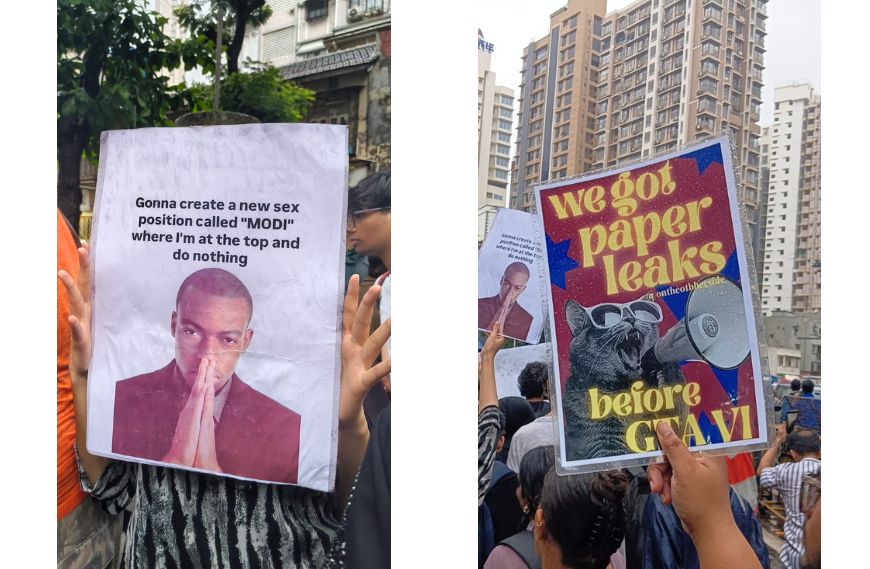
As we continued walking through the protest, we noticed people distributing Melody chocolates, a playful reference to Prime Minister Narendra Modi gifting them to Italian Prime Minister Giorgia Meloni. It was another example of how humour and satire had become a language of protest, with students finding creative ways to express what they felt.
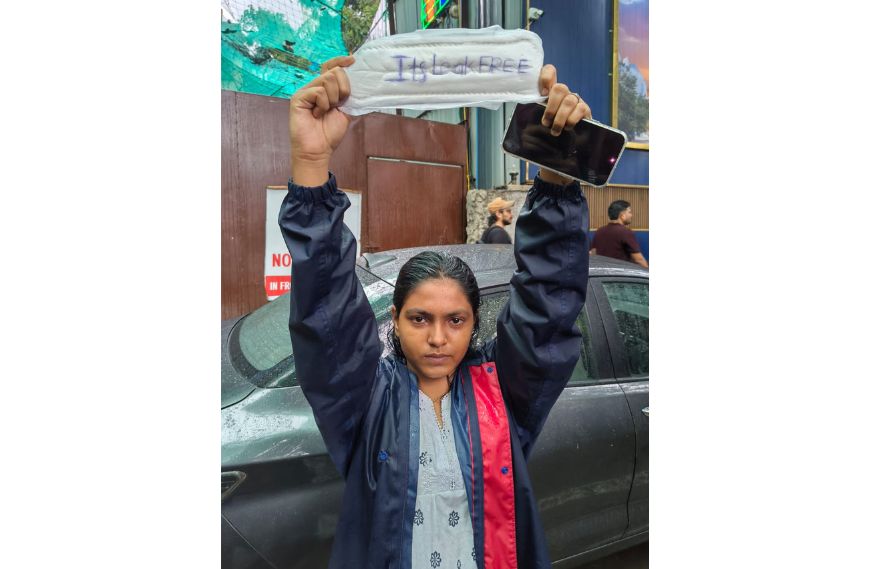
I looked around at the sea of posters. My friends and I felt the urge to create one of our own, something that reflected exactly how we felt about everything that had brought us there. We wanted our voices to be ‘seen’, not just heard. So, instead of picking up a regular placard, we decided to try something different. We took a sanitary napkin, wrote “It’s leak free”, across it, and held it up. Within moments, our poster caught people’s attention. It was a small idea, but for us, it was a powerful way of expressing what words alone couldn’t.
Voices that echoed across the streets
The protest also drew support from familiar faces. Actor Imran Khan addressed the gathering and spoke about accountability. Rappers Raftaar and Emiway Bantai stood alongside the students. Several content creators and social media influencers also joined the movement, adding their voices to the growing crowd.
The afternoon soon turned into evening, and the energy kept increasing.
The chants echoed through the streets: “Gali gali mein shor hai, Modi sarkar chor hai!”, “Inquilab Zindabad”, “Vande Mataram”, and “Jab jab Modi dartaa hai, police ko aage kartaa hai.” At one point, the crowd sang the ‘Azaadi’, a number from Gully Boy. Hearing hundreds of voices singing together gave me goosebumps. It wasn’t just a song anymore it had become a shared emotion.
Another moment caught my attention whenever television news crews entered the protest. Many people began chanting “Godi Media”, expressing what they believed was the media’s failure to adequately cover the CJP protests taking place across the country. Whether one agreed with them or not, it was impossible to ignore the frustration in their voices.
More than a protest…
But if someone asks me what I will remember most from that day, it won’t be the slogans.It will be the kindness.
I watched complete strangers make way for motorcycles and school buses that accidentally entered the crowd. Volunteers patiently guided people instead of pushing them. Local shopkeepers handed out free water bottles to protesters without expecting anything in return. Everywhere I looked, people were helping one another. It reminded me that protests are not only about resistance, they are also about community.
The day wasn’t without its challenges. Some students alleged that they were detained by the police, while others said they were prevented from protesting at certain locations. Yet, despite these moments, the crowd remained remarkably calm and disciplined. The coordination among the students and volunteers ensured that the protest remained peaceful from beginning to end.
The day Gen-Z proved them wrong
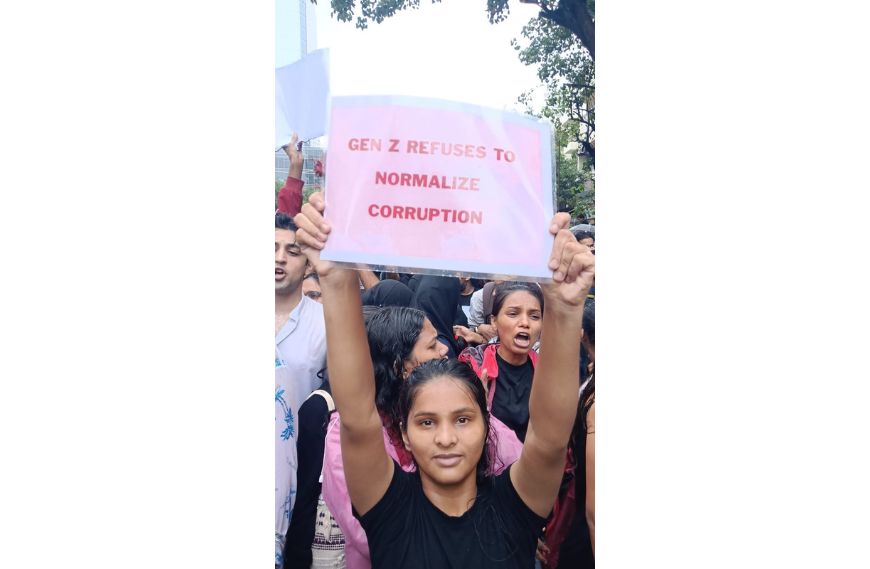
Before that day, I had often heard people say that Gen-Z doesn’t care about politics or the future of the country. Standing in the middle of this protest, that stereotype felt impossible to believe. These students knew exactly why they were there. They were informed, passionate, and determined to make themselves heard.
One poster summed it up perfectly: “Gen-Z refuses to normalize corruption.”
Finally, as I made my way back home, I wasn’t thinking about the speeches or the celebrities anymore. I was thinking about the people I had met, the strangers who looked after one another, who believed their voices mattered, and who refused to stay silent.
It was my first protest. Whether history remembers this day as a turning point in Indian political history or not, it was certainly a historical day for me. After all, I participated for the first time in a protest, for the people, by the people. And for my India. Hope, India’s achchhe din aayenge soon, when our leaders’ conscience will work the way it should be.
I stand by millions of those who are my age so that my India can see the coming of age of clean administration, better education, and remarkable progression.
Jai Hind.


