



India has taken a bold stand against terrorism with Operation Sindoor, a calculated military response following the Pahalgam terror attack. The operation targeted terrorist infrastructure in Pakistan and Pakistan-occupied Kashmir (PoK), reinforcing India’s commitment to national security.
Prompt Action Following Pahalgam Attack
Launched immediately after the deadly Pahalgam incident, Indian Armed Forces carried out precise cross-border strikes on terrorist camps. The strikes were aimed at neutralising threats before they could escalate, showcasing a firm, pre-emptive security doctrine.
Defence Minister Highlights India’s Firm Policy
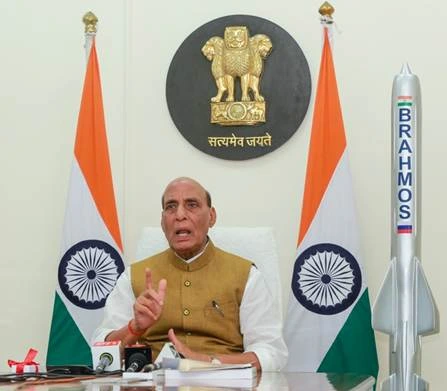
Defence Minister Rajnath Singh confirmed that the armed forces had struck back with strength and precision. He reiterated India’s zero tolerance policy against terrorism and made it clear that terrorist actions would face strong retaliation. His statement underlined that while India desires peace, it will not hesitate to act when provoked.
Differing Approaches: India vs Pakistan
While India’s operation focused on surgical strikes against terror launchpads with minimal civilian impact, retaliatory actions from Pakistan reportedly targeted civilian locations in India. These included attacks on religious sites and hospitals, drawing strong condemnation for violating humanitarian norms.
Defence Capabilities Strengthened
Coinciding with the operation, Rajnath Singh also inaugurated the BrahMos Integration and Testing Facility Centre in Lucknow. This state-of-the-art centre will significantly boost India’s indigenous defence production and is expected to create around 5,500 jobs, supporting both national security and local economic growth.
Message to the Region
Operation Sindoor sends a strong message: India will defend its sovereignty decisively. This shift from reactive to proactive engagement is likely to influence regional security frameworks and deterrence strategies moving forward.
