



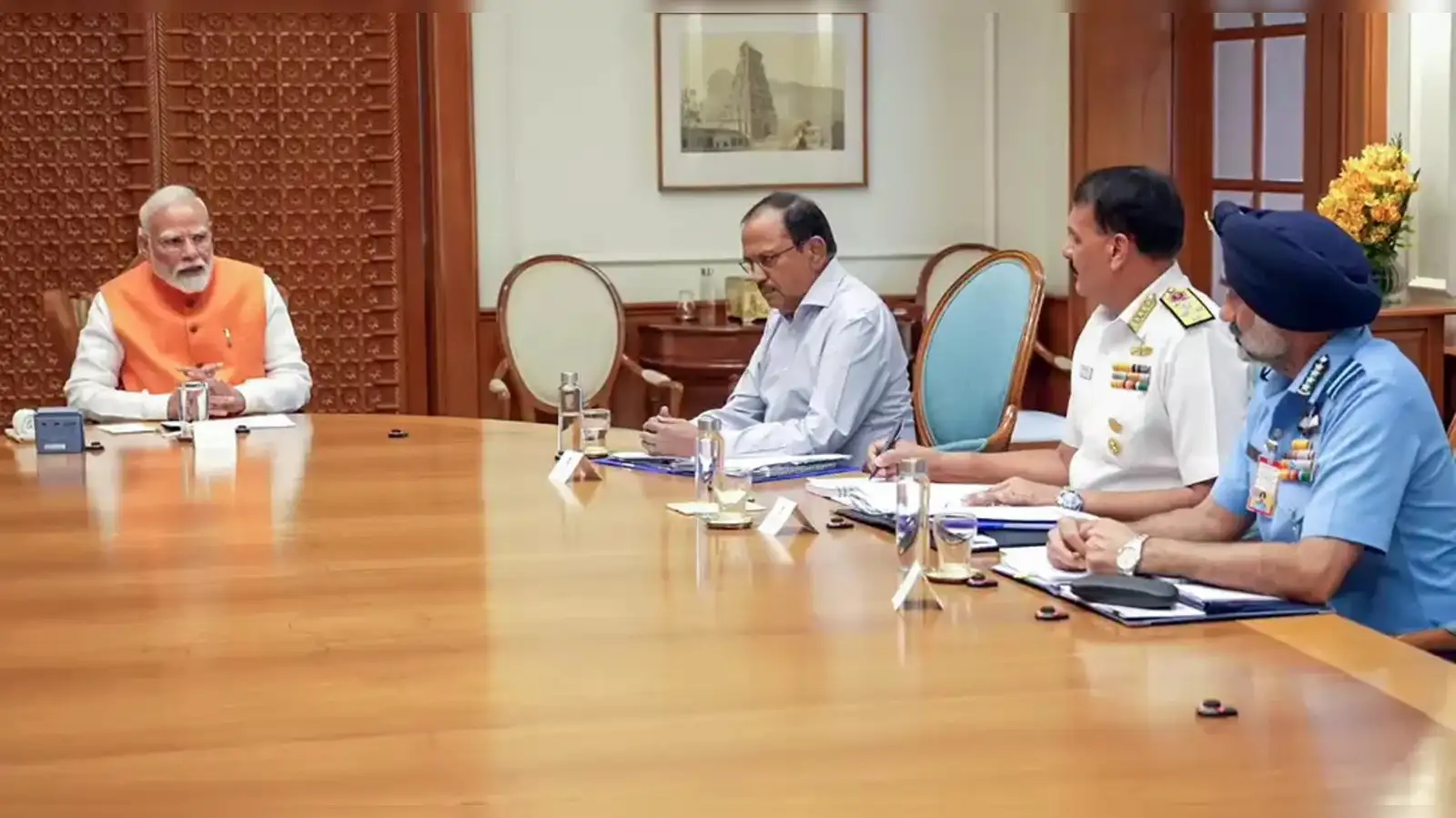
Prime Minister Narendra Modi has sent out a clear and direct message following the Pahalgam terrorist attack in Jammu and Kashmir, India’s armed forces are free to decide how, when and where they will hit back.
This strong statement came during a high-level security meeting held on Tuesday, just days after the brutal attack in Pahalgam on 22 April that claimed 26 lives, many of them tourists. The Prime Minister said India remains fully committed to fighting terrorism and declared, “We are determined to crush it.”
Modi made it clear that the Indian military has his complete trust. “They have full operational freedom,” he said, according to government sources. That means it’s entirely up to them to plan the response, be it timing, location or strategy.
Top security brass meets in Delhi
The meeting was attended by key defence leaders including Defence Minister Rajnath Singh, National Security Advisor Ajit Doval, and the chiefs of the Army, Navy and Air Force. Chief of Defence Staff General Anil Chauhan was also part of the discussion.
The government is now evaluating its options carefully after the Pahalgam incident, which has once again raised serious questions about cross-border terrorism and the safety of civilians in conflict-prone areas like Kashmir.
Punishment Will Be Beyond Their Imagination
Earlier, reacting strongly to the attack, PM Modi did not mince words. He vowed that those behind the killings, including their backers, would face consequences ‘beyond their imagination’. While he did not name Pakistan directly this time, the reference was clear, given the country’s known links to previous terror incidents targeting India.
This is not the first time the government has shown such intent. After the 2016 Uri attack, India carried out surgical strikes inside Pakistan. Then came the Balakot airstrike in 2019 after the Pulwama attack on CRPF personnel. Both actions were significant military responses meant to send a strong message across the border.
India takes early steps against Pakistan
In a clear signal of pressure, India has already started acting diplomatically and strategically. One major step was suspending parts of the Indus Waters Treaty with Pakistan, a 1960 water-sharing agreement which has long been seen as a gesture of cooperation despite tensions.
On the same day, Union Home Secretary Govind Mohan also chaired a separate high-level meeting in New Delhi with the heads of all three central paramilitary forces and senior officials from other security agencies. Although the official agenda wasn’t made public, it is understood that national security and counterterror measures were the core focus.
