


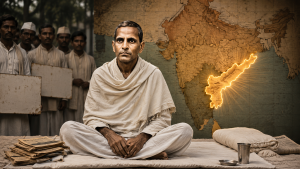








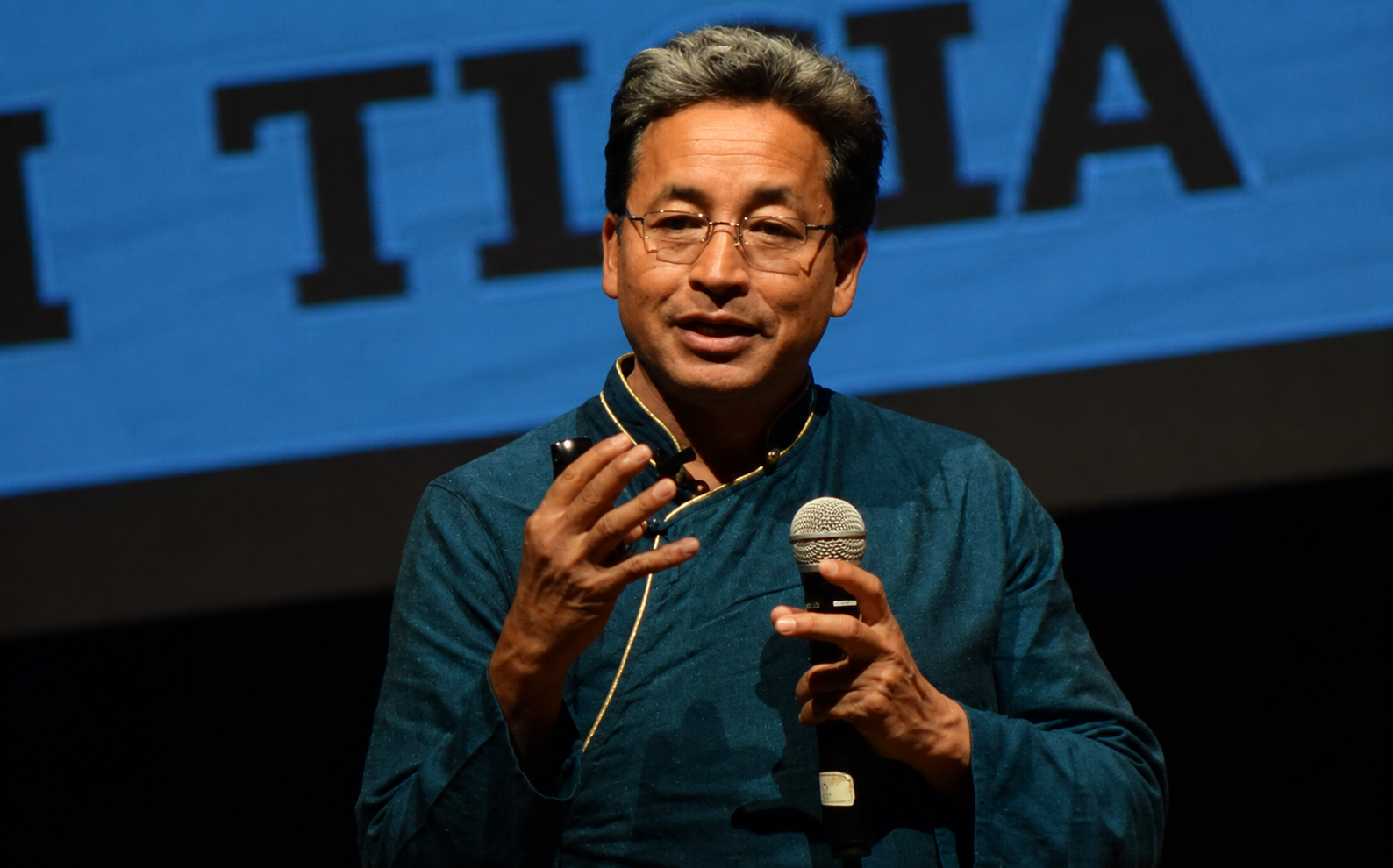
At Jantar Mantar in Delhi, a quiet but intense standoff has been unfolding for over two weeks.
Climate activist and education reformer Sonam Wangchuk has been on an indefinite hunger strike since June 28. As his protest enters its 19th day, two very different forces are now watching his every move.
One is his own body, which is visibly weakening. The other is the Indian state, which has just been ordered by a court to keep a close eye on him.
What is the protest about?
Wangchuk is demanding the resignation of Union Education Minister Dharmendra Pradhan. His concerns centre on examination irregularities, including the NEET paper leak issue.
His protest is being held in solidarity with the Cockroach Janta Party (CJP), a youth-led political movement.
Wangchuk is a familiar name in Indian public life. He is known for decades of work on education reform and sustainable innovation in Ladakh.
This is not his first high-profile protest. But the scale and duration of this one have raised concern well beyond his usual circle of supporters.
The body’s toll after 19 days
Hunger strikes of this length come with serious physical consequences. Wangchuk’s case appears to be no exception.
Reports indicate he has lost more than 8 kg since the strike began. His blood sugar levels have also been dropping.
Both are signs that his body is under significant strain. Medical experts generally note that prolonged fasting beyond two weeks can affect vital organ function.
Continuous monitoring becomes critical at this stage to prevent irreversible harm.
The court steps in
On July 15, the Delhi High Court took up a public interest litigation seeking urgent medical intervention for Wangchuk.
The plea, filed by advocate Rakesh Kumar Saini, asked the government to shift him to a hospital. It also sought that necessary nutrients be administered through a liquid diet if needed.
A bench comprising Chief Justice Devendra Kumar Upadhyaya and Justice Tejas Karia did not order forced hospitalisation.
Instead, the court directed that Wangchuk’s health be clinically assessed on a daily basis. Any medical intervention found necessary by doctors is to be carried out.
The bench made its position clear in a simple line: “Life of any citizen is precious and all efforts ought to be made by government authorities to save the same.”
Solicitor General Tushar Mehta, representing the Centre, told the court that government doctors and medical experts were already monitoring Wangchuk’s condition.
He added that appropriate medical intervention would be provided based on the doctors’ assessment. The court noted this assurance and disposed of the petition.
This effectively formalised the daily monitoring as an ongoing legal obligation, rather than a one-time check.
A quiet tension, not a confrontation
What makes this moment interesting is that there is no direct clash playing out here.
No one is forcing Wangchuk to end his strike. The government has not been ordered to physically intervene against his wishes.
Instead, the court’s approach reflects a careful balance. It respects an individual’s right to protest, while ensuring the state does not stand by if a life is at serious risk.
This is not a new dilemma in India. Hunger strikes have long been used as a form of protest.
Questions around how far the state should go to protect a protester’s health, without undermining their right to demonstrate, have come up before too. Each case tends to be handled differently, largely depending on how serious the health risk appears to be.
What happens next
For now, Wangchuk remains at Jantar Mantar, continuing his fast.
The daily medical monitoring ordered by the court means his condition will be tracked closely in the days ahead. Any deterioration is expected to prompt further medical action.
Whether this arrangement is enough to protect his health while allowing his protest to continue, or whether the situation escalates further, will likely become clearer only in the coming days.
As things stand, the case highlights a broader, ongoing question in how India handles hunger strikes. How does a democratic system protect a citizen’s right to protest, while also fulfilling its duty to protect that same citizen’s life?
Subscribe Deshwale on YouTube


