










By: Shilpin Tater, Founder & Managing Director, Superb Realty
Every year, World Environment Day serves as a reminder that the future of our planet depends on the choices we make today. While governments and policymakers play an important role, businesses, communities and individuals also share the responsibility of creating a more sustainable future.
Over the past few decades, cities across the world have witnessed rapid growth. Expanding skylines, modern infrastructure and urban development have transformed the way people live and work. However, this progress has also brought significant environmental challenges, including rising temperatures, worsening air quality, pressure on natural resources and a growing distance between urban residents and nature.
The debate is no longer about whether cities should grow. The real challenge is ensuring that growth takes place in a responsible and sustainable manner.
The real estate sector plays a critical role in shaping the future of cities. Every building constructed today leaves a lasting impact on the environment and the communities around it. As a result, developers must recognise that sustainability and development are not competing goals. Instead, they must work together to create cities that are both economically vibrant and environmentally responsible.
One of the most pressing concerns facing urban centres such as Mumbai is air pollution. Clean air, once taken for granted, has become a growing concern for millions of residents. Poor air quality affects health, productivity and overall well-being. This challenge highlights the need for buildings that actively contribute to healthier environments rather than adding to environmental stress.
Modern architecture must therefore move beyond aesthetics and functionality. Commercial and residential spaces should be designed to support human health, comfort and sustainability. Today’s workplaces, for example, are not simply offices. They are environments that influence mental well-being, creativity and collaboration. Thoughtful design can significantly improve the quality of life for those who use these spaces every day.
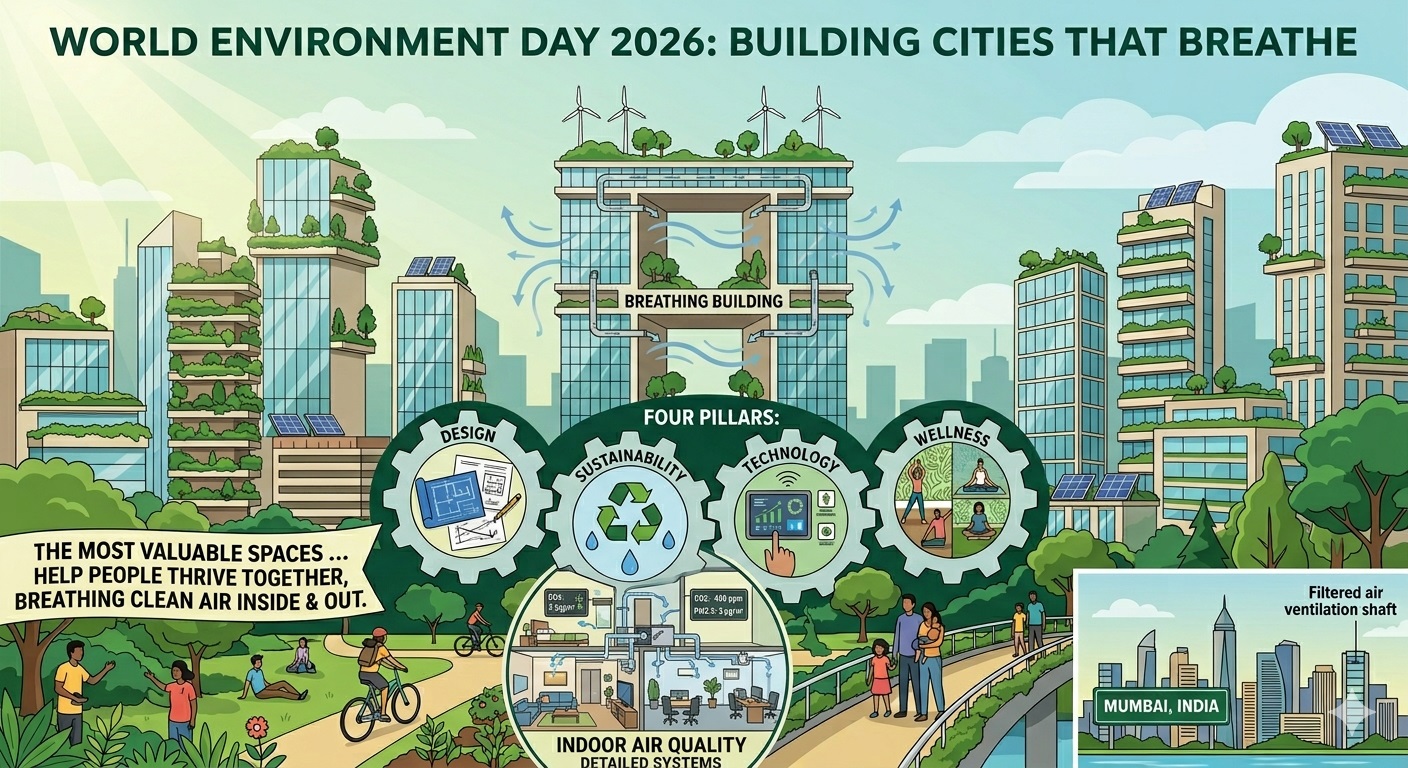
Creating sustainable buildings requires a balanced approach built around design, technology, wellness and environmental responsibility. Natural light, efficient airflow, open spaces and access to greenery should become central elements of urban planning. Features such as landscaped gardens, terrace lounges and biophilic design help reconnect people with nature while creating healthier living and working environments.
Technology is also transforming how buildings operate. Intelligent systems can now monitor energy consumption, indoor environmental conditions and operational efficiency in real time. Innovations such as smart environmental monitoring and AI-driven air quality management can help create healthier and more efficient indoor spaces.
Sustainability, however, extends far beyond energy efficiency. Responsible resource management is equally important. Practices such as rainwater harvesting, wastewater recycling, renewable energy integration, waste management and efficient lighting systems should become standard components of modern development projects.
The real estate industry occupies a unique position because every project shapes communities for decades. Decisions made during planning and construction can influence environmental outcomes for generations. This makes sustainability not just a business objective but a long-term responsibility.
On World Environment Day, the industry has an opportunity to redefine success. Success should not be measured solely by financial returns or the amount of space delivered. It should also be measured by the quality of life created, the environmental impact reduced and the positive legacy left behind.
The cities of the future must be resilient, intelligent and sustainable. They must balance innovation with environmental stewardship and create spaces where people and nature can thrive together. Ultimately, the most valuable buildings are not those that simply stand tall, but those that contribute to a healthier and more sustainable world.
Subscribe Deshwale on YouTube


