



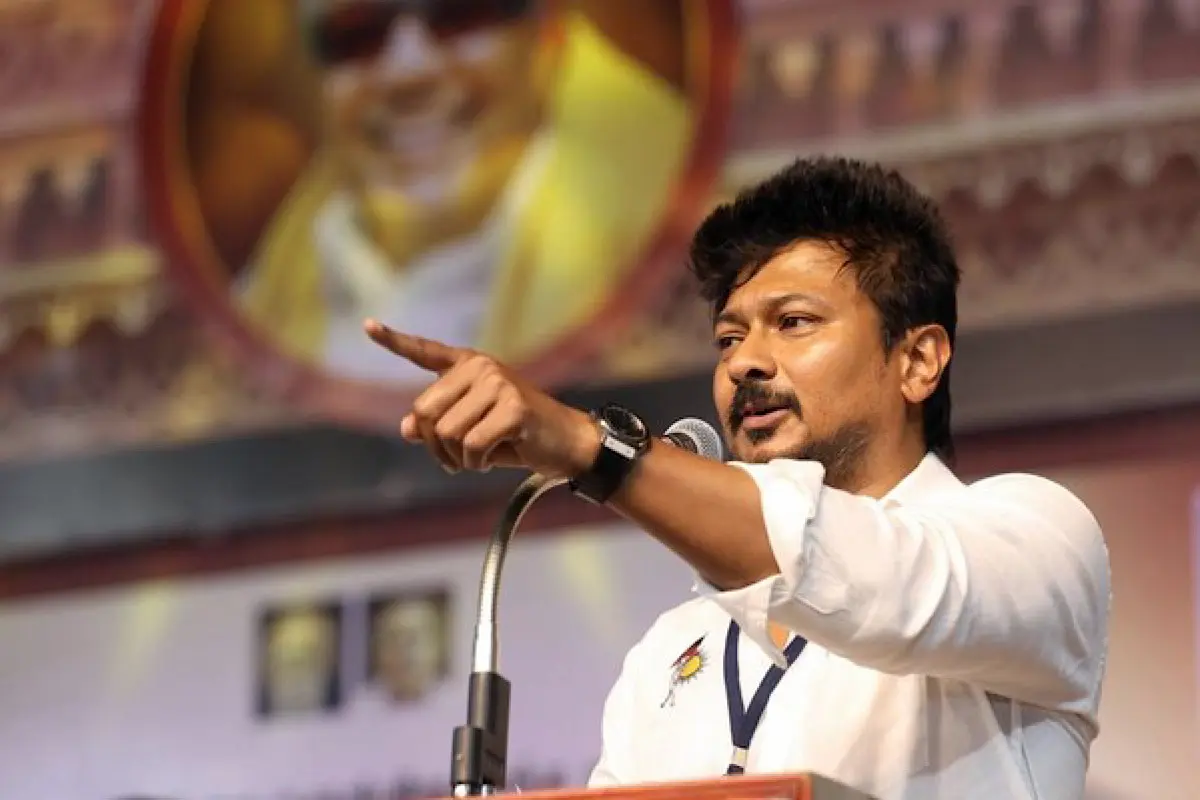
The debate over language policy in Tamil Nadu has reignited tensions between the state government and the Centre, with the ruling party staging protests against the imposition of a three-language formula. Leaders and workers from the party, including Udhayanidhi Stalin, have strongly opposed the policy, arguing that it threatens Tamil linguistic identity and violates the state’s long-standing commitment to a two-language system.
Why is Tamil Nadu Protesting?
The Centre’s push for the National Education Policy (NEP) has been a major point of contention, particularly its emphasis on a trilingual education system. Under this system, students would be required to learn three languages, including Hindi, which Tamil Nadu sees as an attempt to impose linguistic uniformity across states. The state has historically adhered to a two-language policy-Tamil and English-since the anti-Hindi agitations of the 1960s, making any deviation a politically sensitive issue.
Udhayanidhi Stalin, while addressing the protest, stated that Tamil Nadu is being financially penalised for not accepting the policy. He alleged that the Centre is withholding ₹2,152 crore in education funds as a pressure tactic. Tamil Nadu’s government has accused the Union Government of favouring states like Uttar Pradesh and Gujarat while sidelining non-compliant states.
Political Backlash and Warning Against ‘Language War’
The protest saw participation from several key political figures, including state ministers, MPs, and MLAs, who carried placards and raised slogans rejecting the trilingual mandate. The state leadership has warned that any attempt to enforce the language policy could trigger a larger movement similar to the anti-Hindi protests that shaped Tamil Nadu’s linguistic and political landscape decades ago.
Additionally, leaders have criticised the National Education Policy for being incompatible with Tamil Nadu’s existing education system. They argue that imposing Hindi as a mandatory subject limits opportunities for students who wish to pursue higher education and careers within a Tamil-medium framework.
What’s Next?
With the Tamil Nadu government refusing to comply with the trilingual policy, the confrontation with the Centre is expected to intensify. The state remains firm on its stance that language education should be determined by regional governments rather than a centralised directive. As protests gain momentum, the issue is likely to spark a wider debate on linguistic autonomy and federal governance in India.
