



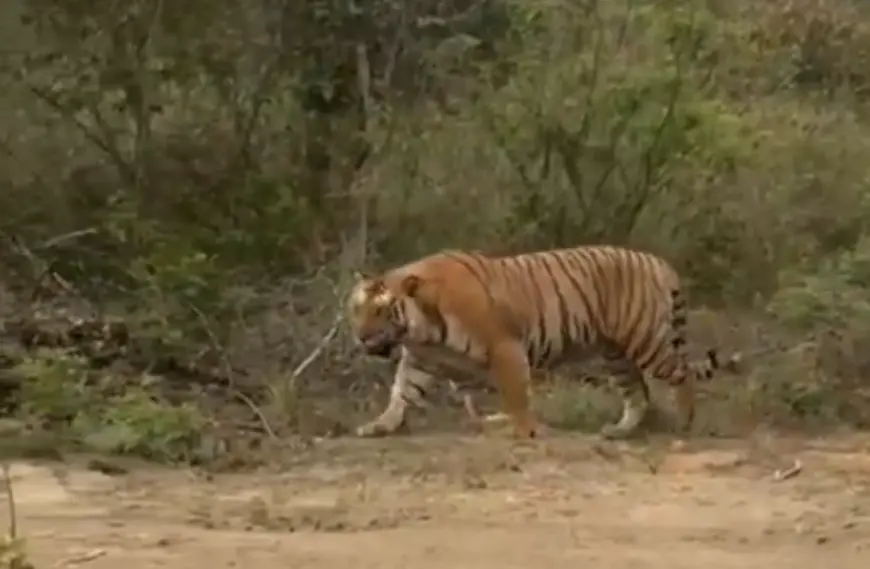
Deep within the dense forests of Uttarakhand, a colossal figure recently stunned both forest officials and wildlife enthusiasts a massive tiger, now dubbed “Hercules,” believed to be the largest ever recorded in Asia. With a staggering presence and immense build, Hercules isn’t just a marvel of nature; he’s a symbol of a conservation success story unfolding silently amidst the Himalayan foothills.
The making of a giant
Hercules’ appearance marks a turning point in India’s tiger conservation narrative. Over the past 16 years, Uttarakhand has witnessed a phenomenal 314% rise in its tiger population. From just under 180 tigers in 2006, the count has surged beyond 560 today. This growth has been the result of meticulously planned conservation programs and long-term ecological commitment.
Several factors have contributed to this remarkable rise. Protected forests have been expanded and connected through wildlife corridors, enabling safer movement for tigers and their prey. Modern monitoring techniques like camera trapping, radio collars, and even DNA analysis have allowed forest teams to better understand and protect individual animals. Most importantly, anti-poaching efforts have intensified, with advanced surveillance and trained response teams working round the clock.
Communities and conservation: a delicate balance
But the resurgence of such a dominant predator brings with it new challenges. As tiger numbers grow, their territories expand sometimes pushing them closer to human settlements. This has led to a slight increase in human-wildlife encounters. In the past year alone, a number of tragic incidents involving tigers have been reported.
Recognizing this, authorities have increasingly focused on co-existence. Local communities, particularly those living near reserve boundaries, have been involved in conservation through eco-tourism opportunities, organic farming initiatives, and awareness programs. These efforts not only ensure a livelihood for villagers but also reduce the dependence on forest resources.
The shadow of development
While Uttarakhand’s forests are brimming with new life, rapid infrastructure development looms as a threat. Road expansion, construction projects, and tourism-related activity often fragment tiger habitats. In some regions, proposed projects risk severing critical movement corridors threatening not just tigers, but elephants, leopards, and other wildlife.
The case of Hercules underlines an urgent need: integrating conservation with development. Forest landscapes must not be viewed as obstacles to growth, but as invaluable ecological assets. Planners and policymakers must ensure that progress does not come at the cost of the very wilderness that makes Uttarakhand unique.
What lies ahead?
The arrival of Hercules is both awe-inspiring and deeply symbolic. At nearly 300 kg and measuring over 10 feet in length including the tail, he is not just a biological wonder, but also a reminder of nature’s resilience when given the chance.
However, sustaining such giants requires vision. The future of wildlife conservation in India depends on holistic strategies that include scientific management, community participation, and mindful development. Tigers like Hercules are rare, and their survival speaks volumes about our priorities as a society.
In the coming years, the roar of the forest will echo not only through the hills of Uttarakhand but also in policy rooms, classrooms, and conservation forums challenging us to do more, dream bigger, and protect what truly matters.
