



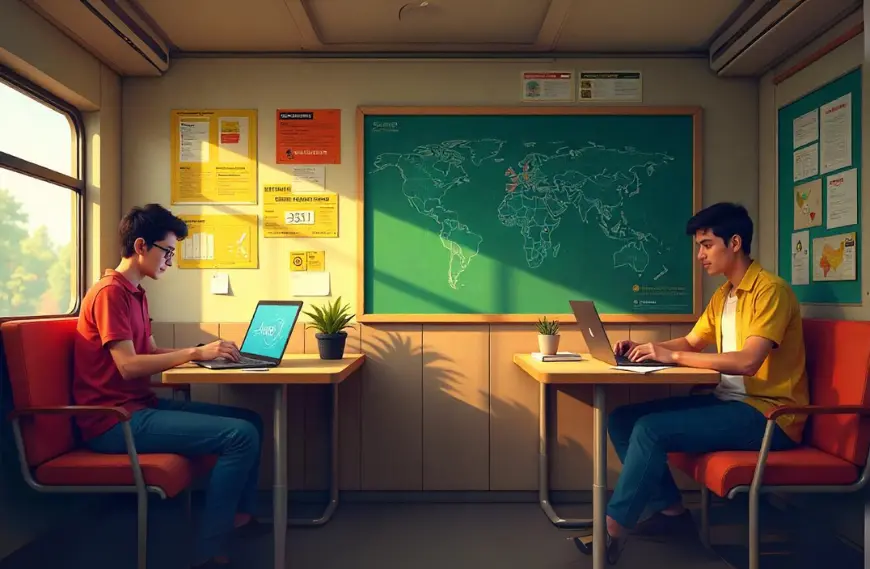
On a crowded local train in Mumbai, 22-year-old Arjun codes a budgeting app that helps gig workers save money. In a hostel room in Coimbatore, 20-year-old Riya builds biodegradable packaging from banana fiber. And in a classroom in Guwahati, 17-year-old Tenzing dreams of a drone-based delivery system for rural pharmacies.
This is not a fantasy, it’s the real India. A country where the youth are not waiting for jobs, but creating them. Where failure is embraced, and jugaad meets JavaScript. Where entrepreneurship is not just a buzzword, but a movement.
India’s Youngest Entrepreneurs Yet
India is the third-largest startup ecosystem in the world, and its youngest founders are shaping its future. According to a 2023 NASSCOM report, 43% of first-time founders were under the age of 25. Fuelled by digital access, startup-friendly policies like Startup India, and abundant social challenges that double as opportunities, young Indians are building businesses that matter.
These startups are not about flashy valuations, they’re about impact. Be it climate tech, health-tech, agri-solutions, or digital inclusion, youth-led ventures are solving India’s deepest problems with agility and empathy.
The Why Behind the Wave
What’s driving this boom in youth entrepreneurship?
- Disillusionment with Traditional Jobs: Many Gen Zs find 9-to-5 roles limiting, and crave autonomy and meaning.
- Digital Literacy: Raised on the internet, they’re fluent in tech, marketing, and global trends.
- Frugal Innovation: Resource constraints breed creativity. India’s youth excel at low-cost, high-impact solutions.
- Purpose-Driven Mindsets: Whether it’s mental health or clean energy, today’s young entrepreneurs are passionate about change, not just profit.
As 24-year-old Aisha, founder of an e-waste recycling startup in Jaipur, puts it: “We don’t want to become unicorns. We want to solve unicorn-sized problems.”
From Dorm Rooms to Demo Days
College campuses across India have become hotbeds of innovation. IITs, IIMs, and even smaller private institutions now host incubators, hackathons, and pitch nights. Government initiatives like Atal Innovation Mission and private accelerators like Y Combinator and 100X.VC are fueling this fire.
But beyond metros, the Tier-2 and Tier-3 surge is even more exciting. From Agra to Alappuzha, youth are launching hyperlocal startups, using WhatsApp, UPI, and reels to reach customers. Language and location are no longer limitations.
The Sectors They’re Transforming
- Fintech: Youth-led apps help gig workers get insurance, farmers access micro-loans, and teenagers learn digital finance.
- Health-tech: Startups offer teleconsultations, AI diagnostics, and mental health chatbots—built by and for the young.
- Climate & Sustainability: From upcycled fashion brands to plastic alternatives, eco-entrepreneurship is thriving.
- Ed-tech: Post-pandemic, students are building platforms to teach coding, arts, and regional languages.
- Creator Economy: Influencers are launching their own brands, leveraging community and commerce seamlessly.
The Grit Behind the Glamour
While the media celebrates the billion-dollar unicorns, real startup life is anything but glamorous. Most young entrepreneurs work with limited capital, juggle studies or family expectations, and face regulatory hurdles.
Failure is common. Mental fatigue is real. Yet, their resilience is extraordinary.
“We pitch 10 times before someone believes in us,” says Raghav, 23, founder of a soil-testing AI tool in Punjab. “But every ‘no’ teaches us how to improve.”
What They Need
To turn potential into power, India must:
- Simplify Compliance: Make business registration and taxation youth-friendly.
- Offer Mentorship: Connect students with real-world guidance from successful entrepreneurs.
- Promote Inclusion: Ensure that rural, female, LGBTQ+, and disabled founders receive equal opportunities.
- Strengthen IP & Legal Education: Many young startups falter due to lack of awareness about intellectual property, contracts, and financing.
The Big Picture
Youth entrepreneurship isn’t just about startups, it’s about sovereignty. It’s about creating livelihoods, solving local problems, and redefining India’s global image. If nurtured, this movement can bridge the urban-rural divide, empower marginalized communities, and transform education from rote learning to real-world impact.
India’s youth are no longer dreaming of Silicon Valley, they are building Bharat Valley. With laptops in hand and courage in their hearts, they are showing that innovation doesn’t need a corner office, it needs curiosity, commitment, and a bit of chaos.
Their journey won’t be easy, but their fire is unmistakable. And when the dust settles, it’s their ideas that will rise, reshaping India from the ground up.
