



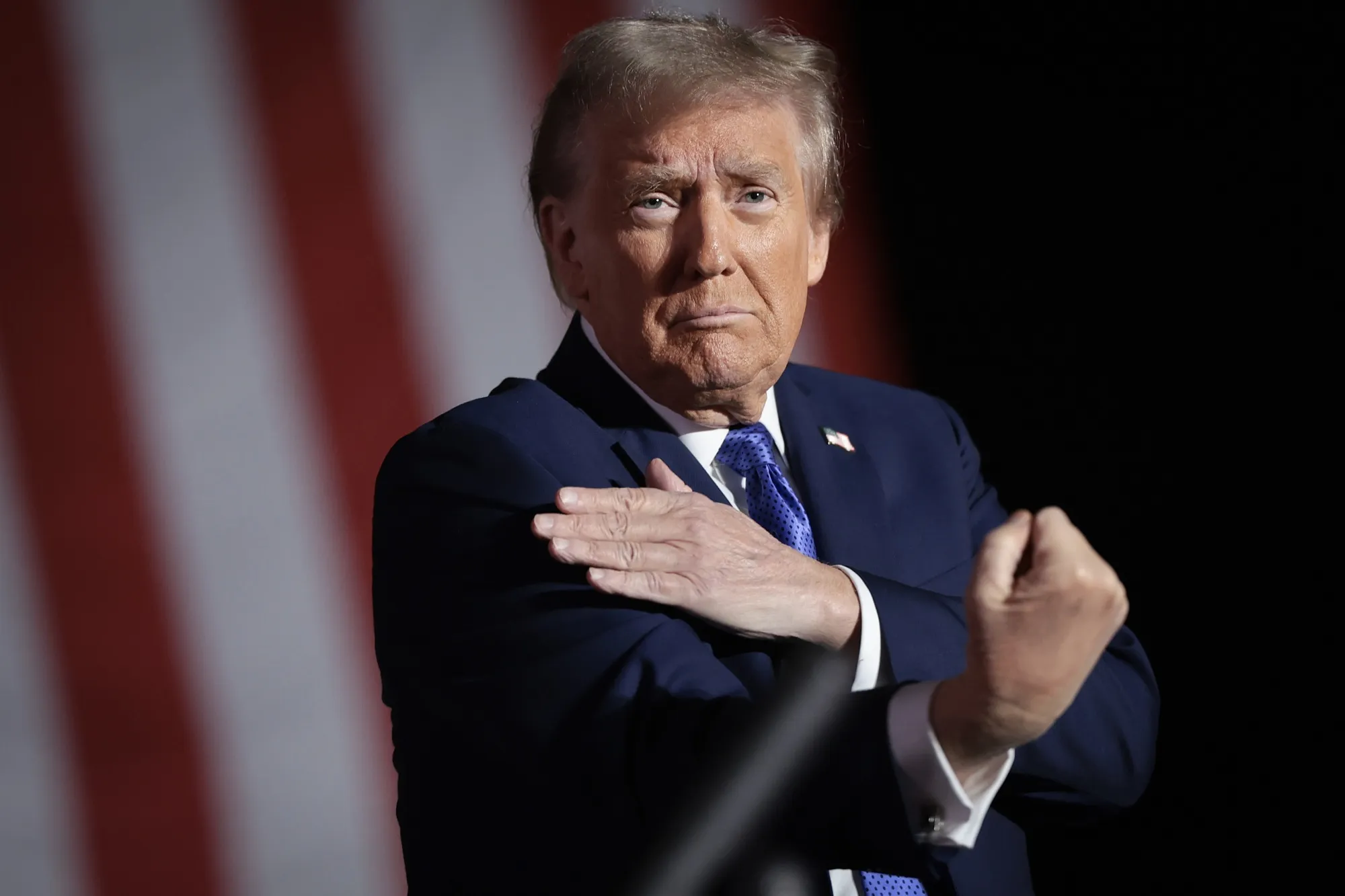
At dawn, a digital salvo was fired across continents. “Any Country aligning themselves with the Anti-American policies of BRICS, will be charged an ADDITIONAL 10% Tariff. There will be no exceptions.” The words—unmistakably Donald J. Trump’s—sent shockwaves through foreign ministries in Brasília, Beijing, and New Delhi.
The weapon of choice? Trade tariffs.
The target? A rising bloc that represents nearly half the world’s population, controls 40% of global oil production, and 75% of the planet’s rare earth minerals. BRICS—originally Brazil, Russia, India, China, and South Africa—now expanded to include Egypt, Ethiopia, Iran, UAE, Indonesia, and Saudi Arabia—is no longer just a diplomatic gathering. It’s become, in Trump’s eyes, an existential threat to America’s global supremacy.
Why Trump Sees Red
rump’s hostility towards BRICS isn’t new—but it has intensified. The bloc’s real threat, according to Trump, isn’t military might but economic independence. They’re not launching missiles—they’re challenging the hegemony of the dollar. And for Trump, that’s unforgivable.
“They’re trying to destroy the dollar,” Trump reportedly snapped during a Cabinet meeting. Washington took note when Russian sovereign wealth fund chief Kirill Dmitriev called BRICS “the dawn of a Global South era.” For Trump, that sounded like a declaration of war.
The Core Conflict:
- Trump’s Fear: That BRICS could de-dollarize global trade, eroding US control.
- The Spark: BRICS condemned US-Israel strikes on Iranian nuclear sites and criticized US tariff policy.
- Trump’s Retaliation: 10% blanket tariff on BRICS-aligned nations; 100% if a common BRICS currency is adopted.
- BRICS’ Response: “We advocate openness, not confrontation,” said China’s Foreign Ministry.
- What’s at Stake: Over $33 trillion in global trade—and the rules that govern it.
Currency, Not Cannons
The dollar isn’t just a currency—it’s Washington’s soft weapon. Through it, the US imposes sanctions, sets financial terms, and governs trade routes. Over the years, BRICS has grown restless under this regime. Russia now sells oil to India in yuan and dirhams. China has inked gas deals in rubles. The Rio BRICS summit even endorsed “BRICS Bridge”, an alternative to SWIFT.
While a proposed common currency—nicknamed the “Unit”—hasn’t materialized, local currency trade is advancing fast. That’s enough to trigger Trump. He’s warned of 100% tariffs should BRICS dare to unify currencies.
Geopolitics Heats Up
June’s US-led airstrikes on Iran’s Fordow and Natanz nuclear sites drew sharp rebukes from BRICS. The bloc called the attacks “illegal” and a violation of international law. Trump’s response? Instant escalation via tariffs. White House Press Secretary Karoline Leavitt minced no words: “BRICS is seeking to undermine US interests.”
But BRICS isn’t a monolith.
- India refuses any yuan-led currency.
- Brazil prioritizes trade autonomy.
- South Africa insists it isn’t “anti-American.”
Still, under pressure, unity may harden. As economist Herbert Poenisch noted: “Bridging the many differences will be a tall order.” But nothing brings factions closer than a shared adversary.
History Repeats Itself?
Brazil’s President Lula da Silva fired back: “The world has changed. We don’t want an emperor.” The remark echoes history. Like the colonial East India Company once did, Trump now wields tariffs like imperial tools of control. But when empires overreach, resistance often becomes unity.
Looking Ahead: August 1 and Beyond
With tariff notices reportedly “signed and ready,” countries like Egypt, Ethiopia, and Indonesia—struggling with debt, foreign direct investment needs, and oil exports—stand to suffer. But BRICS has leverage:
- Rare earths for high-tech manufacturing
- Oil for global energy demands
- A massive 3.5 billion-strong market
South African President Cyril Ramaphosa put it aptly: “Various centres of power should be seen positively.” But Trump doesn’t see multipolarity as strength. He sees it as chaos.
A New Global Showdown
In essence, the fight isn’t just about tariffs or treaties—it’s about who writes the next chapter of the world order. Trump bets on fracture. BRICS bets on patience and cooperation.
The dance floor is global. The rhythm is geopolitical. And as Trump leads with aggression, BRICS holds its stance—slow, steady, and unshaken.
