



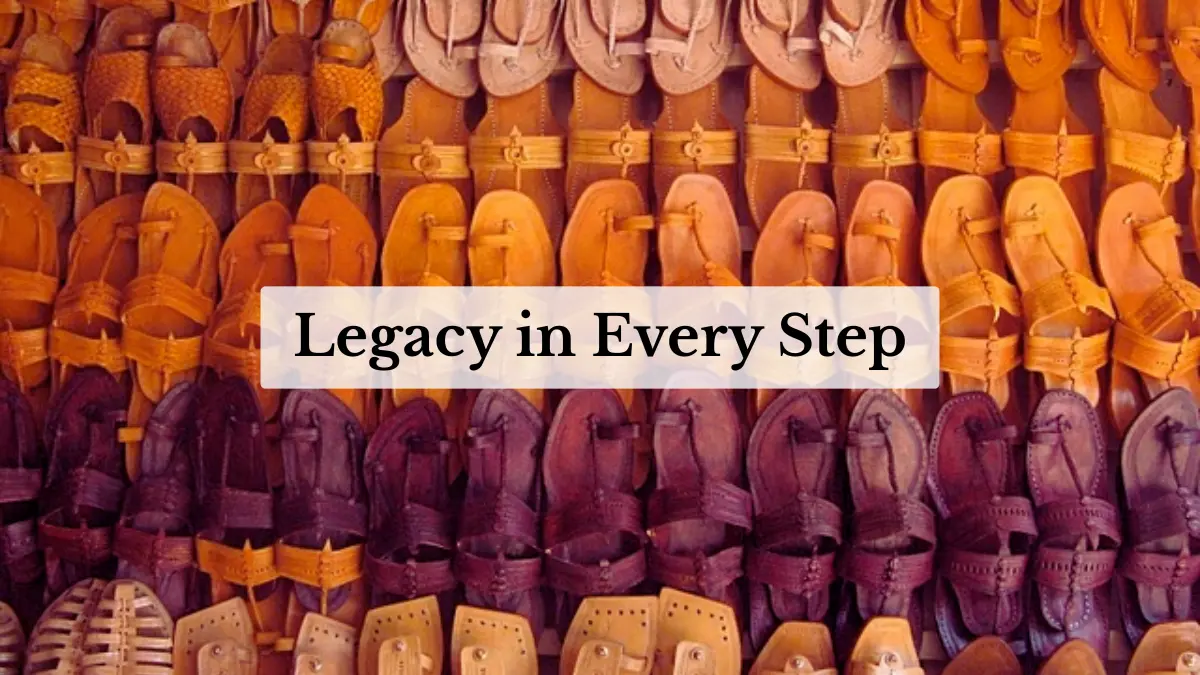
Kolhapuri chappals, born in 12th-century Maharashtra, are handcrafted leather sandals famed for their durability and style. With a 2019 GI tag, they symbolise India’s artisanal legacy, alongside Punjabi juttis and Rajasthani mojaris. Over 10,000 artisans craft 600,000 pairs annually, generating Rs. 9 crore. Recent global attention, like Prada’s 2025 controversy, highlights their cultural value. From weddings to runways, these eco-friendly designs blend tradition with modern appeal, sustaining communities and heritage.
Step into a pair of Kolhapuri chappals, and you’re walking through centuries of Indian history. These handcrafted leather sandals, born in the dusty lanes of Kolhapur, Maharashtra, are more than footwear. They’re a cultural emblem. Their open-toed, T-strap design, tanned with vegetable dyes, sings of craftsmanship honed since the 12th century. But Kolhapuris aren’t alone. From Punjab’s ornate juttis to Rajasthan’s vibrant mojaris, India’s footwear weaves a tapestry of tradition, artistry and resilience. This is their story, one that strides from village workshops to global runways.
The tale begins in Kolhapur, a city cradled by the Sahyadri mountains. In the 12th century, King Bijjala and his minister Basavanna championed local cobblers, urging them to craft sandals for rugged terrains. Known then as Kapashi, Paytaan or Pukri, these chappals were thick, buffalo-hide marvels, weighing up to two kilos. “Craftsmanship is the soul of a nation,” Basavanna might have said, echoing the era’s reverence for artisans. By the 13th century, the Saudagar family refined their design, making them lighter and fit for royalty. Thus, the Kolhapuri chappal was born.
Crafting a Kolhapuri is a labour of love. Artisans, often from the Charmakar community, select buffalo or cowhide leather, tanning it with bark and neem for a rich, earthy hue. No nails are used, just hand-stitched leather threads. Skiving, cutting, punching and braiding create intricate patterns, from elephants to geometric borders. A single pair takes six weeks, though skilled workers produce eight daily. In 2025, a pair costs $8–10, yet lasts a lifetime if kept dry. In 2019, Kolhapur, Sangli, Satara and Karnataka’s Belagavi earned a GI tag, protecting this heritage.
Kolhapuris aren’t just durable. They’re versatile. Their flat sole and breathable leather mould to the feet, ideal for India’s heat. Traditionally tan or brown, modern versions dazzle with zari, pom-poms and colours like electric green. Women pair them with sarees at weddings. Men sport them with kurtas or jeans. The Times of India notes their global rise, with designers like Aprajita Toor adding cushioned soles and heels for urban wear. In 2020, Kolhapur’s 10,000 artisans produced 600,000 pairs, earning Rs. 9 crore, 30% from exports.
But Kolhapuris faced a storm in 2025. Prada’s Spring-Summer 2026 men’s collection featured sandals eerily similar to Kolhapuris, labelled simply “leather sandals.” Priced at $800, they sparked outrage in India. “This is cultural theft,” cried artisans, backed by the Maharashtra Chamber of Commerce. After backlash, Prada’s Lorenzo Bertelli admitted inspiration from “Indian handcrafted footwear” on 27 June 2025, vowing to engage artisans ethically. A silver lining emerged. The Times of India reported a surge in Kolhapuri sales, with youth rediscovering their legacy.
This wasn’t Kolhapuris’ first global moment. In the 1970s, American hippies embraced them as “buffalo sandals,” drawn to their bohemian charm. They appeared in US boutiques, a quiet export of Indian craft. Today, brands like Kosh-a offer vegan Kolhapuris, using faux leather to appeal to eco-conscious buyers. Harshwardhan Patwardhan’s Chappers, launched in 2014, blends tech with tradition, offering customised designs in 27 countries. These innovations keep Kolhapuris relevant, bridging heritage with modernity.
Kolhapuris aren’t India’s only footwear gem. Enter the Punjabi jutti, a closed-toe slipper from Punjab’s heartland. Crafted since the Mughal era, juttis boast silk or velvet uppers, embroidered with gold and silver threads. Artisans in Patiala and Amritsar hand-stitch motifs like peacocks or paisleys, using leather soles for durability. Unlike Kolhapuris, juttis are softer, ideal for formal wear. D’Source notes their popularity at weddings, where brides pair them with lehengas. They cost Rs. 500–5,000, reflecting intricate zari work.
Juttis share roots with Rajasthani mojaris, though differences spark debate. Mojaris, from Jodhpur and Jaipur, feature pointed toes and bolder embroidery, often with mirrors or beads. Legend ties them to Emperor Akbar’s court, where nobles flaunted custom designs. Today, artisans like those at Jaipur’s Johari Bazaar produce 50 pairs weekly, per Connect2India. Mojaris shine at festivals, their vibrant hues complementing bandhgalas. Both juttis and mojaris use vegetable-tanned leather, echoing Kolhapuris’ eco-friendly ethos.
South India offers its own treasures. Kerala’s Kasavu sandals, inspired by the state’s golden-bordered sarees, blend leather with cotton weaves. Artisans in Thrissur craft them for temple visits, their minimalist design suiting humid climates. In Tamil Nadu, Madurai’s Kuthu sandals, with thick soles and brass studs, were once worn by warriors. Today, they’re revived for cultural dances, costing Rs. 1,000–2,000. These regional styles, though less global, rival Kolhapuris in craftsmanship, per Sthapatya.
The economic impact of these crafts is profound. Kolhapur’s Charmakar community, often Scheduled Castes, relies on chappal-making. The Indian Express notes 25,000 leather workers in Kolhapur and Miraj, producing 35–40 pairs weekly per household. Women weave straps, men cut leather and children braid threads. Yet, low wages – Rs. 300 per pair locally – prompt calls for fair pay. Suraj Yengde, in Caste: A Global Story, urges global brands to compensate artisans, citing Prada’s profits.
Challenges loom large. Tanneries, vital for leather, are declining due to environmental laws, per The Hindu. Kolhapuris’ hard soles deter first-timers, though brands like Korakari add cushioning. Low-cost imitations flood markets, undercutting artisans. The GI tag helps, but The Hindu reports MACCIA’s push for global patents to curb appropriation. Despite hurdles, artisans innovate, with Chappers’ ergonomic soles and Kosh-a’s vegan options drawing millennials.
These footwear styles carry cultural weight. Kolhapuris grace Maharashtrian weddings. Juttis adorn Punjabi brides. Mojaris dazzle at Rajasthani fairs. Unique Maharashtra calls Kolhapuris a “symbol of sustainability,” their chemical-free tanning eco-friendly. Tourists flock to Kolhapur’s markets, drawn by their history. A 2025 post on a social platform hailed their “timeless elegance,” reflecting pride in India’s craft. Their global appeal, from Madonna’s collection to Prada’s runways, underscores their universal charm.
Yet, the artisans’ struggle persists. NDTV quotes Aprajita Toor: “Every Kolhapuri is a fruit of labour, not just hands, but heart.” Her brand, launched in 2012, modernises chappals with heels and sliders, empowering 10,000 Kolhapur families. The 2025 Prada row led to a PIL in Bombay High Court, demanding compensation for artisans. Such efforts signal a shift from appropriation to appreciation, giving craftsmen their due.
India’s footwear legacy is a living art. Kolhapuris, juttis, mojaris and regional sandals tell stories of resilience and creativity. They blend function with beauty, tradition with trend. As global eyes turn to these crafts, the challenge is clear. Preserve their soul while embracing change. Will artisans find fair reward? Will India’s heritage stride confidently on world stages? Each step in a Kolhapuri chappal echoes hope for a future where craft and culture thrive
