



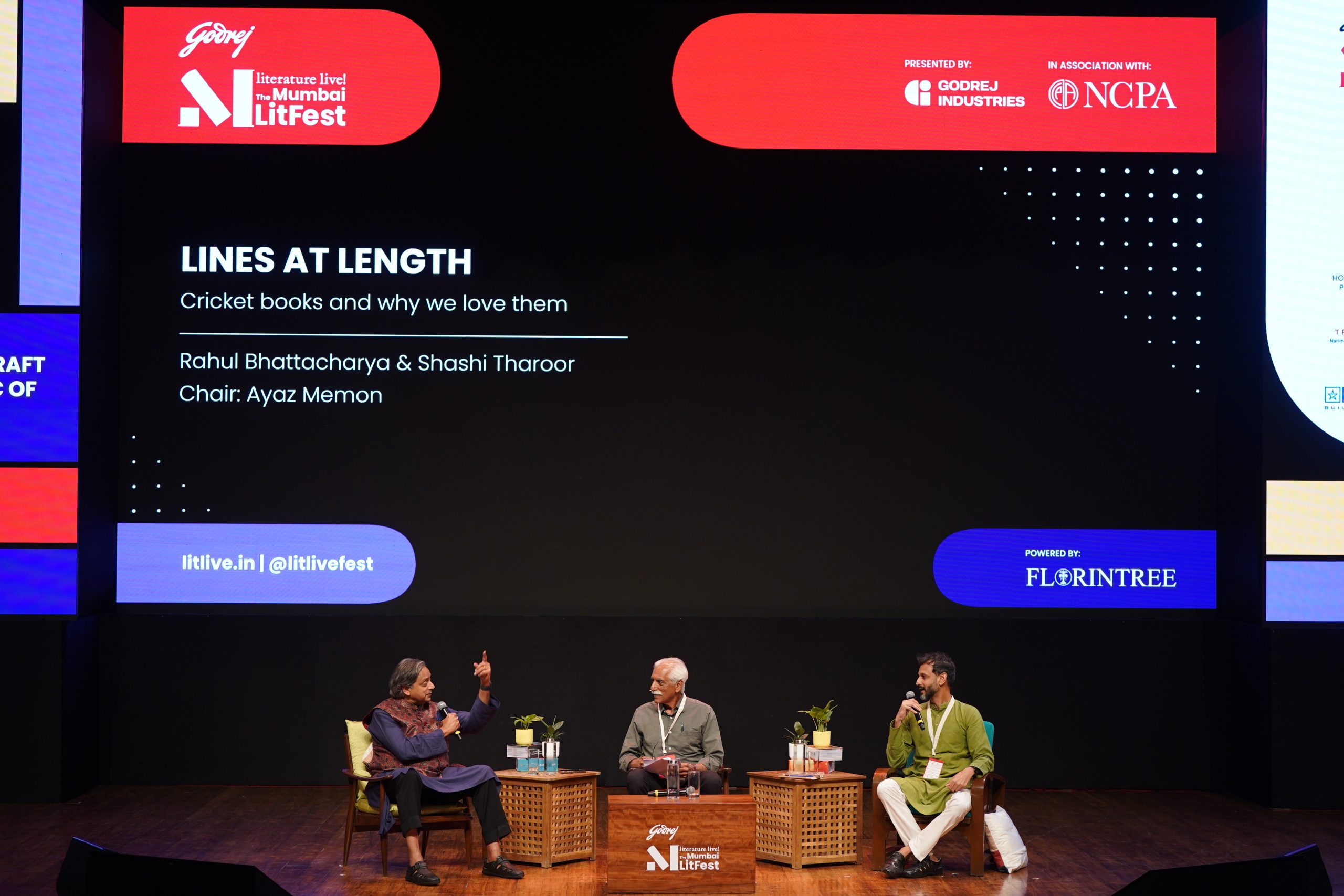
At Godrej Literature Live! The Mumbai LitFest 2026, Shashi Tharoor, Rahul Bhattacharya and Ayaz Memon explored why cricket continues to inspire writers beyond the scoreboard.
Cricket can be measured in runs, wickets and statistics, but its meaning often extends far beyond the numbers. A perfectly timed cover drive can stay in the memory for years, while an unexpected defeat can become a story people discuss long after the match ends. For millions of Indians, cricket is not simply a game. It is an experience filled with hope, uncertainty, ambition and emotion.
This connection between cricket and everyday life took centre stage on day two of Godrej Literature Live! The Mumbai LitFest 2026. During a session titled Lines at Length, author and politician Shashi Tharoor, writer Rahul Bhattacharya and veteran sports journalist Ayaz Memon discussed why cricket remains such a powerful subject for literature, even in an age dominated by short highlights, instant updates and match statistics.
A Game That Mirrors Life
Tharoor described cricket as a metaphor for life, pointing to the way a player’s fortunes can change despite everything appearing to go well.
“There’s something about cricket that really resembles life,” he said.
A batter may be timing the ball beautifully, only for rain, an unpredictable pitch or changing conditions to alter the situation. Life, too, rarely follows a perfectly planned course. Success can arrive unexpectedly, and circumstances beyond our control can change everything.
This uncertainty is part of cricket’s storytelling appeal. Every innings has its own rhythm, every match brings new possibilities, and even a strong position offers no guarantee of victory. For a writer, these moments provide opportunities to explore resilience, disappointment, patience and the courage to begin again.
When Money Changes the Game
The conversation also examined the growing financial influence of Indian cricket, particularly through the Indian Premier League (IPL) and franchise-based competitions.
Bhattacharya questioned whether the concentration of financial power was healthy for the sport. He expressed discomfort with India’s growing dominance and argued that the country’s considerable resources could lead to a short-sighted approach to cricket’s wider development.
His comments raised a larger question: how can cricket balance commercial success with the interests of the game as a whole?
The IPL has transformed the financial landscape of cricket, creating opportunities for players and expanding the sport’s commercial reach. Yet the discussion highlighted the importance of considering how money and influence are distributed across the international game. Cricket’s long-term strength depends not only on the success of its biggest markets, but also on a competitive environment in which other teams can develop and challenge established powers.
A Changing India on the Cricket Field
Tharoor also reflected on how the backgrounds of Indian cricketers have changed over time. Earlier teams often drew heavily from urban, affluent communities and royal families. Increasingly, players from smaller towns and more modest circumstances have found opportunities to represent the country.
Former India captain MS Dhoni, who worked as a railway ticket collector before becoming an international cricket star, offers a striking example of this changing landscape.
Tharoor observed that the transformation of the national team reflected wider changes in Indian society, including the growing opportunities emerging beyond the country’s largest cities.
Cricket’s reach makes these journeys particularly meaningful. A player’s rise can encourage young people who may never have imagined themselves on a national stage. Their stories remind audiences that talent can emerge from places far removed from the traditional centres of opportunity.
The Individual and the Team
For Bhattacharya, another reason cricket attracts writers is the tension between individual ambition and collective responsibility.
A batter may score a century, but the team’s result still depends on the contributions of others. A bowler may deliver a remarkable spell, yet one dropped catch or a missed run-out can change the outcome. Individual brilliance and shared responsibility remain closely connected.
That tension gives cricket a natural dramatic structure. It allows writers to explore the relationship between personal goals and the demands of belonging to a team.
Ultimately, cricket offers more than memorable performances. It provides stories about people facing uncertainty, working towards shared goals and adapting when circumstances change.
That may be why the game continues to hold the attention of writers and readers alike. Long after the scorecard is forgotten, the struggle, emotion and human choices behind a match can remain worth telling.
