



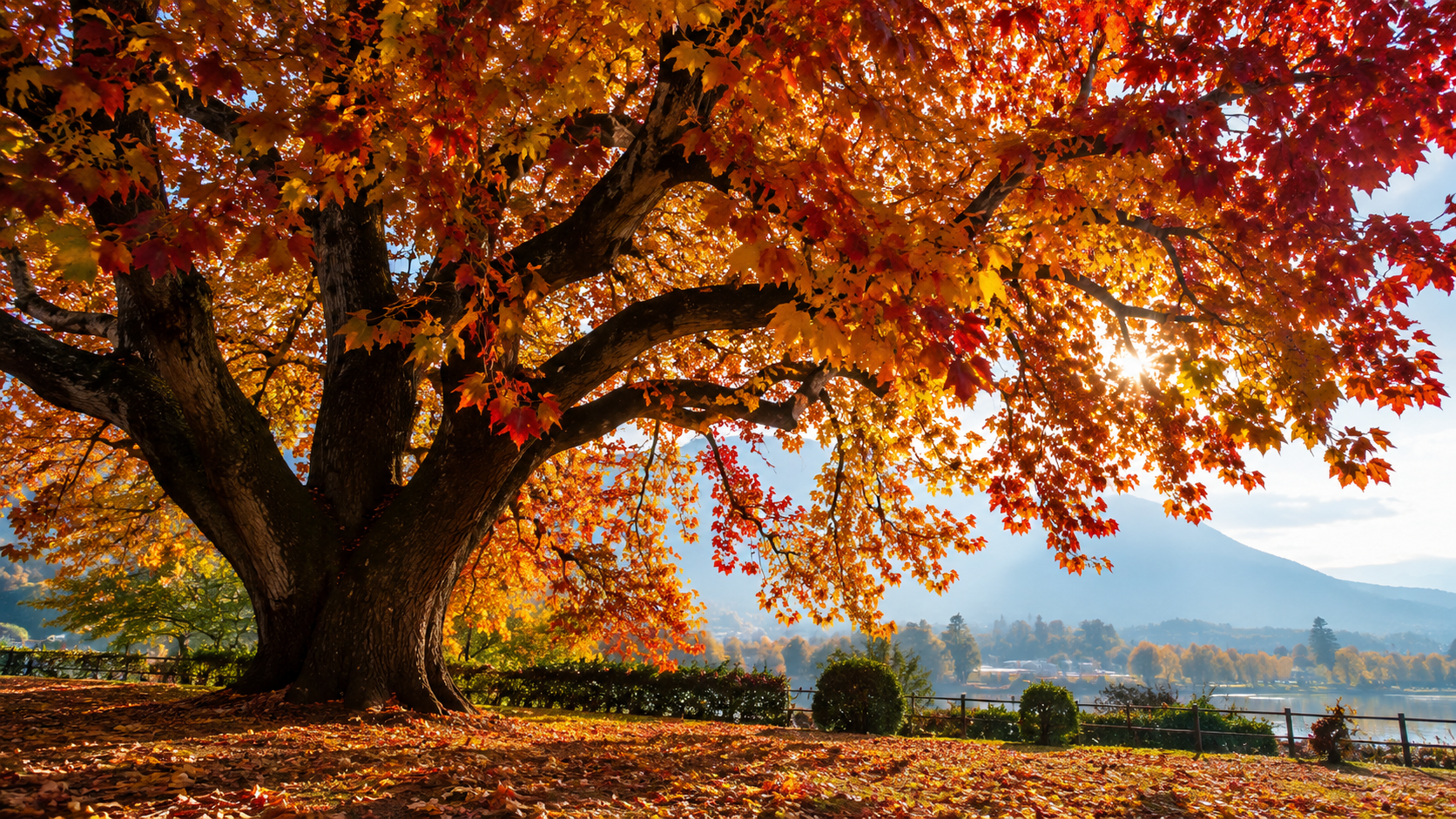
Every October, the Kashmir Valley starts to change. The green leaves of the chinar trees slowly turn yellow, then orange, and finally deep red. By November, whole avenues seem to glow in the afternoon light.
For people in the Valley, this is more than a pretty sight. It is a sign that winter is close. But the colours also tell a clear story about how a tree prepares for the cold.
The chinar (Platanus orientalis), called buen in Kashmiri, is the state tree of Jammu and Kashmir. It is deciduous, which means it sheds all its leaves before winter. Before they fall, though, the tree puts on its famous show.
In spring and summer, a leaf works like a tiny kitchen. It uses a green pigment called chlorophyll to capture sunlight. With that energy, it turns water and carbon dioxide into sugars, which feed the tree. This process is called photosynthesis. Chlorophyll is constantly used up during this work, so the leaf has to keep making fresh supplies all summer. Because there is so much of it, the green hides every other colour in the leaf.
As autumn arrives, days in Kashmir get shorter and nights get colder. These are the signals the tree reads. It slows down its food-making and starts pulling useful materials, such as nitrogen, out of the leaves. These are stored in the branches and trunk for use in spring. Once the leaf stops making new chlorophyll, the old chlorophyll breaks down and the green fades.
At the base of each leaf stalk, the tree also forms a thin layer of cells that slowly seals the leaf off from the branch. Water and nutrients stop flowing, and eventually the leaf drops. This is why a chinar can look glorious one week and be bare a few weeks later.
Underneath the green, leaves carry yellow and orange pigments called carotenoids. They include carotenes and xanthophylls. These pigments are present all through the growing season, and they also help the leaf handle light. When the chlorophyll disappears, they become visible. This is why many trees turn golden yellow first. So, in simple words, the gold was not painted on in autumn. It was uncovered.
Red is a different story. Red and purple shades in autumn leaves generally come from pigments called anthocyanins. Unlike carotenoids, they are mostly made fresh in the leaf as autumn begins. Their production depends on the weather. Bright, sunny days help the leaf make sugars, and cool nights slow the movement of those sugars out of the leaf. With more sugar trapped inside, the leaf can produce more anthocyanins. This is why a stretch of sunny days and chilly nights often gives the brightest reds. Nights that are cool but not freezing work best.
Scientists have not pinned down exactly which pigments create every shade of crimson in Kashmir’s chinars. They are also still discussing why trees make red pigments when the leaf is about to die. One idea is that anthocyanins act like a sunscreen, protecting the leaf while the tree recovers its nutrients. Another is that they reduce damage from strong light in cold weather. The question is not fully settled.
It is also worth knowing that no two chinars look exactly alike. Colours vary from tree to tree and from year to year, depending on the tree’s health, its position and the weather. Leaves in full sun tend to turn redder than those in deep shade.
Large parts of India stay warm for most of the year, so the cues that trigger colour change, short days and cold nights, are weak or missing. Many trees there are evergreen and keep their leaves all year, replacing them a few at a time. Others, such as teak, shed their leaves in the dry season to save water. Their leaves simply drop, and the trees stay bare until the rains return, without the bright show of a chinar.
In Kashmir, winters are cold, and the chinar’s strategy is to drop its leaves, avoid frost and snow damage, and rest. The yellow and gold are simply a by-product of this preparation. The red may serve a purpose, but scientists are still working that out.
The chinar has been part of Kashmir’s life for centuries. It is widely believed that Mughal rulers planted many of the Valley’s chinars, including in gardens around Dal Lake. The leaf’s shape also appears in Kashmiri crafts such as papier-mâché, carpets and embroidery. In recent years, Jammu and Kashmir has tried to protect old chinars through an initiative called Tree Aadhaar, which geo-tags individual trees and records details such as location, age and health.
Next time you see a chinar glowing in autumn light, remember the science behind it: shorter days, cooler nights, fading chlorophyll, and a leaf that was hiding gold all along.
Subscribe Deshwale on YouTube
