



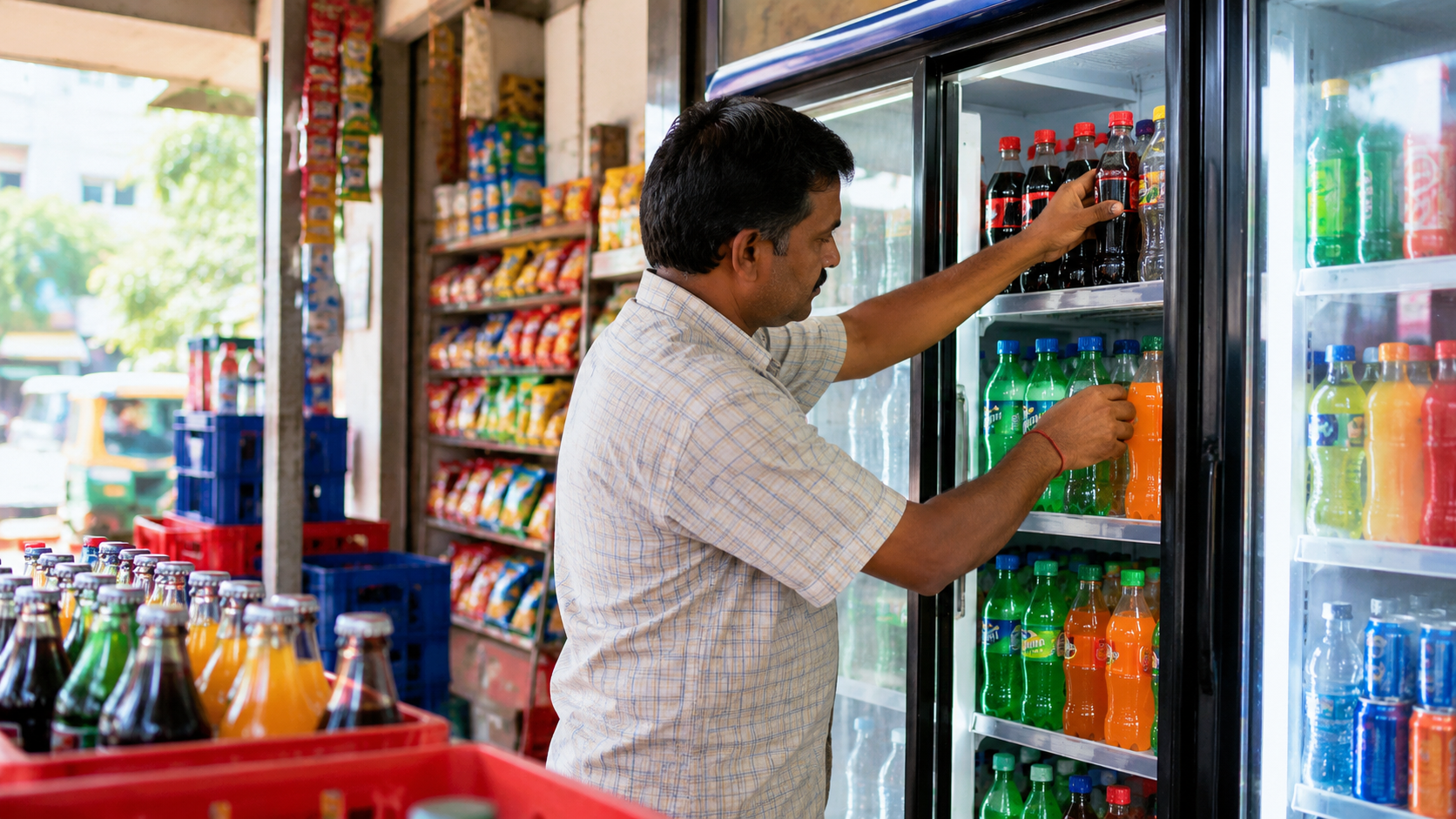
A proposed stock market listing puts the spotlight on the factories, distributors and retail network behind one of India’s most familiar beverage businesses.
A cold drink bought from a neighbourhood shop may seem like a small, everyday purchase. Yet getting that bottle to the customer involves a much larger operation, connecting bottling plants, packaging units, transport networks, distributors and retailers across the country.
Now, the business behind many of these familiar beverages is preparing for a possible new chapter.
Hindustan Coca-Cola Holdings (HCCH), the parent company of Hindustan Coca-Cola Beverages (HCCB), is likely to file its draft red herring prospectus (DRHP) for an initial public offering (IPO) this week, according to a Moneycontrol report published on 26 October 2026. The proposed listing is expected in 2027, subject to regulatory approvals and market conditions.
The reported IPO size is around $1 billion, with the company seeking a valuation of approximately $10 billion. These figures are estimates, and the final terms have yet to be confirmed.
The development brings attention to a business that connects a global beverage brand with India’s vast network of local markets and everyday consumers.
The Business Behind the Bottle
Established in 1997, HCCH is the parent company of HCCB, one of India’s major beverage bottlers. Its operations go beyond producing drinks. The business also packages, distributes and sells beverages through a network that helps products reach shops and consumers.
According to information released by The Coca-Cola Company in June 2026, HCCB operates 14 bottling plants across 10 states and works with eight co-packers.
Its portfolio includes familiar names such as Coca-Cola, Thums Up, Sprite, Fanta, Limca, Maaza and Minute Maid.
Behind their availability are different parts of a connected supply chain. Bottling facilities produce and package beverages, distributors help move them through the market, and retailers make them accessible to customers.
For a neighbourhood shopkeeper, keeping popular drinks available can be part of meeting everyday customer needs. For the company, that same shop represents the final link in a much wider business operation.
This network provides useful context for understanding why the proposed IPO has attracted attention. The story is not simply about a well-known brand entering the stock market. It is also about the scale of the business that supports its presence across India.
What Does the Proposed IPO Mean?
An initial public offering is the process through which a company offers shares to public investors and seeks a stock market listing. Once listed, its shares can be traded on the stock exchange, subject to applicable rules.
The Coca-Cola Company announced in June 2026 that it was exploring a potential 2027 listing of HCCH on the Bombay Stock Exchange and the National Stock Exchange.
According to the latest report, the proposed $1 billion offering would largely involve the sale of existing shares. This distinction matters because an IPO does not always mean that the company itself will receive the money raised.
When existing shareholders sell their shares, the proceeds generally go to those selling shareholders. The company receives fresh funds only to the extent that new shares are issued as part of the offering.
The final prospectus should provide greater clarity on the offer structure, financial performance, shareholding and other details relevant to investors.
For people considering an investment, the reported valuation alone will not tell the whole story. The company’s financial results, business prospects, risks and the eventual offer price will also matter.
A Changing Ownership Structure
The proposed listing follows an important change in the company’s ownership.
In July 2025, the Jubilant Bhartia Group completed the acquisition of a 40 per cent stake in HCCH through Jubilant Beverages Limited. The Coca-Cola Company retained the remaining 60 per cent.
The potential IPO would mark another significant step in the business’s ownership journey. Moneycontrol has reported that Axis Capital and IIFL Capital Services are among the investment bankers involved in the proposed issue, while Rothschild & Co has been retained as an adviser.
However, the proposed listing is not yet a completed transaction. Its final structure and timing will depend on the company’s filings, regulatory processes and other relevant conditions.
Why the Story Matters Beyond the Stock Market
For customers, the proposed IPO may not immediately change the experience of buying a cold drink. Its significance lies more in the business behind that familiar purchase and the possibility of a major public-market listing.
The operation brings together production facilities, distribution networks and retail outlets across different parts of the country. It illustrates how a product bought in a few minutes can depend on a complex chain of business activities.
As the company moves towards a possible listing, investors and market observers will have an opportunity to examine that business more closely through the disclosures made during the IPO process.
For now, the next milestone is the expected filing of the draft prospectus. Whether the proposed listing proceeds on the anticipated timeline will become clearer in the coming months.
A familiar bottle may remain an ordinary part of everyday life. The business behind it, however, could soon enter a very different spotlight.
Subscribe Deshwale on YouTube
