



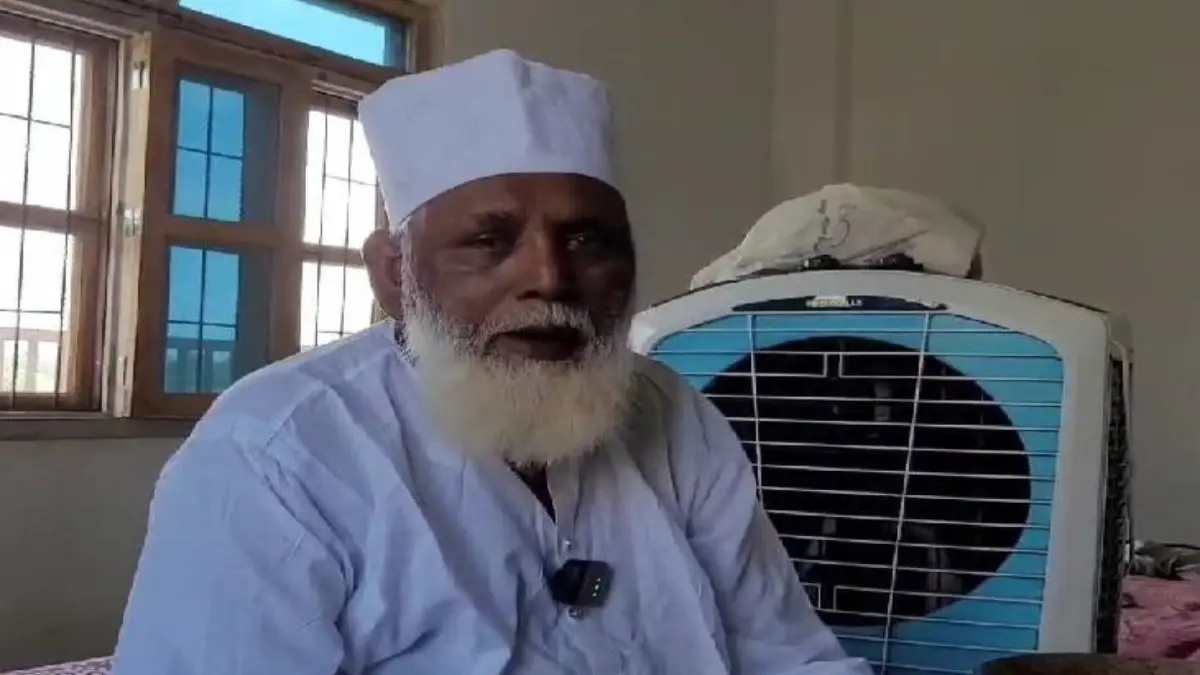
In the quiet town of Balrampur, Uttar Pradesh, a man known as Chhangur Baba held sway over many. To his followers he was a Sufi saint, a beacon of spiritual guidance. But beneath this veneer of piety lay a sinister operation that shook the nation. Jamaluddin, alias Chhangur Baba, was arrested in July 2025 by the Uttar Pradesh Anti-Terrorist Squad (ATS) for running a conversion racket targeting Hindu women, particularly minors. This scheme allegedly backed by over Rs 100 crore in foreign funding used financial incentives and deceit to convert women to Islam, raising alarm about the misuse of religion for personal gain and the role of technology in such activities.
The scale of Chhangur Baba’s operation was staggering. He and his family ran a nationwide network luring women with promises of money and false identities. The racket had a chilling incentive structure as revealed by an ATS officer: “Jamaluddin ran a gang with a fixed incentive structure for conversions. Rs 15 to 16 lakh was fixed for conversions of Brahmin, Sikh or Kshatriya women, Rs 10 to 12 lakhs for OBCs, and Rs 8 to 10 lakhs for other castes” (OpIndia 2025). Men in the network posed as Hindus using fake names to build trust before pressuring women into conversion often through romantic relationships. Chhangur Baba himself solemnised these conversions with Nikaah ceremonies cementing the process.
This case is not an isolated incident. Conversion rackets targeting Hindu women have sparked heated debates across India often under the controversial term “love jihad.” This phrase used to describe alleged campaigns by Muslim men to convert Hindu women through marriage or relationships is deeply divisive. While some including Hindu organisations like the Vishva Hindu Parishad (VHP) view it as a real threat to cultural identity others including Muslim leaders and civil rights activists dismiss it as a myth propagated to demonise minorities. A 2021 NPR report noted that official investigations in 2009, 2010, 2012 and 2014 found no evidence of organised “love jihad” yet cases like Chhangur Baba’s lend credence to concerns about coercive conversions (NPR 2021).
Technology plays a pivotal role in modern conversion rackets amplifying their reach and impact. Social media platforms and dating apps allow perpetrators to identify and contact vulnerable individuals. Fake profiles often hiding religious identities are used to build relationships and manipulate trust. In the Chhangur Baba case while specific evidence of technology use is not detailed it is plausible that tools like WhatsApp or other messaging apps were used to coordinate the racket’s activities or communicate with victims. A 2024 report by Rest of World highlighted how WhatsApp networks have been used by Hindu nationalist groups to target minorities suggesting technology’s dual role in both perpetrating and countering such schemes (Rest of World 2024).
The digital age has transformed how such rackets operate. Social media not only facilitates contact but also amplifies narratives around “love jihad.” Hashtags like #BoycottTanishq have trended when brands promote interfaith harmony showing how online platforms can escalate tensions (CJP 2024). In one instance a Hindu woman in Mumbai alleged that a Muslim man used social media to conceal his identity and pressure her into conversion highlighting technology’s role in personal manipulation (Organiser 2024). These platforms while connecting people can also be exploited to spread propaganda or coordinate illicit activities.
India’s legal framework seeks to address such issues through state-level anti-conversion laws. Enacted in states like Uttar Pradesh, Madhya Pradesh and Gujarat these laws prohibit conversions through force, fraud or allurement. The Uttar Pradesh Prohibition of Unlawful Conversion of Religion Act under which Chhangur Baba was charged aims to protect vulnerable individuals. However critics argue these laws can be misused to harass interfaith couples. A 2020 Times of India editorial warned that such laws reverse the principle of “innocent until proven guilty” giving authorities excessive power to target minorities (Times of India 2020). The Chhangur Baba case with its clear evidence of coercion and financial incentives underscores the need for such laws but also highlights the delicate balance required to protect religious freedom.
The societal implications of this case are profound. Hindu organisations including the VHP have long voiced concerns about conversion rackets viewing them as a threat to India’s cultural fabric. “Religious conversion is the biggest problem in Chhattisgarh and the top of our agenda” said Rishi Mishra a Bajrang Dal coordinator in a 2021 Guardian report reflecting similar sentiments in Uttar Pradesh (The Guardian 2021). Conversely Muslim leaders argue that the “love jihad” narrative unfairly paints their community as predatory. Naseeruddin Elamaram of the Popular Front of India has called it a “malicious misinformation campaign” noting that conversions occur across all religions and are not inherently criminal (Wikipedia 2023).
The Chhangur Baba case also raises questions about foreign funding. Reports indicate that Rs 106 crore was deposited into 40 bank accounts linked to Jamaluddin much of it from Middle Eastern countries (NDTV 2025). This financial trail coupled with properties and luxury assets amassed by the family points to a well-funded operation. The Enforcement Directorate has launched a money laundering probe highlighting the racket’s economic scale. Such funding fuels suspicions of external agendas further complicating the narrative around religious conversions.
Historically religious conversions in India have been contentious. During the British colonial period princely states enacted anti-conversion laws to preserve Hindu identity against missionary activities (India Today 2020). Today the debate continues with figures like B R Ambedkar who converted to Buddhism to escape caste oppression reminding us that conversions can be acts of agency. “The same compulsion forced the architect of our constitution B R Ambedkar to take the life-altering decision of quitting Hinduism” noted a religious scholar in 2021 highlighting the complexity of conversion motives (UCA News 2021).
The Chhangur Baba case underscores the need for vigilance and education. Vulnerable communities particularly women and minors must be empowered to recognise manipulation. Technology while a tool for connection demands responsible use to prevent exploitation. Schools and community programmes can play a role in fostering awareness helping individuals make informed choices about their faith.
Moreover fostering interfaith dialogue is crucial. India’s diverse religious landscape thrives on mutual respect yet cases like this strain communal harmony. Religious leaders policymakers and civil society must work together to address coercion without stifling personal freedoms. The Supreme Court’s 2022 ruling that forced conversions violate constitutional rights while voluntary ones do not offers a guiding principle (Providence 2024).
In conclusion the Chhangur Baba conversion racket is a stark reminder of how faith can be twisted for personal gain. It calls for a balanced approach enforcing laws against coercion while protecting individual rights. As India navigates this complex terrain it must uphold its legacy of religious tolerance ensuring that faith remains a source of unity not division.
Key Details of the Chhangur Baba Conversion Racket:
| Aspect | Details |
|---|---|
| Head of Racket | Jamaluddin alias Chhangur Baba |
| Arrest Date | July 5, 2025, in Gomti Nagar, Lucknow |
| Location | Balrampur, Uttar Pradesh, with nationwide operations |
| Funding | Over Rs 100 crore from foreign sources, deposited in 40 bank accounts |
| Victims | At least 40 identified, primarily Hindu women, including minors |
| Methods | Financial incentives, fake identities, romantic relationships, Nikaah ceremonies |
| Incentive Structure | Rs 15–16 lakh for Brahmin/Sikh/Kshatriya; Rs 10–12 lakh for OBC; Rs 8–10 lakh for others |
| Legal Action | Charged under Uttar Pradesh Prohibition of Unlawful Conversion of Religion Act |
| Investigating Agencies | Uttar Pradesh ATS, STF, Enforcement Directorate, NIA |
