



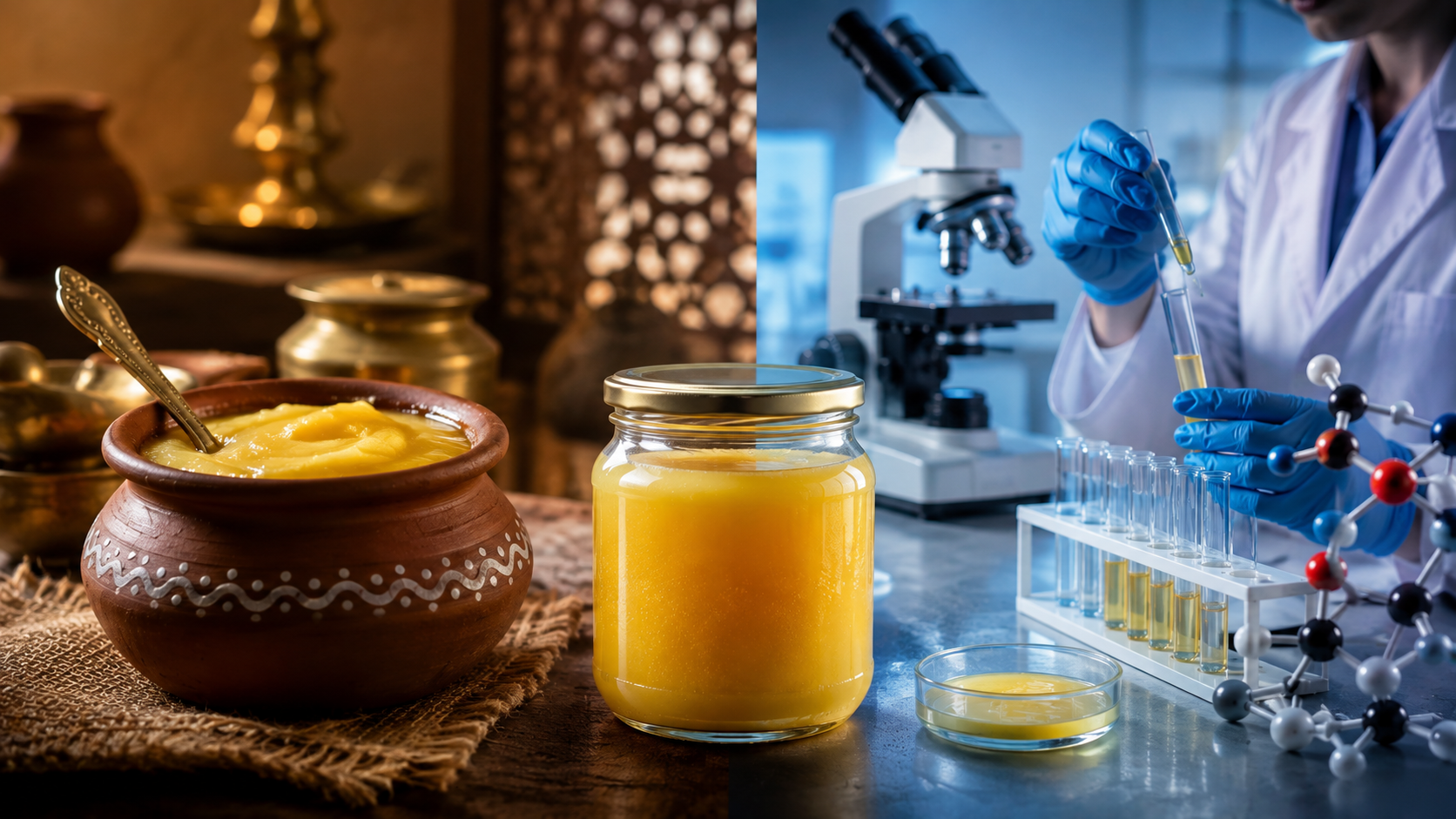

Walk into any supermarket or browse an online grocery app, and you’ll find shelves filled with premium ghee. Among the many labels that catch the eye, one stands out the most A2 Ghee. From “Pure A2 Bilona Ghee” to “100% A2 Desi Cow Ghee”, brands promise a healthier and more natural product, often at prices that are two or three times higher than regular cow ghee. But is the premium backed by science, or is it simply smart marketing?
Over the last few years, India’s food industry has seen a rise in premium products. Labels such as organic, chemical-free, farm fresh and A2 have become common. While some of these claims are based on genuine production methods, others leave consumers wondering whether they are paying for quality or simply for attractive packaging.
Understanding the science behind A2 ghee
The discussion around A2 ghee begins with understanding what “A2” actually means. A1 and A2 refer to two types of beta-casein, a protein naturally found in milk. Indigenous Indian cow breeds such as Gir and Sahiwal are known to produce milk containing mostly A2 beta-casein, while milk from several exotic breeds may contain A1 or a combination of both proteins.
However, ghee is not the same as milk. It is made by heating butter until the water evaporates and most of the milk solids, including proteins, are removed. The final product is made up almost entirely of milk fat. This has raised an important scientific question—if A1 and A2 are classifications of a milk protein, can the finished product scientifically be called “A2 Ghee”?
The debate gained national attention in August 2024 when the Food Safety and Standards Authority of India (FSSAI) issued an advisory stating that A1 and A2 relate to beta-casein protein and that using such claims on milk-fat products like ghee and butter could be misleading. Food businesses were asked to remove these claims after a transition period. However, within days, the advisory was withdrawn for further consultation with stakeholders. The withdrawal did not endorse A2 claims but indicated that the regulator would examine the issue further before taking a final decision.
Marketing, pricing and consumer perception
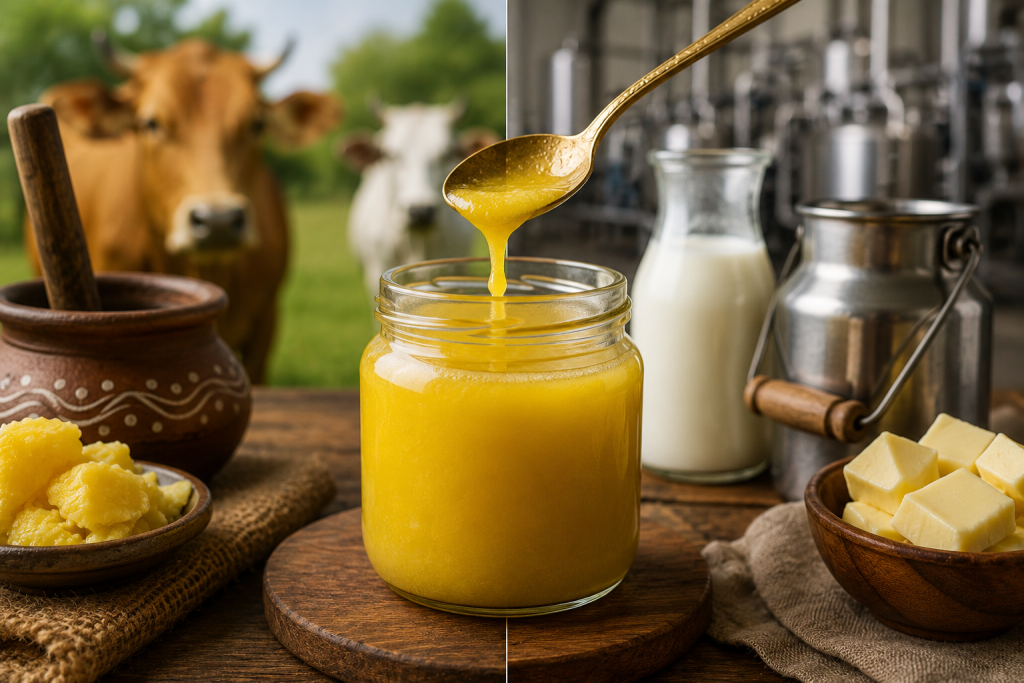
Despite the ongoing debate, A2 branding continues to dominate the premium ghee market. Many consumers willingly pay significantly higher prices for products carrying labels such as A2, Bilona and Desi Cow. While traditional preparation methods and sourcing milk from indigenous breeds may genuinely increase production costs, consumers are often left wondering how much of the price reflects the manufacturing process and how much comes from the power of marketing.
Experts believe that scientific terms on food packaging can strongly influence buying decisions. Most consumers do not read research papers or understand technical concepts like beta-casein. Instead, they rely on labels and advertisements while making purchases. This makes transparent and accurate labelling even more important.
The debate is not about whether A2 milk exists—it certainly does. The real question is whether calling the finished product “A2 Ghee” accurately represents its composition, considering that the protein used to distinguish A1 and A2 is present only in negligible amounts after the ghee-making process. Some believe the label simply indicates that the ghee was prepared from A2 milk, while others argue that it may unintentionally suggest that the ghee itself possesses special A2 properties.
The debate continues
As India’s premium food market continues to grow, so does the need for clear information. Whether A2 ghee represents better quality, traditional production, or simply successful branding remains a subject of discussion. Until scientific evidence and regulatory clarity become more definitive, consumers may have to look beyond eye-catching labels and understand exactly what they are paying for.
Subscribe Deshwale on YouTube
