



By: Pratyush Bardoliwala
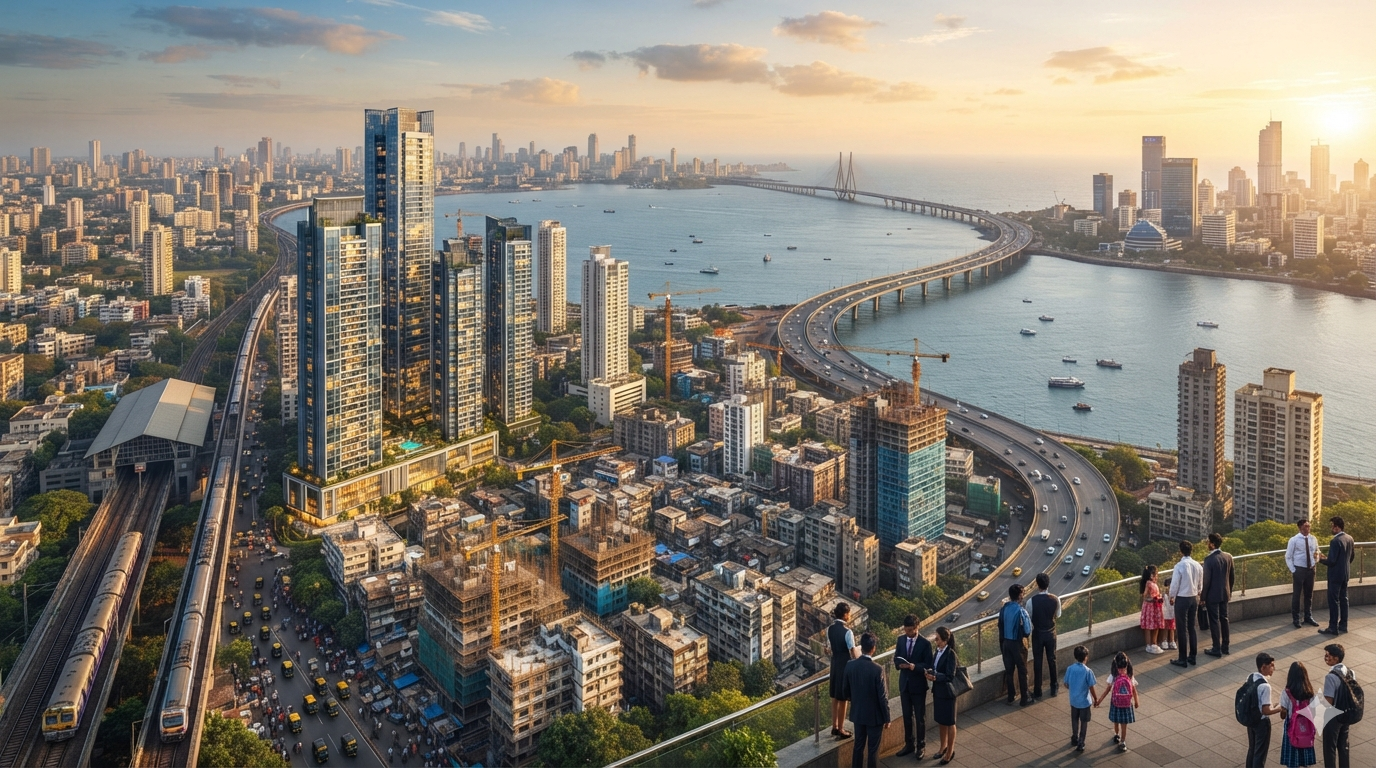
Mumbai has always been known as the City of Dreams, and in many ways, it truly deserves that title. Every year, millions of people move here in search of better jobs, bigger opportunities and a brighter future. But while Mumbai may fulfil many dreams, owning a home in the city remains out of reach for a large section of its population. For the average salaried person, buying even a modest apartment can feel impossible, with prices in many areas easily crossing the crore mark.
One of the things that makes Mumbai unique is the contrast it represents. People from every economic background live side by side, from families living in Dharavi to some of India’s wealthiest residents in Malabar Hill. The city brings together people from all walks of life, yet the gap in housing affordability between different income groups is impossible to ignore. This naturally raises an important question: Why are houses in Mumbai so expensive?
Limited Land Availability
Unlike many other cities, Mumbai can only expand in certain directions because of its geography. The city is surrounded by the Arabian Sea on three sides, making land one of its most valuable assets.
As a result, whenever land becomes available for development, it is usually in high demand. Developers often compete to acquire these limited plots, driving land prices even higher before construction even begins. In simple terms, Mumbai has limited land, but millions of people and businesses want a share of it. When supply is limited and demand continues to rise, property prices naturally increase. The scarcity of developable land has also made redevelopment the primary source of new housing across much of the city.
Millions Want to Live Here
Mumbai, the financial capital of India, is home to major banks, multinational companies, the BSE, Bollywood, media houses, one of India’s busiest ports, startups and thousands of businesses. It contributes a significant share to India’s economy and remains one of the country’s largest employment hubs. Every year, students, professionals, entrepreneurs and workers move to the city in search of better education, career opportunities and business growth.
As more people choose Mumbai to build their future, the demand for housing continues to rise. Some look for affordable rental homes when they first arrive, while others eventually plan to buy a property. This steady migration, combined with Mumbai’s strong job market and limited land availability, keeps demand for homes consistently high and makes the city’s real estate market one of the most competitive in India.
Land Is Often More Expensive Than the Building
Many people assume the construction itself is the most expensive part of a residential project.
In reality, the land underneath the building can be worth far more than the structure standing on it. Before construction even begins, developers must acquire land, pay stamp duty and registration charges, obtain approvals, arrange financing and complete several legal and regulatory processes. These expenses, along with financing costs incurred during the project, are ultimately reflected in the final selling price of the property.
Redevelopment Is More Common Than New Construction
Unlike newer cities with large stretches of vacant land, much of Mumbai is already built up. Instead of developing empty plots, developers often redevelop ageing residential buildings, old housing societies, chawls and former industrial areas.
Redevelopment is significantly more expensive and time-consuming than constructing on vacant land. Developers must compensate existing residents, provide temporary accommodation or transit rent, complete legal agreements, obtain approvals from multiple authorities and bear demolition and rehabilitation costs. Since these additional expenses become part of the overall project cost, the price of new homes also increases. In many parts of Mumbai, redevelopment has become the primary way of creating new housing because there is very little undeveloped land left.
Location Changes Everything
Property prices in Mumbai vary significantly from one locality to another. For example, a 4 BHK apartment in Kandivali is likely to cost much less than a similar-sized apartment on Altamount Road. Even homes with the same size and amenities can have vastly different prices simply because of their location.
The main reason is connectivity, infrastructure and the desirability of the neighbourhood. Properties located close to major business districts, railway stations, Metro lines, schools, hospitals and commercial centres usually command higher prices because they reduce travel time and offer greater convenience. Premium neighbourhoods such as Altamount Road, Malabar Hill and Bandra also attract higher prices due to their central location, luxury developments, well-developed social infrastructure and limited housing supply. In contrast, suburbs farther from Mumbai’s main commercial hubs generally offer more affordable housing, although improved Metro connectivity has increased property values in several suburban areas in recent years.
Infrastructure Can Push Prices Higher
Major infrastructure projects can significantly influence property prices in Mumbai. Developments such as the Mumbai Metro expansion, the Mumbai Coastal Road, the Mumbai Trans Harbour Link (MTHL), new flyovers and road improvement projects have improved connectivity across different parts of the city and the Mumbai Metropolitan Region.
When connectivity improves, travelling becomes faster and previously less accessible areas become more attractive to homebuyers and businesses. As demand for property in these locations increases, land and housing prices often rise as well. Improved infrastructure also encourages commercial development, creates new employment opportunities and attracts more investment, all of which contribute to higher property values over time.
Development Rules Affect Housing Supply
Every city follows planning regulations that determine how much can be built on a piece of land. In Mumbai, factors such as the Floor Space Index (FSI), zoning regulations, mandatory open spaces, environmental restrictions and the approval process all influence the scale of new developments.
These regulations are designed to ensure planned urban growth, but they also limit the number of homes that can be built in many areas. When housing supply remains constrained while demand continues to grow, property prices naturally rise. Although the government has periodically revised FSI norms to encourage redevelopment and increase housing supply, land scarcity and planning regulations continue to shape Mumbai’s real estate market.
Property Is Also Seen as an Investment
Not everyone who buys a home in Mumbai intends to live in it. Many people purchase residential properties as long-term investments, while others buy them expecting property values to appreciate over time. Some investors also earn rental income by leasing out their homes.
This investment-driven demand creates additional competition in the housing market, especially in premium and well-connected locations. As investors compete with end-users for the same limited supply of properties, housing prices can increase even further.
Mumbai Is an Economic Hub
Mumbai is India’s financial capital and one of the country’s largest employment centres. It is home to industries such as finance, banking, information technology, entertainment, healthcare, shipping, media and professional services, attracting people from across India in search of better career opportunities.
Many people are willing to pay a premium to live closer to their workplace rather than spend several hours commuting every day. This preference increases demand for homes in areas near major business districts and commercial centres, contributing to higher property prices across many parts of the city.
There is no single reason why houses in Mumbai are so expensive. Instead, it is the result of several interconnected factors working together. Limited land availability, steady migration, high redevelopment costs, premium locations, major infrastructure projects, planning regulations, investment demand and Mumbai’s position as India’s financial and commercial capital all contribute to keeping property prices high. While new infrastructure, redevelopment projects and policy changes may gradually improve housing supply, the city’s unique geography and consistently strong demand mean that real estate in Mumbai is likely to remain among the most expensive in India for the foreseeable future.
Subscribe Deshwale on YouTube
