



When we think of Raksha Bandhan, the first picture that usually comes to mind is a sister tying a rakhi on her brother’s wrist. But cross the border into Nepal, and the story of brother-sister love becomes even more interesting. Here, this bond gets celebrated in more than one way and on more than one festival.
In Nepal, Raksha Bandhan is celebrated on Janai Purnima, the full moon day that also has deep religious and cultural importance. Sisters tie a sacred thread, often called rakhi, around their brothers’ wrists and pray for their well-being. Brothers, in return, offer gifts and promise their love and support. The day is also known for the renewal of the sacred thread, or Janai, among Hindu men.
But Nepal has another celebration that takes the brother-sister relationship to a completely different level.
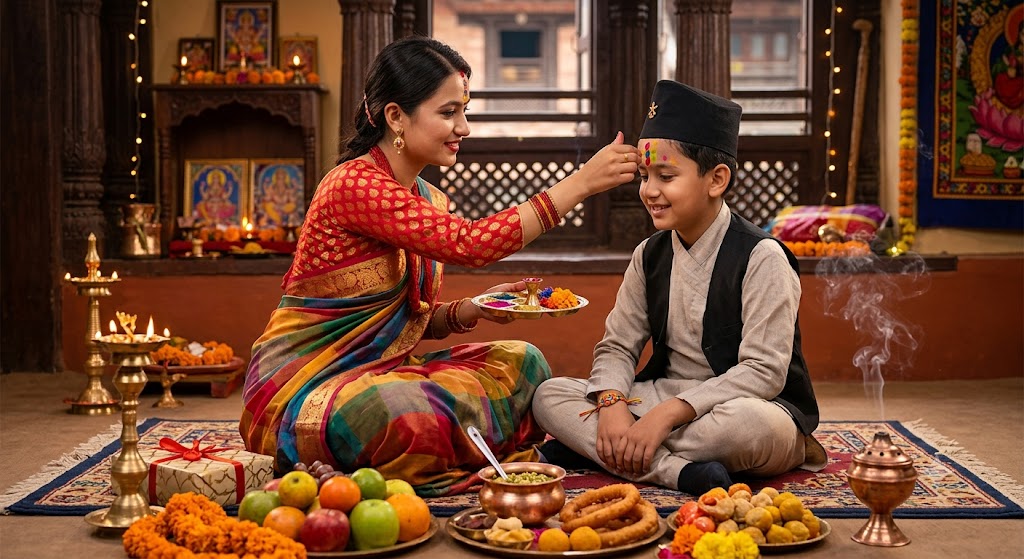
A few months later, during Tihar, comes Bhai Tika, one of the most emotional days of the festival. Tihar is Nepal’s five-day festival of lights, and Bhai Tika marks its final day. On this day, sisters put a special tika on their brothers’ foreheads and pray for their happiness, prosperity and long life. Brothers also give gifts to their sisters, and families come together for food, blessings and celebrations.
And the tika is not simply the red mark that many of us are familiar with.
The Bhai Tika ceremony is known for its colourful, multi-coloured tika, making the occasion visually striking as well as deeply personal. The ritual turns a simple moment between siblings into something filled with colour, prayers and affection.
There is also a beautiful belief connected with the ceremony. Sisters pray to Yama, the Hindu god of death, for the long life and prosperity of their brothers. It is this emotional connection that makes Bhai Tika more than just a festive ritual.
What makes Nepal’s tradition especially interesting is that the brother-sister relationship gets celebrated twice, but in two different cultural settings. Janai Purnima brings the sacred thread and the rakhi together, while Tihar brings lights, colourful tika, gifts and family celebrations.
Janai Purnima itself is also a day of family gatherings and traditional food. In Nepal, Kwati, a soup made from sprouted beans, is traditionally prepared for the occasion.
So, while Raksha Bandhan and Bhai Tika are not the same festival, the feeling behind both is remarkably similar.
One thread says, “I am with you.” One tika says, “May you always be happy and safe.”
And perhaps that is the most beautiful thing about festivals. The rituals may change from one place to another, but the emotion remains familiar: a sister’s blessing, a brother’s promise and a relationship that grows stronger with every celebration.
Subscribe Deshwale on YouTube
