



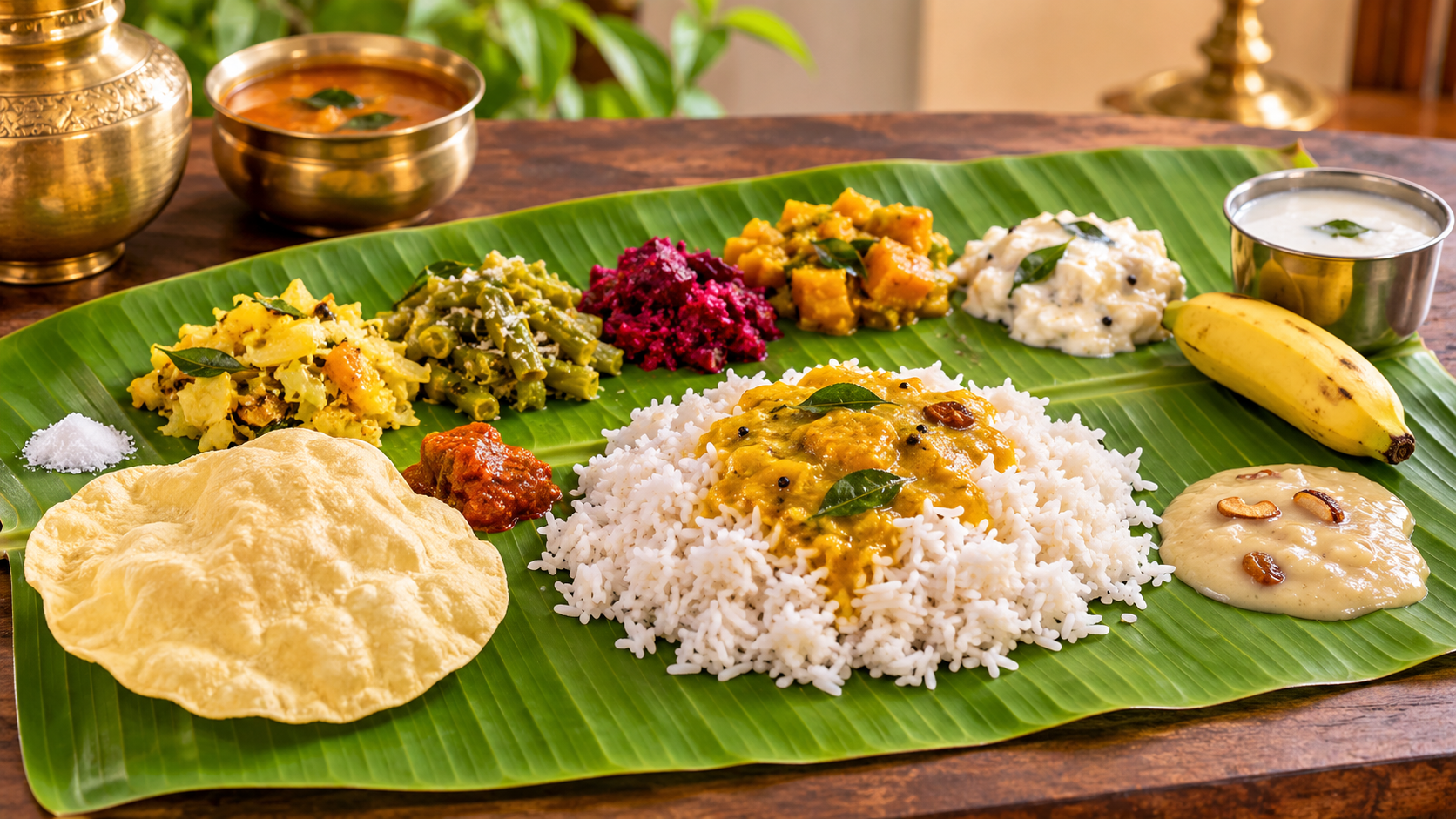
A wedding feast, a festival lunch or a meal at your grandparents’ home often comes with little traditions that make the experience memorable. In many parts of India, one such tradition begins with a fresh green banana leaf placed in front of every guest.
Soon, rice, curries, vegetables, pickles and sweets find their place on it. There are no ceramic plates or fancy table settings, yet the meal feels complete.
In Kerala, the traditional Onam Sadya is almost inseparable from the banana leaf. In Tamil Nadu and Karnataka, it remains a familiar sight at weddings and festive gatherings. But the practice is not limited to southern India. From steamed delicacies in Bengal to traditional preparations in Gujarat, leaves have played an interesting role in Indian kitchens.
So, why did people choose banana leaves to serve food? Was it simply a matter of tradition, or was there a practical reason behind it?
The answer lies in a combination of nature, cooking techniques and the everyday wisdom of earlier generations.
A Plate That Nature Provided
Before steel, ceramic and disposable plates became common, people relied on materials that were easily available around them. In regions where banana plants grew abundantly, their large leaves offered a convenient way to serve food.
A banana leaf can be wide enough to hold several dishes at once. It is flexible, easy to spread out and has a naturally waxy surface that helps repel water. This makes it suitable for holding rice, vegetables, curries and other preparations.
It also made practical sense. Once the meal was over, the used leaf could be discarded rather than washed, dried and stored like an ordinary plate.
Interestingly, banana leaves were not the only natural serving material used in India. Different communities used leaves from plants such as sal, palash and banyan for serving and wrapping food. The choice often depended on what grew locally.
Does Food Actually Taste Different on a Banana Leaf?
Have you ever noticed how a hot meal looks and smells when it is served on a fresh banana leaf?
The green surface creates a natural contrast with colourful food, making even a simple meal look inviting. But there is more to it than appearance.
Banana leaves have a thin, waxy outer surface. When hot food is placed on them, the leaf may release a mild leafy aroma. This can add to the overall sensory experience of eating, although the flavour is not the same for every dish.
The leaf is also useful beyond serving. In several Indian cooking traditions, food is wrapped in banana leaves before being steamed, baked or roasted. The wrapping helps hold moisture, protects the ingredients from direct heat and allows the food to absorb a gentle aroma from the leaf.
For example, Kerala has ela ada, a preparation in which a rice-based mixture is wrapped in a leaf and steamed. In West Bengal, macher paturi is prepared by wrapping marinated fish in banana leaves before cooking. Gujarat has panki, in which a thin rice-based batter is cooked between banana leaves.
These dishes show that the leaf is not merely a substitute for a plate. It can also become an important part of the cooking process.
A Traditional Choice with Environmental Value
Another reason banana leaves continue to attract attention is their ability to break down naturally after disposal.
Unlike conventional plastic plates, which can remain in the environment for a long time, untreated banana leaves are biodegradable. They can decompose under suitable conditions and return organic matter to the soil.
However, calling them completely impact-free would be an exaggeration. Growing, harvesting, cleaning and transporting leaves also require resources. Their environmental advantage depends on how they are sourced and disposed of.
A research review published in the Bulletin of the National Research Centre in 2019 examined the use of leaves as dining plates, food wrappers and packaging materials in Indian culture. It documented how different communities have continued to use plant leaves for everyday meals, religious occasions and traditional cooking.
Researchers have also identified natural compounds such as polyphenols in banana leaves. However, their presence should not be confused with proof that eating from a banana leaf provides special health benefits or improves digestion. The cultural and practical value of the practice is interesting enough without making unsupported medical claims.
More Than a Way of Serving Food
Think about a traditional family feast. Someone carefully cleans and places a banana leaf before every guest. Food is served in an organised manner, and people wait for everyone to be seated before beginning the meal.
In a Kerala Sadya, even the arrangement of food has its own traditional pattern. Rice, vegetables, pickles, savouries and desserts are placed in familiar positions, turning the leaf into an important part of the dining experience.
For many families, the leaf also carries memories of weddings, festivals, temple visits and meals shared with grandparents. It brings together food, hospitality and a sense of belonging.
Perhaps that is the most interesting part of this tradition. A banana leaf is inexpensive, naturally available in many regions and useful in more ways than one. Yet, over generations, it has become much more than a convenient serving surface.
The next time someone places a banana leaf in front of you, take a closer look. What appears to be a simple green plate carries a story of Indian kitchens, local resources and the thoughtful ways in which earlier generations made everyday life work.
Sometimes, the most meaningful traditions are not found in expensive things. They are found in the simplest things we have grown up with.
Subscribe Deshwale on YouTube
