



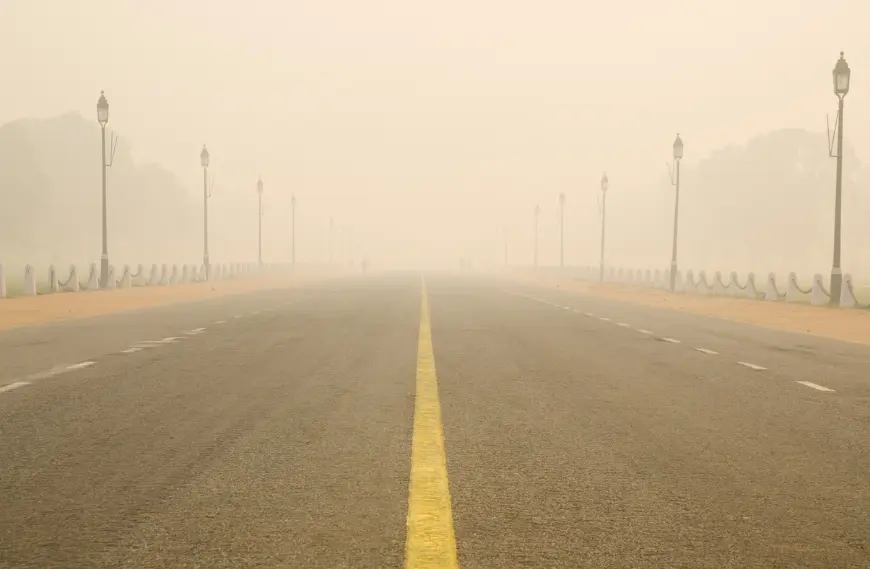
The Indian government has ramped up measures to tackle air pollution in Delhi, a pressing issue that affects both residents and tourists. The Ministry of Tourism, in collaboration with the Ministry of Environment, Forest, and Climate Change, has outlined several initiatives to improve air quality in the capital.
Understanding Delhi’s air pollution crisis
Delhi’s air pollution stems from multiple sources, including:
- Vehicle emissions
- Industrial pollution
- Dust from construction activities
- Open waste burning
- Landfill fires
- Weather conditions that trap pollutants
During winter, stagnant air and low temperatures worsen pollution levels, leading to dangerous air quality levels.
The air quality index (AQI) and its impact
The government monitors pollution using the Air Quality Index (AQI), which categorises pollution levels into:
- Good (0-50): Safe for all
- Satisfactory (51-100): Minor discomfort for sensitive people
- Moderate (101-200): May affect those with lung issues
- Poor (201-300): Discomfort for most people
- Very Poor (301-400): Increased health risks
- Severe (400+): Harmful even for healthy individuals
Key government initiatives to control pollution
1. National clean air programme (NCAP)
Launched in 2019, NCAP focuses on improving air quality in 130 cities, including Delhi. It funds city-specific action plans to curb pollution levels.
2. Strict air pollution regulations
- Graded Response Action Plan (GRAP): Implemented in Delhi-NCR, this plan introduces emergency pollution control measures based on AQI levels. The revised GRAP was issued in December 2024.
- Comprehensive Air Pollution Control Policy (2022): A sector-wise roadmap targeting industries, transport, and waste management to curb emissions.
3. Crackdown on stubble burning
Stubble burning in Punjab, Haryana, and Uttar Pradesh is a major contributor to Delhi’s winter smog. The government has provided ₹3,698 crore since 2018 to help farmers access eco-friendly alternatives, distributing over 3 lakh crop residue management machines.
4. Industrial and vehicular emission control
- Regular inspections of factories and construction sites to check pollution violations
- Promotion of electric vehicles (EVs) and public transport improvements to reduce road emissions
Has air quality improved?
Government data shows progress in reducing pollution levels.
- The number of ‘Good’ to ‘Moderate’ air quality days has doubled since 2016.
In 2024, Delhi recorded 209 days of acceptable air quality—the highest since monitoring began, excluding 2020 (lockdown period).
