



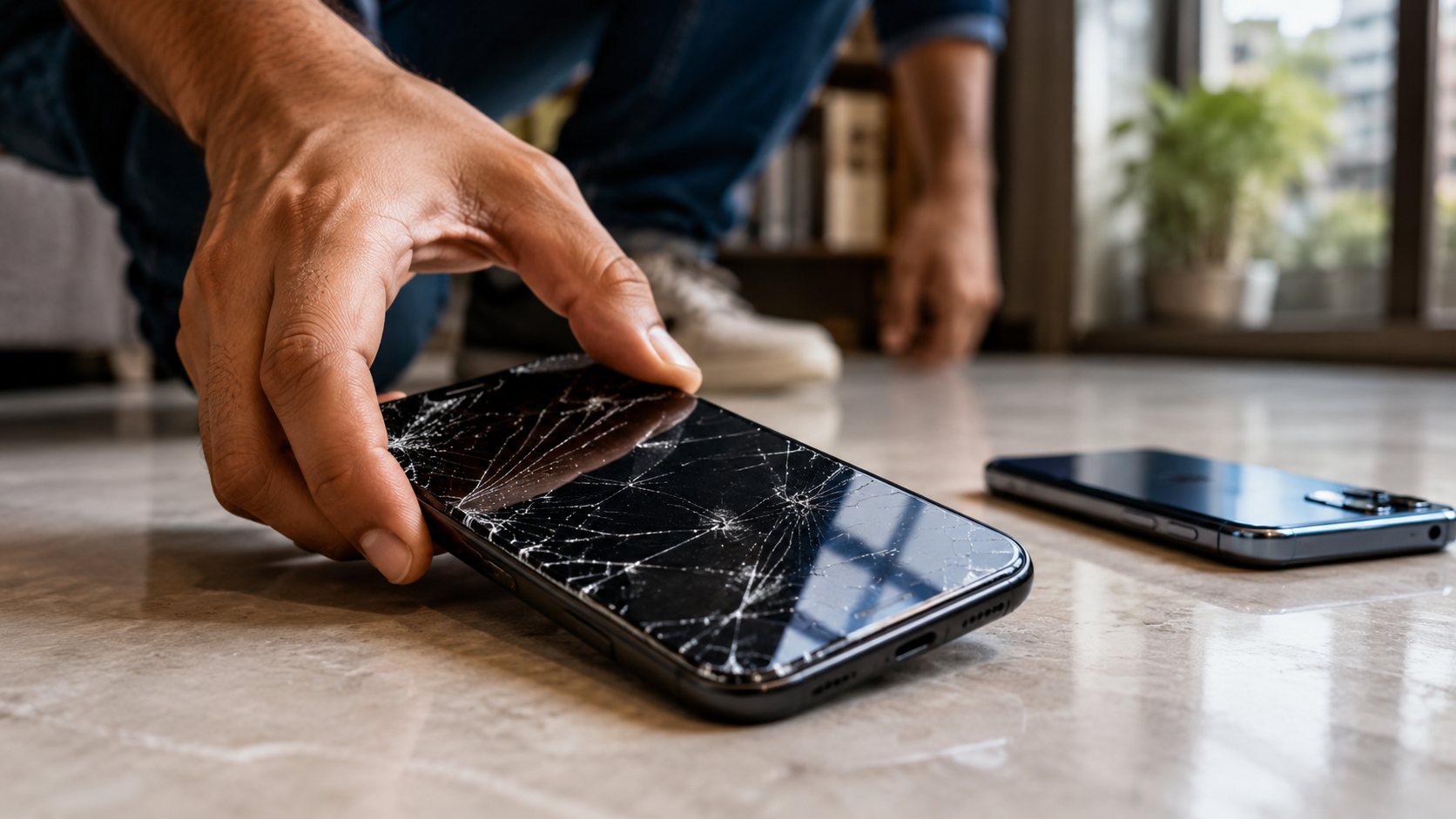
When people think about why someone buys a new smartphone, they usually imagine a faster chip, a smarter AI assistant, or better 5G speed. But a new survey says something far simpler is actually behind a lot of these purchases: a broken screen.
The survey was carried out by Corning, the American company that makes Gorilla Glass the toughened glass used on the front of most smartphones. It found that more than half of Indian users, 53 percent, ended up buying a new phone earlier than they had planned because the glass on their old one had cracked or shattered.
Drops happen more often than you’d think
The numbers around phone drops are hard to ignore. As many as 87 percent of the people surveyed said they had dropped their phone at least once in the past year. More than half, 56 percent, said they actually feel anxious about their phone falling, worried that the glass won’t hold up.
The survey covered 1,509 smartphone users across India. Corning says the group included people from different age brackets, cities, price ranges, and usage habits including gamers, office professionals, heavy phone users, and people who care a lot about their camera quality. It was conducted in November and December 2025, and the results came out in July 2026.
“Durability is no longer a secondary specification. It’s central to the overall device experience,” said Andrew Beck, who leads Corning’s Gorilla Glass business, in a statement about the findings.
A cracked screen can cost more than you’d expect
A phone with a cracked screen usually still works. You can still make calls, scroll through apps, and take photos. The real problem is the cost of fixing it and that cost often pushes people toward buying something new instead.
According to the survey, one out of every five users who broke their screen in a fall needed a professional repair or had to replace the phone altogether. Almost half of all respondents said they had spent more than Rs 2,000 just on repairs.
That kind of repair bill changes the math for a lot of people. If fixing a screen costs a few thousand rupees, and a slightly newer or cheaper phone isn’t that much more, many users decide it’s simpler to just buy a new one.
It’s not just an expensive-phone problem
You might assume this mainly affects people with costly flagship phones, since those screens are more expensive to fix. But the data tells a slightly different story.
Corning shared some extra numbers with India Today Digital that weren’t in the main report. Among premium smartphone users, 61 percent said broken glass had led them to replace their device. Among budget smartphone users, the number was 42 percent lower, but not by a huge margin.
In other words, broken glass causes early upgrades across price categories, not just in the premium segment.
Durability now matters when people are buying a phone
The survey also looked at what people actually look for before buying a new phone. Durability turned out to matter a lot 61 percent said durability claims from brands directly influenced their buying decision. Drop protection was important to 52 percent of respondents, scratch resistance mattered to 48 percent, and 52 percent said they wanted equal protection for both the front and back of their device, not just the screen.
Some more specific numbers from the extra data Corning shared:
- 63 percent said battery life and overall durability mattered most to them
- 58 percent cared about display clarity, even under everyday wear
- 53 percent cared about how durable the camera lens is
- 52 percent wanted glass that could survive drops
- 48 percent wanted scratch-resistant screens
- 44 percent wanted a phone that looked premium and felt tough at the same time
So it’s not only about surviving a fall. People also care about their phone still looking and working well after months of everyday scratches, smudges, and glare.
People say they’re willing to pay more for a tougher phone
Here’s maybe the clearest sign of how much this matters to buyers: 74 percent of respondents said they would be willing to pay extra for a phone with better, tougher cover glass and improved display quality.
Given how often people are dropping their phones and how much repairs can cost, that willingness to pay more upfront starts to make a lot of sense.
A few things worth keeping in mind
Corning has been clear that this was a “geographically diverse urban sample.” That means the survey mainly reflects how city-based smartphone users think and behave. It doesn’t necessarily tell us whether rural users have the same experience or replace their phones for the same reasons.
It’s also worth remembering that this survey was commissioned by Corning, a company that sells glass durability as its main product. That doesn’t make the findings wrong, but it’s a useful detail to keep in mind while reading them.
Smartphone brands spend a lot of money convincing people to upgrade because of a new processor, a new camera system, or a new AI feature. But this survey suggests that for a lot of Indian users, the actual decision to buy a new phone doesn’t happen because of any of that.
It happens the moment a phone slips out of a hand, hits the floor, and the screen cracks.
Subscribe Deshwale on YouTube
