









How Ferran Torres turned a lifetime of being underestimated into the goal that gave Spain the World Cup
He wasn’t even on the pitch when the final began.
For 105 minutes at MetLife Stadium, Spain had done almost everything but score, dominating possession, starving Lionel Messi of the ball, watching Emiliano Martínez fling himself across his goal line several times. Argentina, reduced to ten men after Enzo Fernández saw a second yellow card, had nothing left to attack with. Still, 0-0 held. Then, 39 seconds into the second half of extra time, Nico Williams rose to head a long ball back into the box, and Ferran Torres, on for barely a quarter of an hour, met the bounce with his left foot and buried it under the crossbar.

New Jersey exploded. Messi stood motionless on the halfway line, staring at the grass. Spain had won the World Cup for the second time in its history, sixteen years after 2010, and the man who delivered it wasn’t one of the household names the tournament had been sold on. It was Ferran Torres, a player who had spent the entire competition being questioned, and who answered in the only language that silences doubt.
“It was a goal scored by 47 million people,” he said afterward, invoking Spain’s population. He might easily have said: scored by every player who has ever been told he wasn’t quite good enough, right up until the moment he was.
For Indian audiences who know football mostly through the sport’s four or five global superstars, Torres is unlikely to ring a bell. He doesn’t sell sneakers the way Mbappé does or dominate timelines like Messi and Ronaldo still do. But within the game, among coaches, teammates and the analysts who watch the sport for a living, Torres has long commanded a different, quieter kind of respect. He is part of a Spanish generation trying to drag the national team back to the summit of the sport, and on the night it mattered most, he was the one standing at the top of it.
A Valencia childhood, built on discipline
Ferran Torres García was born on 29 February 2000 in Foios, a small town just outside Valencia on Spain’s eastern coast. Football wasn’t a hobby in that household. It was the organizing principle of childhood.
Spanish academies are famous for teaching more than technique, and Valencia CF’s youth system, which Torres joined as a boy, was no exception. Positioning, pressing triggers, movement off the ball, tactical literacy, these were treated as seriously as first touch and finishing. Torres absorbed all of it. By the time he made his senior debut as a teenager, coaches were already remarking on something unusual: he didn’t play like a kid. He played like someone who understood the geometry of the game before he understood how famous he might become.
That early maturity, knowing when to run in behind rather than dribble, when to disappear from a defender’s eyeline rather than demand the ball, has never left him.
The modern forward, not the old kind
Football has redefined what a forward is for. It is no longer enough to score; the best attackers now press first, defend when possession is lost, drag opposition lines out of shape, and rotate positions to create space for others. Torres, comfortable across both wings and through the middle, has built his career on exactly that kind of adaptability.
His most valuable qualities are the ones a casual viewer might miss entirely. He rarely wins the highlight reel for a mazy dribble the way Vinícius Júnior does, and he doesn’t have the raw top-end speed of some of Europe’s elite wide players. What he has instead is timing, the ability to arrive in the right 16-yard-box pocket a half-second before the ball does, and the selflessness to make a run purely so a teammate has room to breathe. Managers build systems around players like that, even when the applause goes elsewhere.
An education under Guardiola, a trial by fire at Barça
In 2020, Torres left Valencia for Manchester City and Pep Guardiola, as close to a football doctorate as the sport offers. Playing time wasn’t guaranteed in that squad, but the education was relentless: how elite teams retain the ball under pressure, how a press is triggered as a unit rather than by one player charging alone, how positional discipline is what actually creates the space forwards get credit for exploiting. Guardiola repeatedly praised his professionalism.
He later returned to Spain to join Barcelona, where the pressure is different in kind, not just degree, Barça’s crowd wants not just wins but a certain idea of beautiful football, and attackers who don’t deliver both are judged harshly. Torres has had blistering runs of form there, and he has had spells brutal enough that pundits openly wrote him off. He kept working through both.
That refusal to be defined by his worst stretches is, in hindsight, the through-line of his whole career.
Trusted in the shirt that matters most
International football punishes players differently than club football does, less time on the training ground, systems that have to be understood in days rather than seasons, teammates drawn from rival clubs across the continent. Torres has never looked out of place in it. Starting or coming off the bench, he has built a reputation as someone who influences matches without needing the ball constantly at his feet, which happens to be exactly the profile Luis de la Fuente’s Spain, a team built on relentless collective pressing and technical control, most values.
That’s precisely why he was warming up rather than starting the World Cup final in the first place, and precisely why de la Fuente trusted him to change the game once he was needed.
The goal
Finals are engineered to punish hesitation. Torres didn’t hesitate. When Nico Williams’ header dropped into the box in the 106th minute, Torres didn’t force anything, he read the bounce, adjusted his body, and finished left-footed under the bar in the kind of single clean motion that looks instinctive on television and is, in fact, the product of thousands of repetitions no camera ever saw. It was his first goal of the entire tournament, arriving at the only moment in the competition that would be remembered forever.
“I have been criticized throughout the whole tournament,” he admitted afterward, “but, as I said before, destiny was written.”
For Spain, it was the goal that denied Messi, playing, by his own signals, his final World Cup, a second consecutive title, and confirmed that for the better part of the last two years, this generation of La Roja simply hasn’t lost to anyone who matters. For Torres personally, it did something more specific: it ended, in 39 seconds, a tournament’s worth of whispered doubt.
Beyond the box score
Modern football analysis is obsessed with numbers, goals, assists, expected goals models, minutes played. All of it matters. None of it fully explains a player like Torres.
What shows up less in a data table is pressing intensity, off-ball movement, the willingness to spend ninety minutes making the team function rather than making a personal highlight reel. Elite coaches notice that anyway, which is why they keep picking him despite constant competition for his position. Frustration rarely seems to touch his work rate. That, as much as the finish itself, is why Sunday’s goal felt earned rather than lucky.
What Indian sport can take from him
Indian football is still building, better academies, sharper coaching pathways, deeper exposure to the European game. For young players watching from outside that system, Torres offers a specific and useful lesson: brilliance isn’t always loud.
He has spent a career accepting new roles, absorbing new tactical demands, and staying mentally intact through public criticism that would unsettle most 20-somethings. None of that is football specific. It is the same discipline that separates the good from the enduring in cricket, badminton, hockey, any sport where a career outlasts a single good season.
What comes next
At 26, Torres sits at the center of his career, not the end of it, with La Liga, the Premier League, the Champions League and now a World Cup winner’s medal already behind him. Few players his age have absorbed that much pressure and kept coming back for more.
Spain’s next era will very likely still have him in it. His name will always be attached to that goal in New Jersey. But it would be a mistake to let one moment, however historic, be the whole story.
The more accurate one is this: Ferran Torres is proof that persistence and intelligence eventually outlast noise, that a player doesn’t need to be the loudest name in the room to become, on the one night it counts most, the only one who matters.
Some champions never chase the spotlight. They just keep working until the spotlight has no choice but to find them.
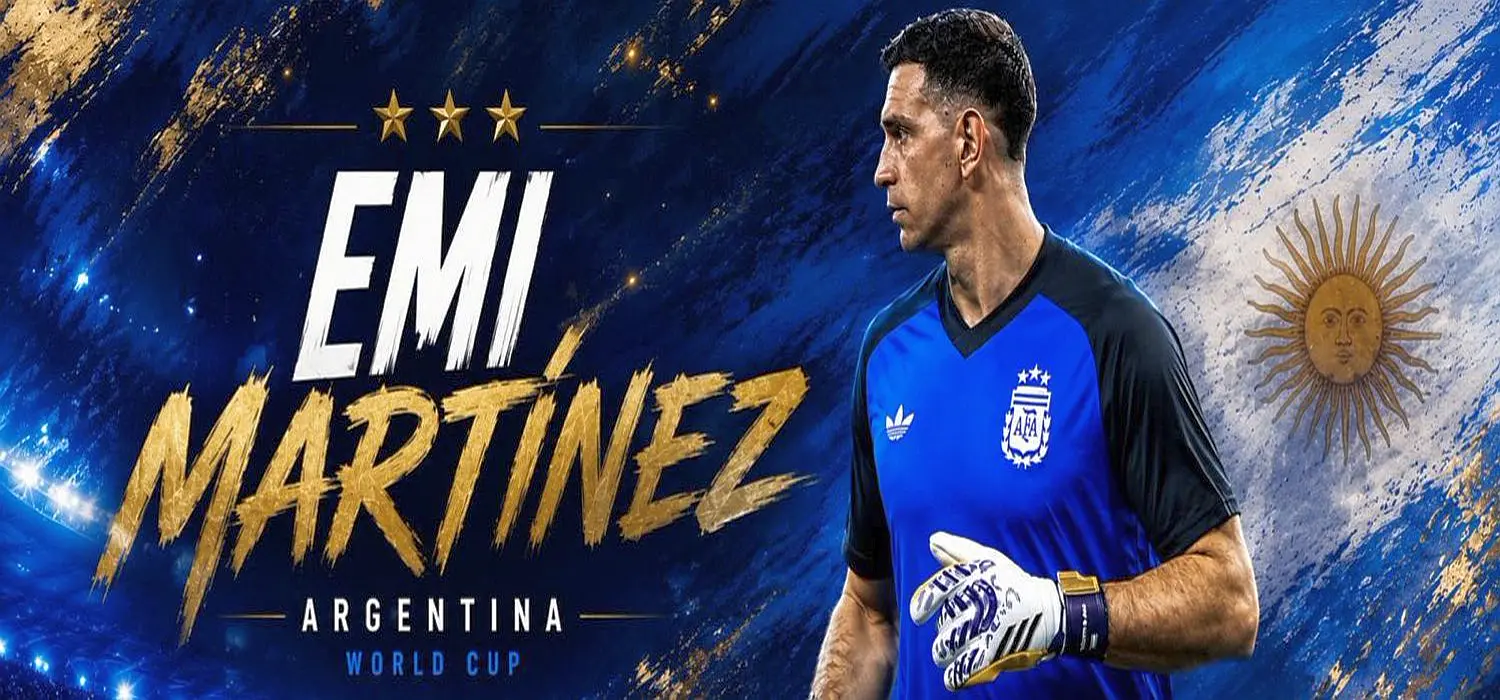
The Man Who Almost Stole The World Cup: Emiliano Martínez
Emiliano Martínez didn’t win Argentina the final. But for 105 minutes, he made sure Spain didn’t win it either
Spain lifted the World Cup on Sunday night in New Jersey. By the numbers, it shouldn’t have been close. La Roja finished with 20 shots to Argentina’s none in normal time and 106 minutes of extra time combined. They controlled the ball for long, suffocating stretches, moved it the way only a Luis de la Fuente side can, and were denied, over and over, by one man standing between the posts. That was Argentina’s goalkeeper Emiliano Martínez.
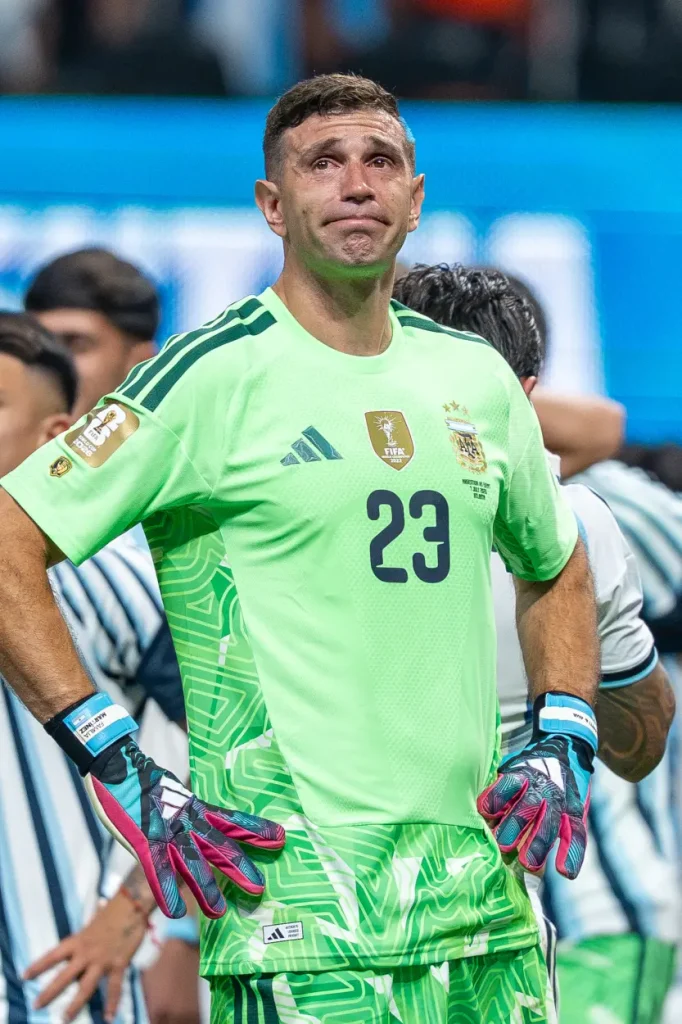
By full time, Emiliano Martínez had made 11 saves, the most by any goalkeeper in a World Cup final since records began in 1966. He did it, as it turned out, with a broken finger on his right hand that he had chosen not to have operated on before the tournament. Argentina lost 1-0. Had Martínez not been in goal, the story of that scoreline could easily have carried an extra digit or two.
For those who watched the final purely for Messi, or purely for the occasion, it’s worth pausing on Martínez specifically, because what he produced on Sunday wasn’t a lucky night. It was the peak of a goalkeeping career built almost entirely on refusing to be written off.
From loan spells to World Cup history
Emiliano “Dibu” Martínez’s path to becoming Argentina’s number one was never a straight line. He left home in Mar del Plata as a teenager to join Arsenal’s academy in England, and what followed was close to a decade of being shipped out on loan, spells at clubs like Oxford United, Sheffield Wednesday, Rotherham and Getafe, none of them glamorous, all of them building a goalkeeper who had to fight for every clean sheet rather than inherit one.
His breakthrough finally came in 2020, deputising for an injured Bernd Leno at Arsenal and inspiring an FA Cup run, before Aston Villa took a chance on him permanently. Within months, he was Argentina’s first choice goalkeeper. Within two years, he was a World Cup winner.
That patience is worth remembering on a night when he single handedly extended a final into extra time.
The night the finger didn’t matter
Martínez had told reporters before the final that his hand “still hurts every day”, the result of a fractured ring finger he had been advised to have surgically repaired before the tournament began. He played anyway.
Spain tested that hand relentlessly. Ferran Torres and Mikel Oyarzabal both drew smart saves from distance in the first half, with Argentina’s midfield unable to get near Dani Olmo as he drifted into pockets between the lines. Lionel Messi, by contrast, barely touched the ball, a single touch in the entire first half, such was Spain’s control. Argentina were pinned back for long periods, but Martínez kept finding answers: low, to his left, dropping to smother the ball at forwards’ feet, coming off his line to close down angles before a shot could even be struck properly.
The save that will be replayed for years came in stoppage time of normal time, when he got down to block a Lamine Yamal free kick that looked destined for the corner, the intervention that forced extra time in the first place, and without which the final might never have reached the moment Ferran Torres eventually settled it.
Even in extra time, with Argentina down to ten men after Enzo Fernández’s second yellow card and barely able to string passes together, Martínez kept the door shut until the 106th minute, when Nico Williams’ knockdown finally found Torres in space. It was, in the truest sense, the only mistake Argentina’s goalkeeper made all night, and it wasn’t really his to make; there was very little he or anyone in an Argentina shirt could have done about it.
A familiar role, on the biggest stage yet
This wasn’t new territory for Martínez. He was the hero of Argentina’s 2022 World Cup triumph in Qatar, saving a decisive penalty in the shootout against France after a string of huge stops in extra time, and he has made a habit since then of turning up biggest when Argentina need him most, including a penalty save against Ecuador at the 2024 Copa América that kept his side alive when Messi himself had missed from the spot.
What made Sunday different was the scoreline he was defending. In Qatar, Martínez had goals to work with. In New Jersey, he had none, for the best part of two hours, against a Spanish side that simply would not stop coming.
Why it still hurts, and why it shouldn’t take away from him
Argentina will fly home without the trophy, and Messi, playing, by all indications, his final World Cup, will have to accept an Argentine team ending without the fairy-tale repeat that would have made them the first side since Brazil in 1962 to win consecutive titles.
But nobody serious about football will remember this final as a story of Argentina being outclassed. They will remember Emiliano Martínez standing alone against a wave of Spanish pressure for the better part of two hours, injured and unmoved, setting a record that had stood since the very first World Cup final was recorded. Spain’s players, to their credit, seemed to understand this too, there was little of the wild celebration reserved for opponents who have been dismantled, and more the relief of a team that knew exactly how hard it had been made to work.
Football finals are supposed to be won by the team that finds the moment. On Sunday, Ferran Torres found his. But for 105 long minutes before that, it was Emiliano Martínez who made Spain earn every single one of them.
What a goalkeeper!
(Featured image courtesy: Emiliano Martinez on X (@emartinez)


