



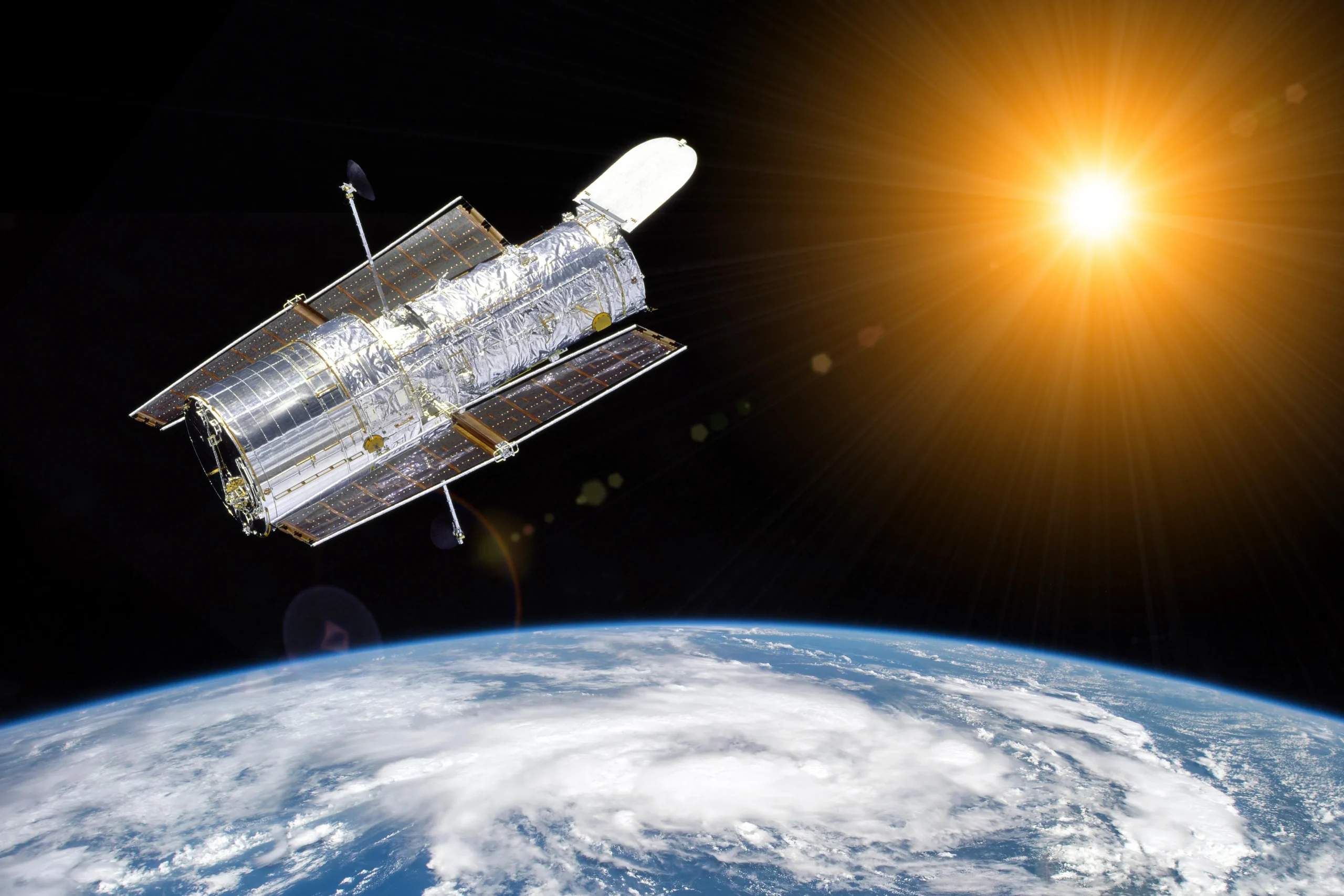
In the vastness of space, one man-made machine has transformed our view of the cosmos — the Hubble Space Telescope. Floating silently above Earth’s atmosphere, it has captured some of the most awe-inspiring images in human history. But beyond the pictures, Hubble has helped rewrite science textbooks and reshape humanity’s understanding of the universe.
A Giant Leap from Earth
Launched on 24 April 1990, the Hubble Space Telescope was a collaborative project between NASA and ESA (European Space Agency). It was named after American astronomer Edwin Hubble, whose work in the early 20th century showed that the universe is expanding — a groundbreaking discovery that set the stage for modern cosmology.
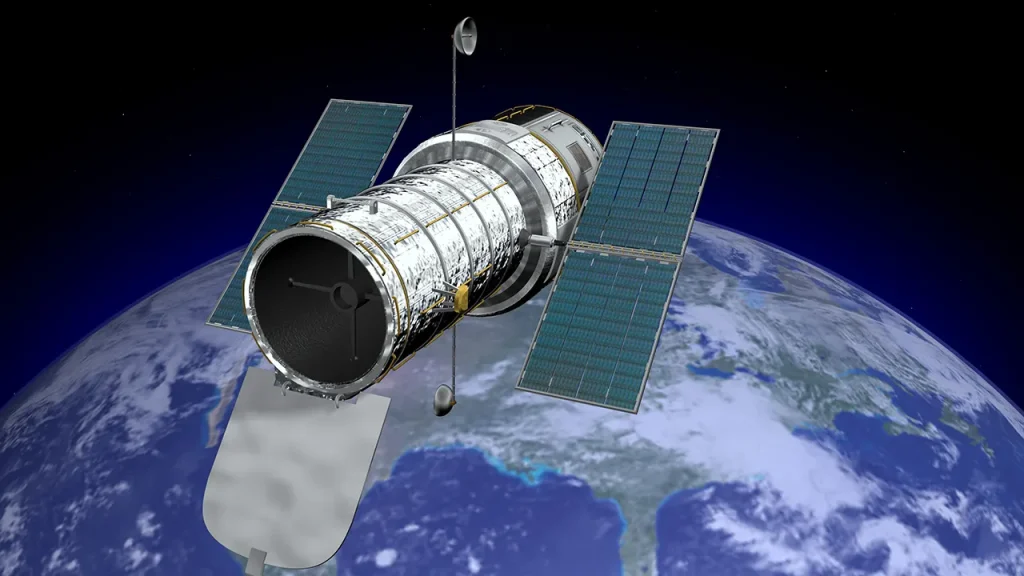
Unlike ground-based telescopes, Hubble was placed into low Earth orbit, about 547 kilometres above the surface. This positioning allowed it to observe the universe without interference from Earth’s atmosphere, which distorts and blocks light from distant stars and galaxies.
How Hubble Sees the Universe
Hubble isn’t your ordinary telescope. It observes the universe in ultraviolet, visible, and near-infrared light. Its main mirror, measuring 2.4 metres in diameter, collects light from cosmic objects millions — even billions — of light-years away. This allows it to peer into the most ancient corners of the universe.
What makes Hubble remarkable is not just its power, but its longevity and versatility. Designed for in-orbit servicing, astronauts visited it five times between 1993 and 2009 to upgrade instruments, fix issues, and extend its life.
A Rocky Start — and a Bold Fix
Hubble’s journey wasn’t perfect. After its launch, scientists discovered a serious flaw in the telescope’s main mirror. The mirror had been ground to the wrong shape by just 2.2 microns — about 1/50th the thickness of a human hair — causing blurry images.
The error became an international embarrassment. But in 1993, NASA launched STS-61, a daring Space Shuttle mission where astronauts installed a corrective device called COSTAR (Corrective Optics Space Telescope Axial Replacement). It worked like contact lenses for Hubble, and soon the telescope began sending back sharp, jaw-dropping images.
Amazing Discoveries You Should Know
Over the past three decades, Hubble has revolutionised astronomy. Here are some of the most mind-blowing discoveries and facts:
1. Age of the Universe
Hubble helped scientists determine the age of the universe more precisely — about 13.8 billion years. It did this by measuring distances to faraway galaxies and observing how fast they’re moving away from us.
2. Deep Field Images
In 1995, Hubble took the Hubble Deep Field image, focusing on a seemingly empty patch of sky for 10 days. The result? Thousands of never-before-seen galaxies. This single image proved that the universe is teeming with galaxies.
3. Dark Energy
In the late 1990s, Hubble observations supported the shocking discovery that the universe’s expansion is accelerating — driven by a mysterious force known as dark energy. This changed the face of cosmology.
4. Exoplanet Atmospheres
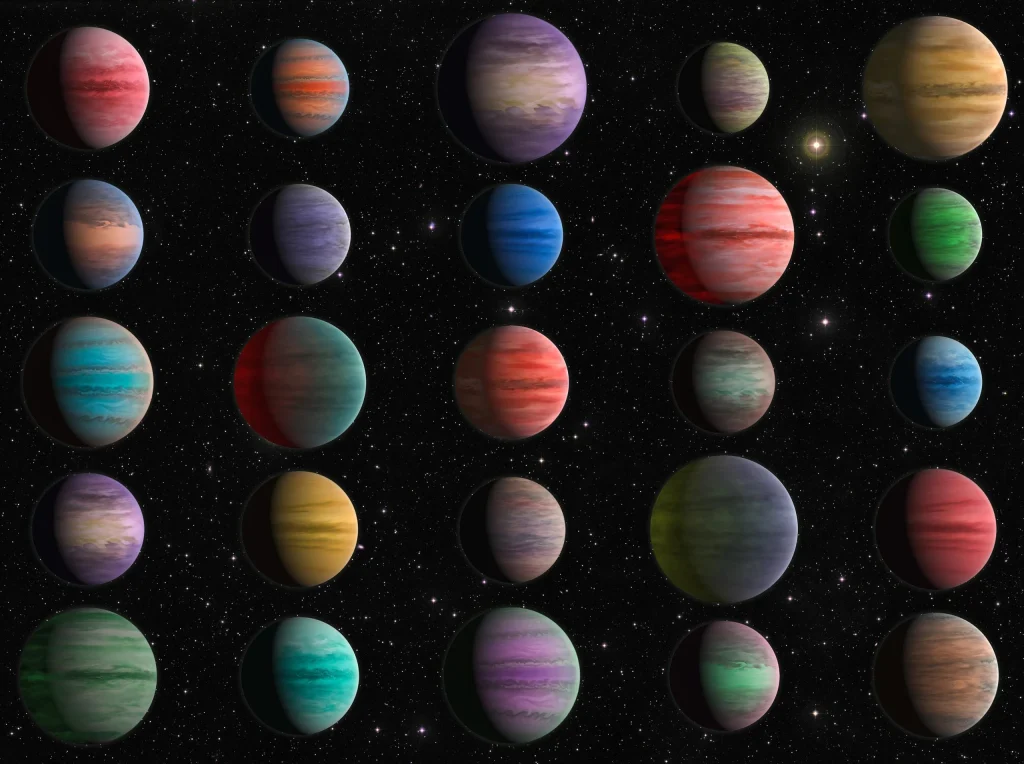
Hubble was the first telescope to detect atmospheres on exoplanets — planets beyond our solar system. It’s helped identify water vapour, methane, and other gases, pointing to possible conditions for life.
5. Star Birth and Death
Hubble’s ultra-clear images of nebulae have shown the stunning processes of star formation and death. It captured the Pillars of Creation in the Eagle Nebula — one of the most iconic space images ever.
6.A Window That Changed Us
Hubble is more than a scientific tool — it’s a cultural icon. Its images have inspired artists, writers, filmmakers, and curious minds around the world. From school classrooms to science museums, Hubble has sparked wonder and excitement for generations.
Its data has supported over 20,000 scientific papers, making it one of the most productive scientific instruments ever built.
Passing the Baton to James Webb
In 2021, NASA launched the James Webb Space Telescope (JWST), Hubble’s larger and more powerful successor. But rather than replacing Hubble, JWST works in tandem with it. While Hubble specialises in ultraviolet and visible light, Webb sees primarily in infrared, peering even further back in time.
Together, the two telescopes are giving us a fuller, deeper view of the universe than ever before.
What’s Next for Hubble?
Though it’s been in orbit for over three decades, Hubble is still operational and delivering stunning science. NASA expects it to keep functioning until the early 2030s, depending on its systems and orbital decay.
Unlike earlier fears, there are currently no plans to deorbit Hubble — it will either remain in a safe orbit or, eventually, be retired with the help of a special mission.
Final Thought
The Hubble Space Telescope is a reminder of what humanity can achieve when curiosity meets technology. From discovering new galaxies to unravelling the mysteries of dark energy, Hubble has opened our eyes to the unimaginable. It continues to whisper secrets of the cosmos, orbit by orbit, one image at a time.
