




On World Health Day 2025, India reaffirmed its commitment to better health for all. The global theme “Healthy Beginnings, Hopeful Futures” shines a light on maternal and newborn care. India is already showing strong results.
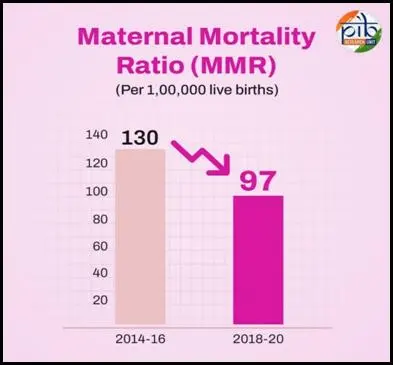
Maternal health has seen huge improvement. The Maternal Mortality Ratio dropped from 130 to 97 in just six years. This is a 25% decline. Over the last 30 years, it’s fallen by 83%. Globally, the drop was only 42%.
India is also winning in child health. Infant Mortality Rate fell from 39 to 28. Neonatal Mortality Rate reduced from 26 to 20. The Under-5 Mortality Rate dropped from 45 to 32.

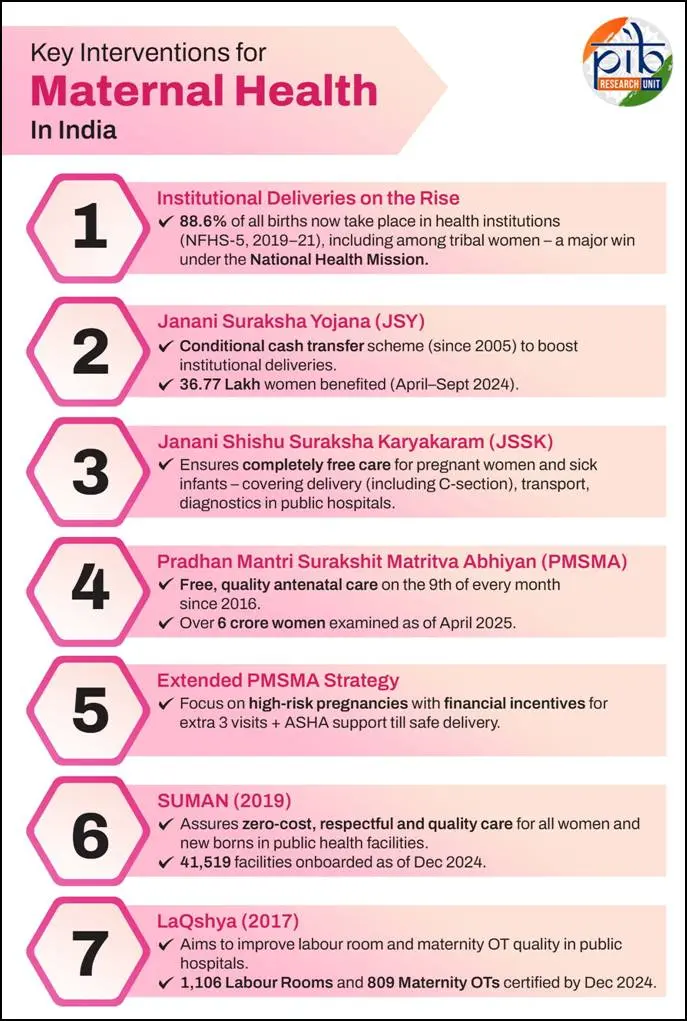
New programmes are helping pregnant women across India. The Maternal Death Surveillance system now tracks causes of maternal deaths. Women are better informed via MCP Cards and Safe Motherhood booklets. These materials explain nutrition, rest, and danger signs during pregnancy.
India’s Reproductive and Child Health Portal tracks each woman’s care. Anaemia Mukt Bharat works under POSHAN Abhiyan to test, treat, and prevent anaemia. Birth Waiting Homes help tribal and remote women reach hospitals safely.
Monthly health days are held at Anganwadi centres. Outreach camps are bringing services to far-off areas. Difficult pregnancies are monitored and supported.

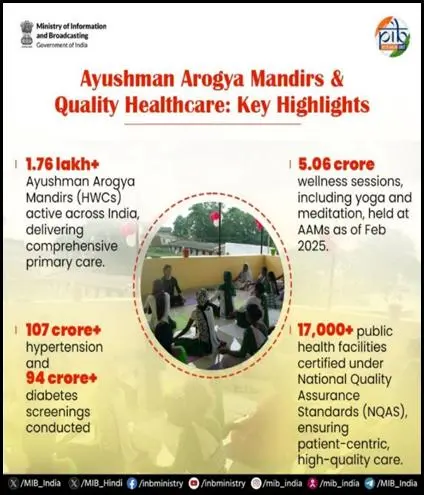
Meanwhile, access to quality care is widening fast. India now has over 1.76 lakh Ayushman Arogya Mandirs. These are Health and Wellness Centres offering primary care. Over 107 crore hypertension and 94 crore diabetes screenings were done here.
Wellness activities like yoga and meditation are growing. Five crore such sessions have been held at these centres. Quality is also improving. Over 17,000 public hospitals are now certified under National Quality Assurance Standards.
India’s digital health systems are expanding. The Ayushman Bharat Digital Mission has created 76 crore Health Accounts. It connects patients, doctors, and hospitals online. Over 52 crore health records are now linked.
More than 5.95 lakh doctors and 3.86 lakh facilities are part of this system. The U-WIN platform tracks immunisation for pregnant women and children. Nearly 30 crore vaccine doses are logged.
Telemedicine is booming too. eSanjeevani has served over 36 crore patients since 2020. It now has over 130,000 service spokes and 17,000 hubs across India. There are 130 specialities available.
On disease control, India has exited the WHO’s high-burden malaria list. Cases dropped 69% and deaths fell 68% since 2017. Trachoma has been eliminated as a public health issue. Measles and rubella cases are falling fast due to aggressive drives.
India’s TB fight is also working. TB incidence dropped 17.7% between 2015 and 2023. Deaths dropped from 28 to 22 per lakh people. Missing TB cases also fell sharply by 83%.
Under the TB Mukt Bharat campaign, 2.5 lakh volunteers now support over 15 lakh patients. The programme has expanded to help families too.
India has also achieved Kala-azar elimination. All affected blocks now report fewer than one case per 10,000 people.
Health insurance is another win. Ayushman Bharat-PMJAY now covers 55 crore low-income Indians. Each family gets ₹5 lakh in coverage. Over 8.5 crore hospital admissions have happened under this scheme.
Over 40 crore Ayushman Cards have been issued. More than 31,000 hospitals are empanelled. ASHA and Anganwadi workers are now included. Senior citizens are enrolling under Ayushman Vay Vandana.
Mental health is finally getting attention too. Tele-MANAS offers 24×7 mental support in 20 languages. It runs in 36 states and UTs. So far, over 20 lakh calls have been received. Around ₹230 crore has been allocated for this programme.
There are 440 Rehabilitation and Halfway Homes supporting mental health recovery.
India’s healthcare system is transforming. With strong public programmes, digital tools, and disease control, the country is building a robust and inclusive health future.
