



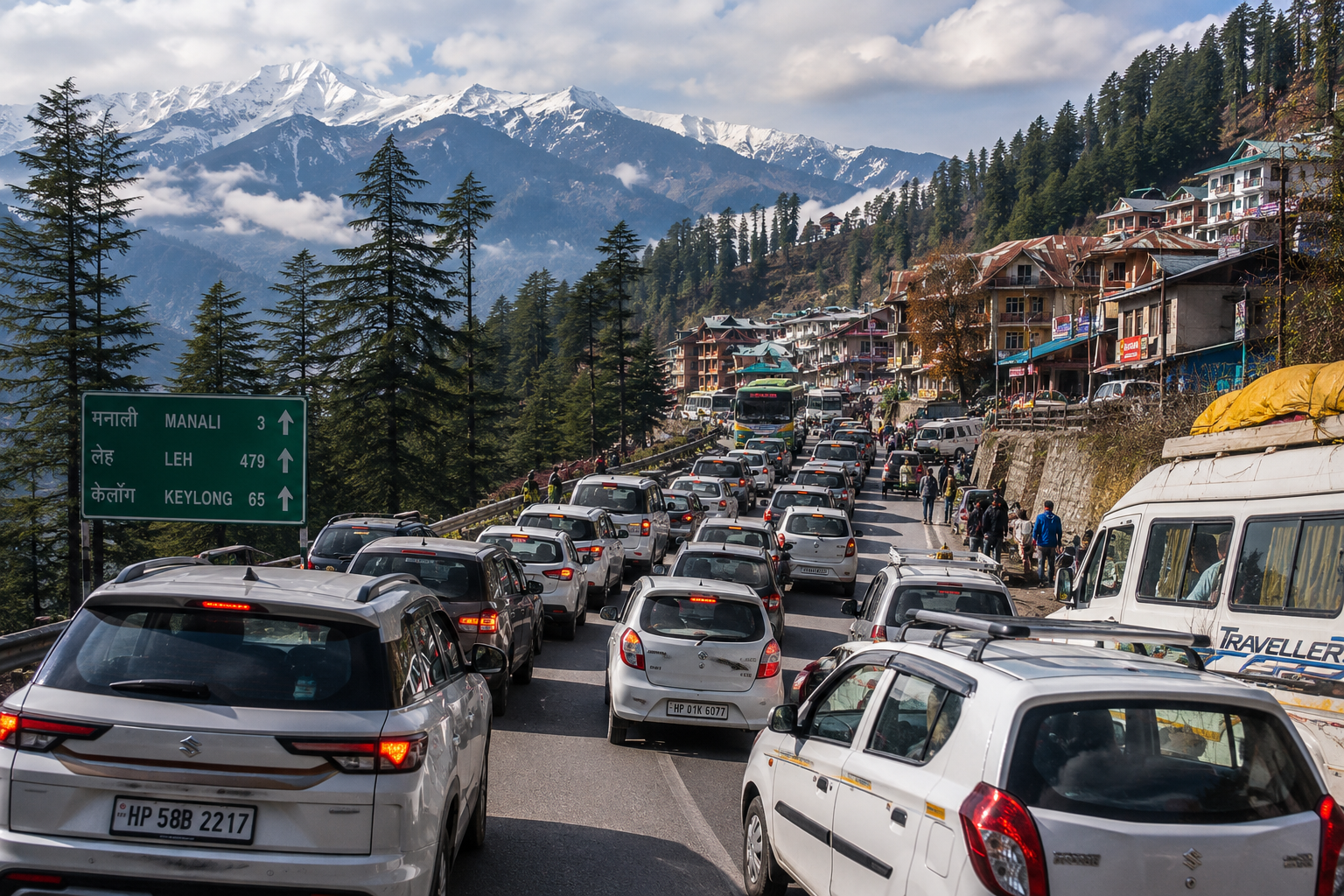
For decades, India’s hill stations were known as peaceful escapes from crowded city life. Families travelled to places like Manali, Shimla, Mussoorie, Nainital and Darjeeling to enjoy cool weather, fresh air and quiet surroundings. These mountain towns were once famous for slow mornings, scenic roads and calm evenings. However, over the years, many of these popular destinations have started facing a growing problem. Traffic congestion and overtourism are slowly changing the identity of India’s most loved hill stations.
Today, travelling to several hill stations during holidays often means spending long hours stuck in traffic. During summer vacations, festive breaks and long weekends, roads leading to popular tourist towns become heavily crowded with vehicles. What was once a relaxing mountain journey has now become stressful for many travellers.
One of the biggest reasons behind this change is the sharp rise in domestic tourism after the Covid-19 pandemic. More Indians are now travelling within the country than ever before. Road trips have become extremely popular, especially among young travellers and families looking for quick weekend holidays. At the same time, social media platforms have also played a major role in increasing tourist footfall. Viral videos and Instagram reels showing snowfall, mountain cafés and scenic viewpoints attract thousands of visitors to the same locations every week.
However, most Indian hill stations were never designed to handle such large tourist numbers. Many of these towns were developed during the British era and still have narrow roads, limited parking spaces and fragile infrastructure. As the number of vehicles continues to increase, these hill towns struggle to manage the pressure of modern tourism.
Shimla, one of India’s most famous hill stations, regularly witnesses heavy traffic during peak tourist seasons. Vehicles entering the city often move slowly because of narrow mountain roads and overcrowded parking areas. Similar situations are seen in Mussoorie and Nainital, where tourists sometimes remain stuck in traffic for several hours during busy holiday periods.
Manali in Himachal Pradesh has also become a major example of overtourism in recent years. The town attracts huge crowds, especially during snowfall and holiday seasons. Roads connecting Manali to tourist spots like Solang Valley and Rohtang Pass frequently experience long traffic jams due to the large number of private vehicles entering the region.
Darjeeling in West Bengal faces similar challenges. Known for its tea gardens and views of the Himalayas, the hill station now deals with increasing congestion during tourist seasons. The problem becomes more visible during festive holidays when thousands of tourists arrive at the same time.
Traffic congestion is only one part of the larger issue. Overtourism is also putting pressure on the environment and local communities. Several hill stations are now dealing with water shortages, waste management problems and rapid construction activity. Hotels, cafés and homestays are expanding quickly to meet rising tourist demand, but this growth is often unplanned.
Environmental experts have repeatedly warned that unplanned construction and deforestation in mountain regions can increase landslide risks and damage fragile ecosystems. Road widening projects and excessive construction have also affected the natural balance of many hill areas. During the monsoon season, mountain states often witness landslides and road disruptions that affect both tourists and local residents.
Many local residents also feel that the peaceful character of their towns is changing rapidly. During peak tourist seasons, daily life becomes difficult because of overcrowded roads, noise and pollution. Traffic jams can delay emergency services and create problems for people travelling to schools, offices and hospitals. Water supply issues also become more common as tourist demand rises sharply during holidays.
Another important factor behind this growing problem is the rise of weekend tourism. Better highways and easy access to private vehicles have made hill stations popular short-trip destinations for people living in nearby cities. Travellers from Delhi, Chandigarh, Mumbai and other urban centres often drive to mountain towns for two or three-day holidays. As a result, roads leading to hill stations become extremely crowded on Fridays, Saturdays and holiday weekends.
Experts and local residents increasingly believe that social media driven tourism is adding more pressure on already crowded destinations. Hidden cafés, scenic roads and lesser-known viewpoints quickly become overcrowded after going viral online. Many travellers now visit these places mainly to create social media content, which has changed travel patterns in several hill regions.
Despite these challenges, experts believe the situation can still improve through better planning and sustainable tourism policies. Some hill stations have already started introducing traffic control measures during peak tourist periods. Authorities in several towns now limit vehicle entry during overcrowded days and encourage the use of shuttle transport systems.
Matheran in Maharashtra is often seen as an example of sustainable tourism. Private vehicles are not allowed inside the hill station, which helps preserve its peaceful atmosphere and reduce pollution. Many urban planners believe other hill stations can also learn from such models to protect their natural environment.
Tourism experts also stress the importance of responsible travel. Visitors can help reduce pressure on hill stations by avoiding peak holiday weekends, using public transport whenever possible and respecting local environments. Avoiding littering and supporting eco-friendly tourism can also make a meaningful difference.
India’s hill stations still remain among the country’s most beautiful travel destinations. Their forests, mountains and cool weather continue to attract millions of tourists every year. However, unless tourism is managed carefully, these peaceful escapes may continue turning into overcrowded urban zones filled with traffic, pollution and environmental stress.
The challenge now is to balance tourism growth with environmental protection and sustainable planning. Without careful action, the charm that once made India’s hill stations special could slowly begin to fade away.
Subscribe Deshwale on YouTube
