










The Future of Power: Can Mamata Banerjee Retain Her Political Dominance?
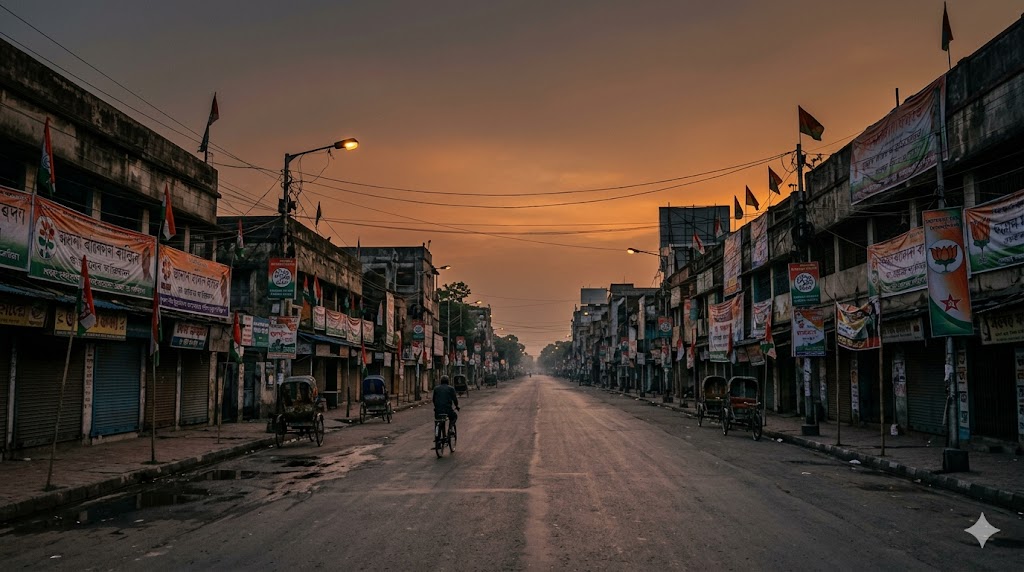
For more than a decade, the political landscape of West Bengal has revolved around a single dominant figure: Mamata Banerjee. Since ending the thirty-four-year rule of the Left Front in 2011, Banerjee and her party, the All India Trinamool Congress, have remained the central force in the state’s politics.
Yet politics in Bengal has rarely remained static for long. The decline of the Communist Party of India (Marxist) created the conditions for Banerjee’s ascent, but the subsequent rise of the Bharatiya Janata Party has introduced a new and unpredictable dimension to the state’s political future.
As Bengal moves deeper into the third decade of the twenty-first century, the central question confronting its politics is whether Mamata Banerjee’s dominance represents a durable political order or merely a transitional phase in the state’s evolving electoral history.
The Consolidation of Trinamool Power
Following her victory in 2011, Banerjee moved swiftly to consolidate the influence of the All India Trinamool Congress across the administrative and political institutions of West Bengal. The party expanded its presence in local governance structures, municipal bodies, and district-level political organisations.
This consolidation enabled the Trinamool Congress to establish a formidable electoral base that extended across both rural and urban constituencies. Welfare initiatives, infrastructure development programmes, and social assistance schemes became central components of the government’s political strategy.
Programmes aimed at supporting students, farmers, and economically vulnerable groups helped reinforce the party’s connection with significant segments of the electorate.
The Challenge from a National Party
Despite this consolidation, the emergence of the Bharatiya Janata Party as a major opposition force has fundamentally altered the political equation. The party’s rapid expansion in Bengal since the mid-2010s has created the most serious electoral challenge Banerjee has faced since assuming office.
Backed by the national leadership of figures such as Narendra Modi, the BJP has attempted to expand its organisational network across the state and mobilise voters dissatisfied with the Trinamool government.
The parliamentary elections of 2019 demonstrated the party’s growing influence, while the state assembly elections of 2021 confirmed its position as the principal opposition force in Bengal.
The Strengths of Mamata Banerjee
Despite these challenges, Banerjee continues to possess several political advantages that sustain her influence in West Bengal.
First is her enduring personal appeal. Over decades in public life, she has cultivated a political image rooted in simplicity, accessibility, and relentless activism. For many voters, she remains a symbol of regional pride and resistance to external political dominance.
Second, the organisational network of the All India Trinamool Congress remains deeply embedded across the state. The party’s presence in local political institutions provides it with a substantial advantage during electoral mobilisation.
Finally, Banerjee has demonstrated considerable political adaptability. Her ability to recalibrate alliances, messaging, and governance priorities has allowed her to navigate several political challenges since 2011.
Emerging Pressures
Yet the durability of any political system depends on its capacity to adapt to changing social and economic expectations.
Younger voters in Bengal are increasingly focused on employment opportunities, economic growth, and technological development. The state’s long-standing industrial decline and the migration of skilled workers to other parts of India remain issues of concern among urban and semi-urban populations.
At the same time, the intensification of political rivalry between the Trinamool Congress and the BJP has contributed to heightened political polarisation in certain regions.
How effectively Banerjee’s government addresses these emerging pressures will play a crucial role in shaping the future trajectory of Bengal’s politics.
The Decline of the Old Opposition
Another notable feature of the current political landscape is the continued weakness of the state’s once-dominant opposition forces. Both the Communist Party of India (Marxist) and the Indian National Congress have struggled to regain the electoral influence they once enjoyed.
Their diminished presence has contributed to the emergence of a bipolar political contest between the Trinamool Congress and the BJP. This transformation represents one of the most significant structural changes in Bengal’s political system since the fall of the Left Front.
An Uncertain Political Horizon
The future of politics in West Bengal will depend on several intersecting factors: economic development, generational shifts within the electorate, and the evolving strategies of competing political parties.
For Mamata Banerjee, the challenge lies in maintaining the political coalition that first brought her to power while simultaneously responding to the aspirations of a changing electorate.
Whether her leadership will continue to dominate Bengal’s politics or eventually give way to a new political alignment remains one of the most compelling questions in contemporary Indian politics.
A Decade That Reshaped Bengal
Over the course of the past fifteen years, the politics of West Bengal has undergone one of the most remarkable transformations in modern India. The collapse of the communist establishment, the rise of Mamata Banerjee, and the emergence of the BJP as a major challenger have collectively reshaped the state’s political order.
The five chapters of this series have traced that transformation, from the fall of the Left citadel to the uncertain political horizon that now lies ahead.
What remains certain is that Bengal’s political story, marked by ideological fervour and intense electoral competition, is far from reaching its final chapter.


