



1. PM Modi to Chair Council of Ministers Meeting Today
Prime Minister Narendra Modi is set to lead a crucial Council of Ministers meeting on June 4, 2025, to discuss national priorities and policy directions. This high-level meeting in New Delhi will focus on economic growth, infrastructure development, and social welfare initiatives. Key topics include the implementation of Budget 2025 schemes and strategies to boost India’s global standing at forums like BRICS. The meeting comes amid rising COVID-19 cases and regional challenges like floods in Assam and Manipur. Political analysts expect discussions on strengthening digital infrastructure and addressing geopolitical tensions, particularly with Pakistan. This gathering underscores Modi’s leadership in steering India through complex domestic and international challenges, making it a focal point for policymakers and citizens alike.
2. NCERT Intensifies Crackdown on Pirated Textbooks
The National Council of Educational Research and Training (NCERT) has escalated its fight against textbook piracy, seizing over 5 lakh pirated books and filing 29 FIRs in the last 14 months. This crackdown targets illegal publishers and distributors who undermine India’s education system by circulating counterfeit NCERT textbooks. The initiative aims to protect students and ensure access to authentic, high-quality educational materials. NCERT has collaborated with local authorities to raid printing presses and warehouses, particularly in Uttar Pradesh and Delhi. The council is also promoting awareness about identifying genuine textbooks through holograms and QR codes. This move aligns with India’s broader push for intellectual property rights and quality education, critical for the nation’s academic ecosystem.
3. Chenab Bridge: World’s Highest Railway Bridge Set for Inauguration
On June 6, 2025, PM Narendra Modi will inaugurate the iconic Chenab Bridge in Jammu & Kashmir, the world’s highest railway bridge. Spanning the Chenab River at 359 meters above the riverbed, this engineering marvel is part of the Udhampur-Srinagar-Baramulla Rail Link (USBRL) project. The 1.3-km-long bridge, designed to withstand earthquakes and extreme weather, will enhance connectivity in the region, boosting tourism and economic growth. The inauguration marks a significant milestone in India’s infrastructure development, showcasing advanced engineering and strategic planning. The bridge is expected to facilitate faster travel and freight movement, strengthening Jammu & Kashmir’s integration with the rest of India.
4. India Champions Inclusive Digital Growth at BRICS Summit
At the recent BRICS Summit, India reaffirmed its commitment to inclusive digital growth, emphasizing technology-driven development. The delegation highlighted initiatives like Digital India and UPI, showcasing their role in financial inclusion and e-governance. India proposed collaborative frameworks for cybersecurity, AI development, and digital literacy among BRICS nations. This pledge aligns with India’s vision to become a global leader in technology while addressing digital divides in rural areas. The summit discussions also focused on sustainable development and economic cooperation, with India advocating for equitable access to digital infrastructure. This move strengthens India’s position in global tech diplomacy.
5. Miss World 2025: Thailand’s Opal Suchata Chuangsri Wins
Miss Thailand Opal Suchata Chuangsri was crowned Miss World 2025 at the 72nd pageant held in Hyderabad, Telangana, on June 3. The event, attended by global dignitaries, showcased India’s hospitality and cultural heritage. Opal’s advocacy for education and women’s empowerment resonated with judges, earning her the title. The pageant trended on social media, with fans praising its inclusivity and glamour. Hyderabad’s hosting has boosted tourism prospects for the city.
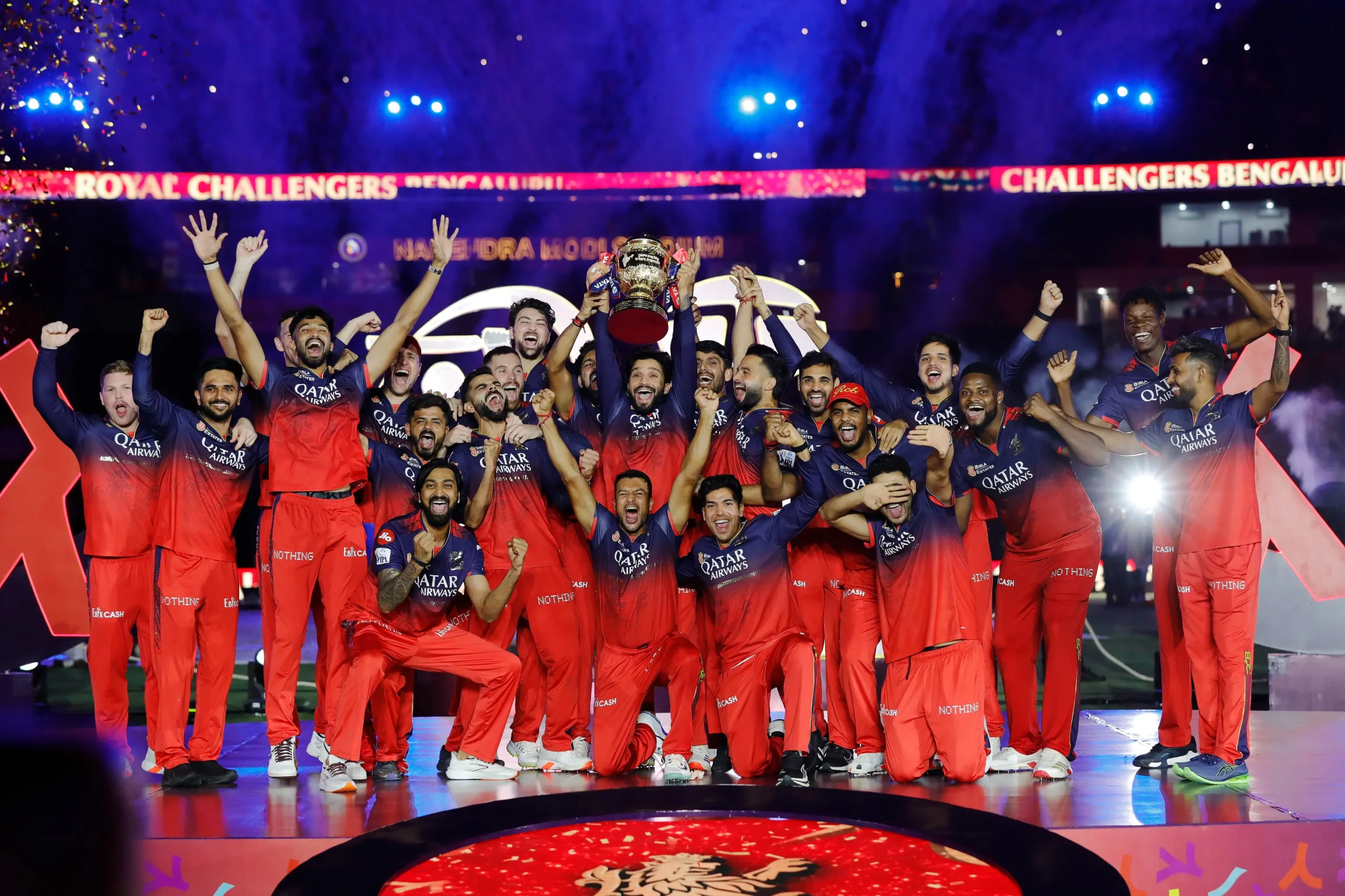
6. Royal Challengers Bengaluru Clinch Maiden IPL Title After 18-Year Wait
In a historic culmination to the IPL 2025 season, Royal Challengers Bengaluru (RCB) secured their first-ever Indian Premier League title, defeating Punjab Kings by six runs in a thrilling final at Ahmedabad’s Narendra Modi Stadium on June 3. Batting first, RCB posted a competitive total of 190/9, with Virat Kohli contributing a steady 43 runs off 35 balls. Despite a valiant effort from Punjab Kings’ Shashank Singh, who scored an unbeaten 61 off 30 balls, RCB’s disciplined bowling attack, led by Krunal Pandya’s two crucial wickets, restricted Punjab to 184/7.
This victory marks a significant milestone for RCB and Kohli, who has been with the franchise since its inception in 2008. After 267 matches and three previous final losses, Kohli’s emotional response post-match highlighted the importance of this achievement in his illustrious career. The win not only ends RCB’s title drought but also cements their place in IPL history. The team’s balanced performance throughout the season, strategic acquisitions, and unwavering determination culminated in this well-deserved triumph.
7. Operation Sindoor Delegations to Brief PM Modi on Global Anti-Terror Outreach
Prime Minister Narendra Modi is scheduled to meet members of the multi-party delegations involved in Operation Sindoor on June 9 and 10, 2025, in New Delhi. These delegations, comprising MPs from various political parties, senior leaders, and seasoned diplomats, were tasked with engaging the international community to present India’s stance against terrorism.
Operation Sindoor was launched as a strategic diplomatic initiative following the tragic Pahalgam terror attack in April, which claimed 26 lives. The delegations visited 33 countries, aiming to expose Pakistan’s support for terrorism and garner global backing for India’s counter-terrorism efforts. During their visits, the delegations engaged with foreign governments, think tanks, and international organizations, sharing evidence and advocating for a unified global response to terrorism. The upcoming meeting with PM Modi will involve presenting detailed reports on these engagements, feedback received, and potential avenues for strengthening international cooperation.
8. Rahul Gandhi’s Visit to Haryana
Congress leader and Leader of Opposition Rahul Gandhi visited Chandigarh as part of the party’s “Sangathan Srijan Abhiyan” (Organisation Creation Campaign) to address longstanding organizational issues within the Haryana Pradesh Congress Committee (HPCC). The visit aimed to rejuvenate the party’s structure in Haryana, where district-level units have remained non-functional for over 11 years due to internal conflicts and leadership disputes.
During his visit, Gandhi held meetings with senior state leaders, including former Chief Minister Bhupinder Singh Hooda, HPCC President Udai Bhan, former Union Minister Kumari Selja, Rajya Sabha MP Randeep Singh Surjewala, and Rohtak MP Deepender Singh Hooda. The discussions focused on finalizing the formation of district units and strategizing for the upcoming assembly elections.
Gandhi emphasized the importance of unity and organizational strength, urging leaders to set aside differences and work collaboratively. He also addressed 21 observers appointed by the All India Congress Committee (AICC) to oversee the restructuring process.
This initiative follows a similar organizational revamp in Gujarat and signifies the Congress party’s commitment to strengthening its grassroots presence in Haryana. The restructuring is expected to be completed within a month, aiming to enhance the party’s effectiveness and electoral prospects in the state.
