









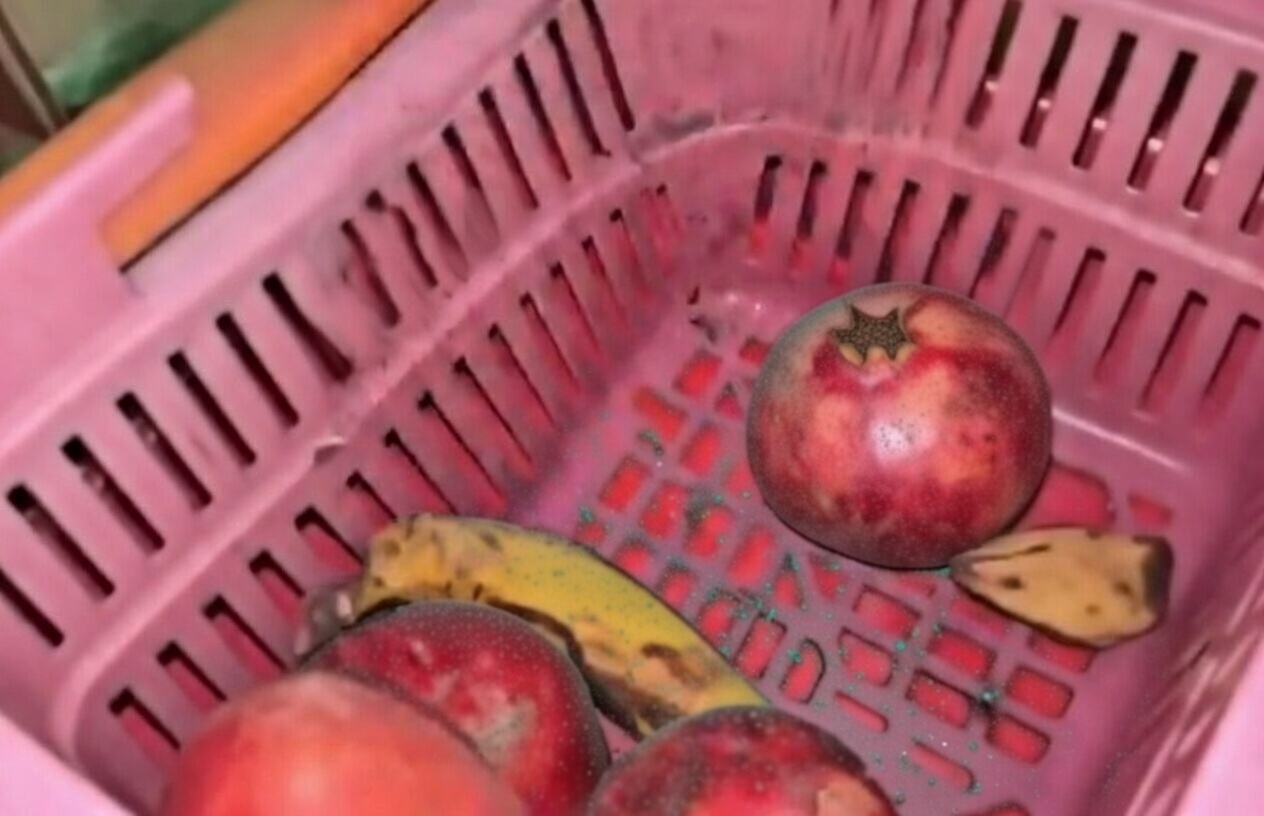
A short video clip, barely a minute long, set off a storm across Indian social media on 25 February 2026. In it, a fruit vendor at a Malad market in Mumbai’s western suburbs is seen smearing a cream-like substance onto bananas and pomegranates. A bystander confronts him. “Children eat these fruits. Why are you putting this on them?” he asks. The vendor appears unconcerned. That indifference, caught on camera, would cost him his freedom – and expose an urban food safety crisis that goes far deeper than one stall in one suburb.
Malad Police arrested two vendors, identified as Manoj Sangamlal Kesarwani, 42, and Rahul Sadanlal Kesarwani, 25, both residents of Rajanpada in Malad West. The substance they had applied was Ratol, a commercially sold rodenticide containing yellow phosphorus. Their shop was sealed. A case was registered against them under Sections 119, 272, 275, and 286 of the Bharatiya Nyaya Sanhita, covering food adulteration, endangering public health, and the illegal use of poisonous substances.
What Ratol Actually Does to the Human Body
Yellow phosphorus, the active compound in Ratol, is not a substance that the human body forgives easily. In the initial stage of ingestion, it causes nausea, vomiting, and severe diarrhoea. As exposure deepens, the symptoms progress to abdominal pain, drowsiness, breathing difficulties, and loss of appetite. In serious cases, yellow phosphorus triggers acute liver and kidney damage. It can be fatal. The toxicological risk is amplified by the fact that fruits like pomegranates and apples – the very ones found treated at the Malad stall – are often consumed without cooking, sometimes by young children who bite directly through or near the skin. The substance does not cook away. There is no safe threshold for human consumption.
They Said They Were Protecting the Fruits
This is the part of the story that the outrage cycle tends to skip. During police questioning, both accused stated that they had applied Ratol to prevent rats from destroying their stock overnight. They were not, by their own account, trying to poison customers. They were trying to protect their inventory from rodent damage – a genuine and recurring problem for open-air vendors in crowded, poorly maintained urban markets.
That admission changes nothing legally. What they did was dangerous and unlawful. But it raises an uncomfortable question. How many vendors across Indian cities are using pesticides, rodenticides, or other chemicals on produce not out of malice, but out of complete ignorance of the toxicological consequences? There is no formal induction process for street vendors. There is no training on food safety before someone is handed a licence – or, in many cases, simply occupies a patch of pavement. The knowledge gap is vast and almost entirely unaddressed.
When a Phone Camera Does the Regulator’s Job
The complaint that led to the arrest was filed by a local resident named Kunal Salunke. He had filmed the incident himself and submitted the video as evidence. Malad Police acted within hours. The shop was sealed the same day. Without Salunke’s video, it is reasonable to ask whether anything would have happened at all.
This is a pattern that repeats itself across Indian cities. Regulatory agencies – the Food Safety and Standards Authority of India (FSSAI), municipal food inspectors, the Brihanmumbai Municipal Corporation’s health department – are structurally equipped to conduct surprise checks on street vendors and open markets. In practice, such checks are rare. A social media user commented directly on this, alleging that FSSAI officials collect their salaries without conducting the field inspections they are mandated to perform. The comment resonated widely, which says something in itself. Citizen-filmed videos have become the de facto enforcement mechanism because institutional enforcement has effectively vacated the field.
The FSSAI Question and Who Is Actually Watching
The regulatory architecture around street food in India looks comprehensive on paper. FSSAI has licensing requirements, inspection protocols, and penalty provisions. State food safety commissioners exist. Municipal health wings have mandates that include market inspections. The ground reality, documented by Parliament itself, is rather different. The Standing Committee on Health and Family Welfare, in its formal report on the functioning of FSSAI, found that no surveys had been conducted for enforcement of the Food Safety and Standards Act and that FSSAI maintained no database of food businesses operating in the country. Without knowing how many businesses exist, meaningful inspection targets are impossible to set or measure.
The laboratory infrastructure tells a similar story. The same Parliamentary committee found that only 13 of 62 functional state food testing laboratories held accreditation from the National Accreditation Board for Testing and Calibration Laboratories. That is a pass rate of roughly 21 per cent for the facilities meant to verify whether the food Indians eat is safe. A LocalCircles survey conducted in April 2024, covering consumers across the country, found that the majority of respondents had either low confidence or no confidence in FSSAI and state food departments. That finding preceded Malad by nearly two years. Nothing material appears to have changed.
Following the arrests, Malad Police announced that they had begun inspecting other fruit stalls in the area and were reviewing CCTV footage from surrounding locations. That inspection sweep happened because of public pressure. It was reactive, not systemic.
The City That Makes This Possible
Looked at from the vantage point of urban planning and market infrastructure, the Malad incident is almost predictable. Mumbai’s informal vending ecosystem is vast. Tens of thousands of vendors operate without access to cold storage, covered stalls, or basic pest management support from the municipality. Rodent infestation in produce markets is a known, chronic problem. The city has never adequately invested in the market infrastructure that would reduce the conditions that lead to it.
When a vendor has no refrigeration, no covered storage, and no pest control support from the authority that ostensibly governs his space, the choices available to him narrow quickly. That is not an excuse for what happened in Malad. It is a description of how cities create the conditions for it and then express collective shock when it surfaces on video. Two arrests have been made. A stall has been sealed. But the market conditions that produced this incident remain entirely intact.
The footage from Malad will fade from social media timelines within days. The structural gaps it illuminated will not close on their own. That is the story underneath the story.
Subscribe Deshwale on YouTube


